Worth remembering
- Tokyo: Sumo Entertainment Show with Chicken Hot Pot & Geisha runs 2 hours, is listed from US$102 and holds a 4.79 rating from 8,004 reviews.[1]
- A Ginza live performance and photo experience is listed from US$61, lasts 1.5 hours and is rated 4.57 from 1,459 reviews.[2]
- The family sumo workshop includes lunch, runs 2 hours, is wheelchair accessible and is rated 4.90 from 430 reviews.[3]
- A luxury sumo show with Japanese cuisine and a drink is listed from US$102, lasts 2 hours and is rated 4.72 from 920 reviews.[4]
- Morning practice typically begins between 5:00 and 7:30 AM and continues for 2-4 hours, with start times varying by stable and season.[5]
- Top choice Sumo show and geisha night from US$102 Rating4.79 from 8,004 reviews[1]Duration2 hours[1]CancellationFull refund up to 24 hours before[1]Wheelchair accessWheelchair accessible[1]Good forChicken hot pot and a geisha show Check availability
- Luxury sumo show and cuisine from US$102 Rating4.72 from 920 reviews[4]Duration2 hours[4]CancellationFull refund up to 24 hours before[4]Wheelchair accessNot stated on the listingGood forLuxury cuisine and a drink See this tour
- Family sumo workshop from US$62 Rating4.90 from 430 reviews[3]Duration2 hours[3]CancellationFull refund up to 24 hours before[3]Wheelchair accessWheelchair accessible[3]Good forFamilies, with lunch included See this tour
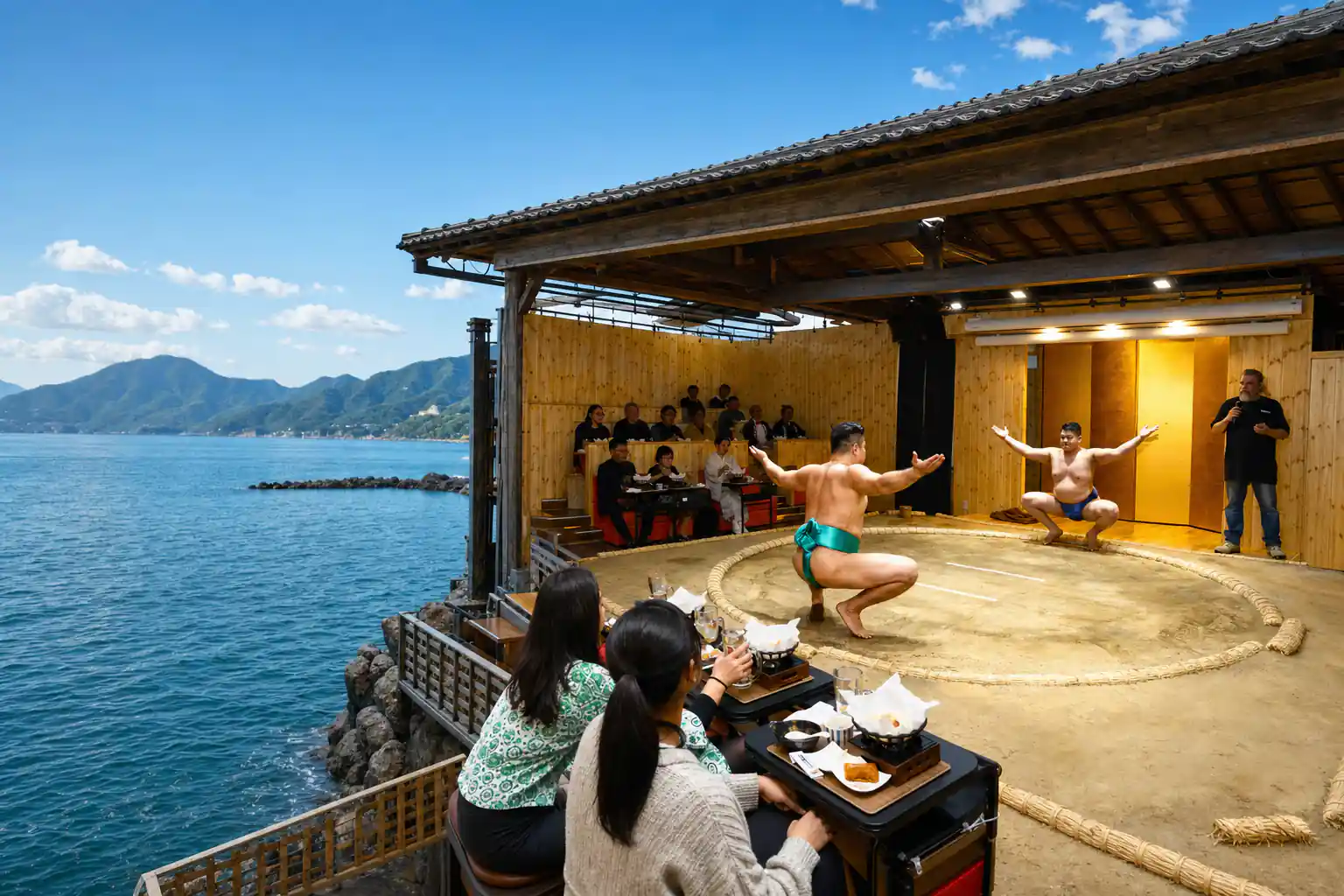
The Kokugikan National Sumo Arena located in Ryogoku (Sumida City, Tokyo) boasts a capacity of up to 10,000.
The best Tokyo sumo experience for most trips
Read before booking
What a Tokyo sumo experience actually is
Tokyo offers two quite different ways to see sumo, and knowing which one you are buying is most of the decision. The first is the sport itself, a morning visit to a working stable where wrestlers train in near silence and the sound of two bodies meeting carries across the room. The second is a staged show in a hall or restaurant, usually with a meal, a former wrestler hosting and plenty of chances for photographs. Both are honest ways to spend a morning or an evening. One is sumo in its natural habitat, the other is close-up entertainment built on real technique.
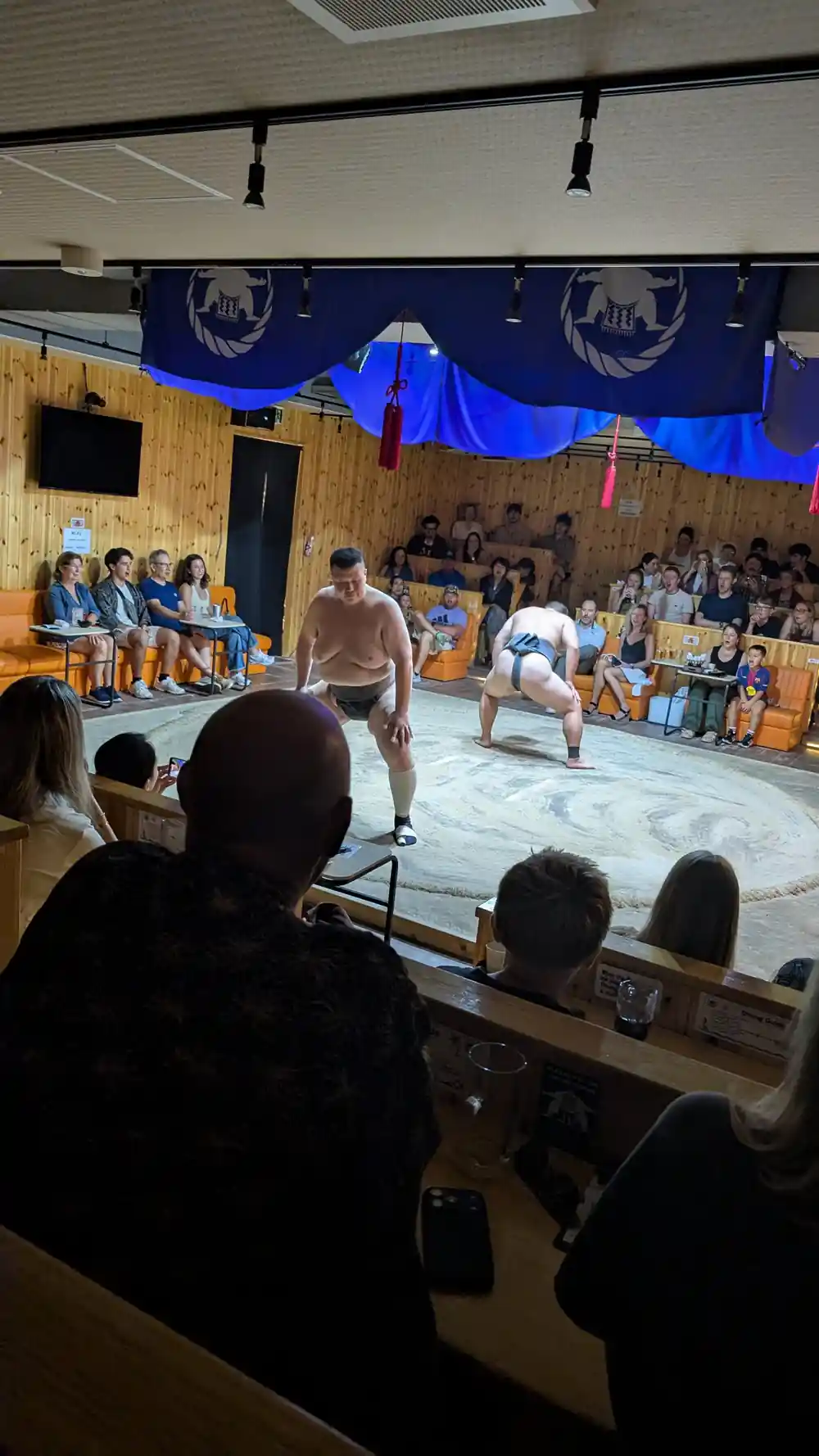
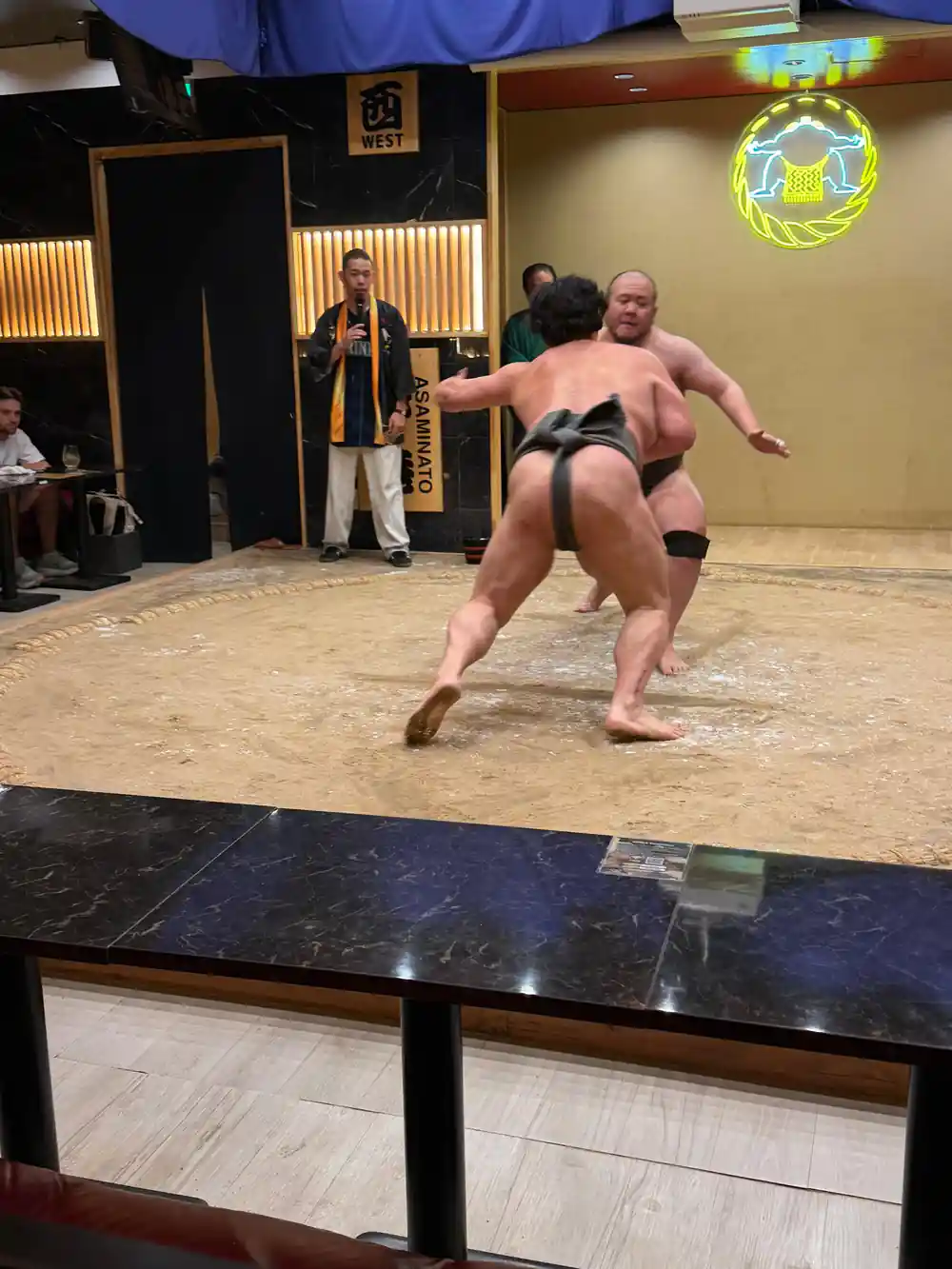
The show format is broadly the same wherever you go. You get an introduction to the rules, a demonstration of the rituals, a handful of exhibition bouts and an invitation for volunteers to climb onto the ring. The action itself is quick. Sumo bouts last 20-30 seconds[6], which is worth knowing before you picture a long card of fights. Most of the drama sits in the build-up: the stomping, the salt, the squat and the stare, and the long pause before two very large men finally move.
The sumo show booked from this site
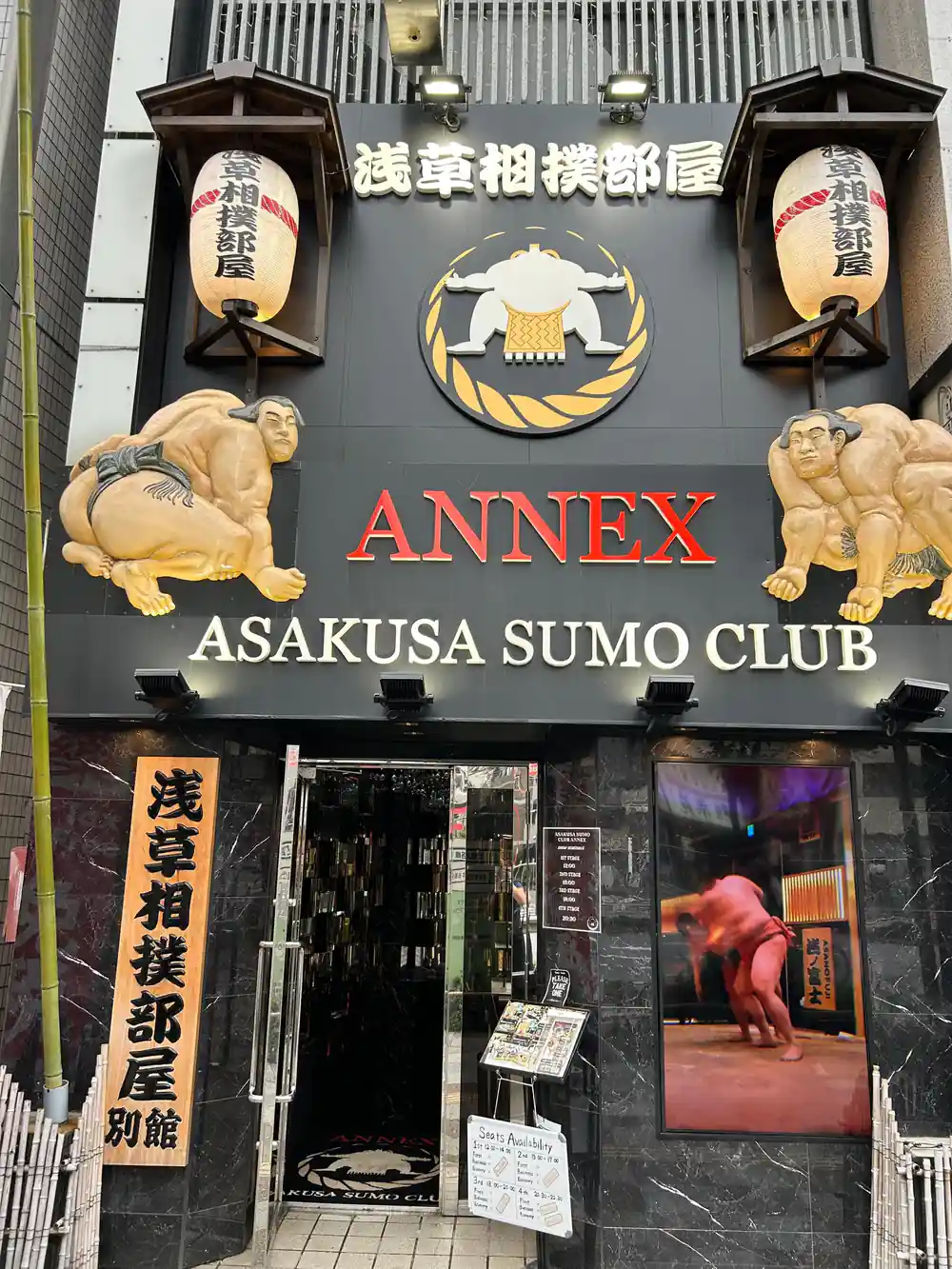
The tour booked from this site is the Tokyo: Sumo Entertainment Show with Chicken Hot Pot & Geisha[1]. It runs for 2 hours[1] and is listed from US$102[1], with a rating of 4.79 from 8,004 reviews[1]. Small group availability[1] keeps the room intimate, and the show is wheelchair accessible[1]. You can reserve now and pay later[1], and free cancellation runs up to 24 hours in advance for a full refund[1]. Check availability to see starting times[1].
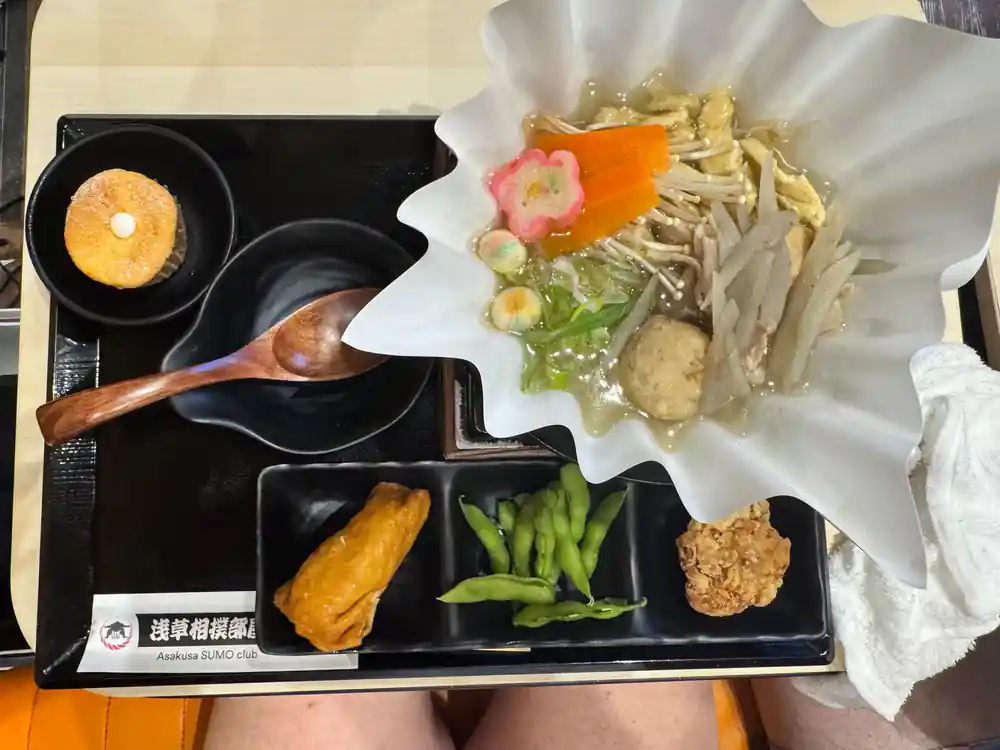
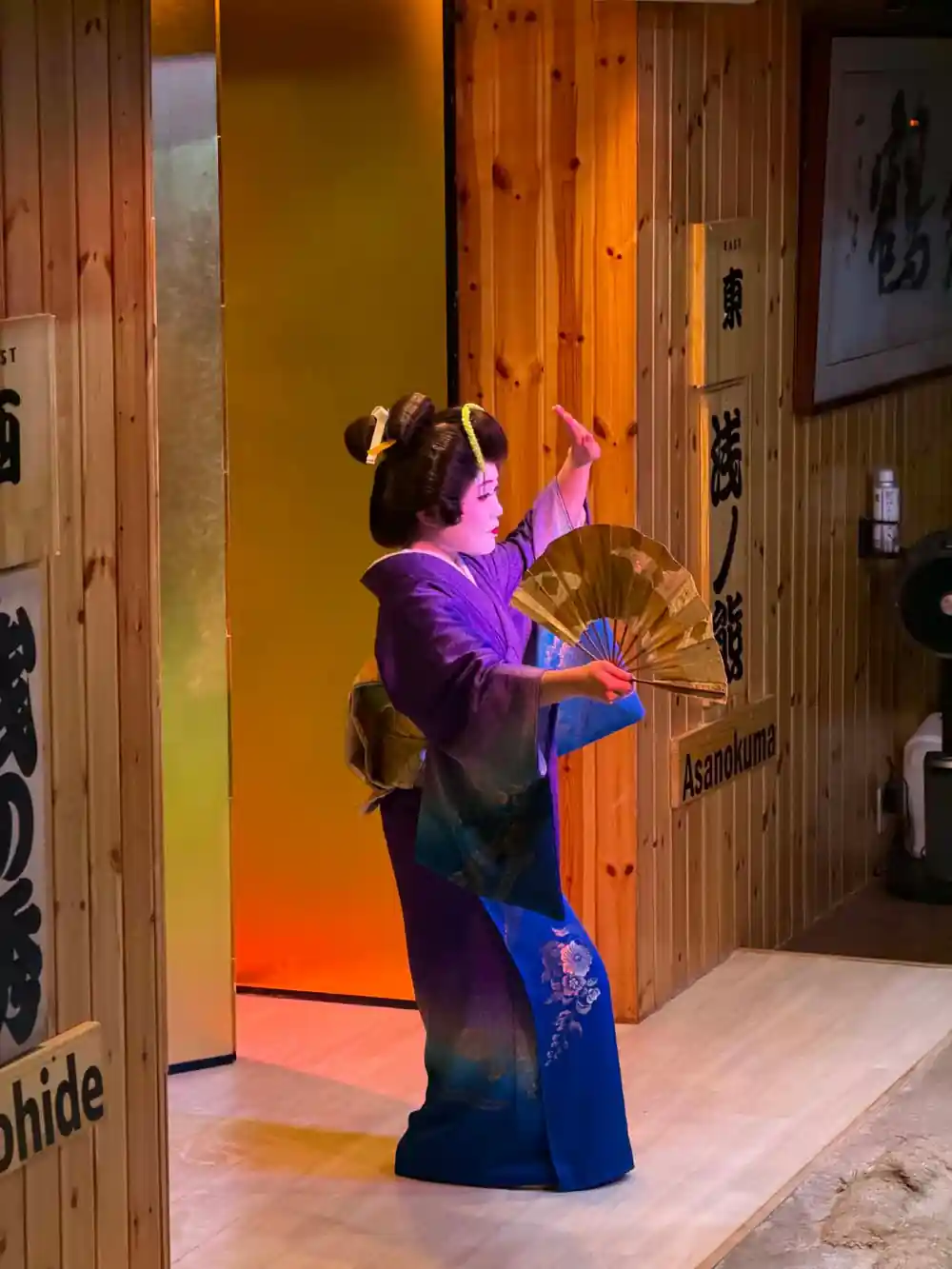
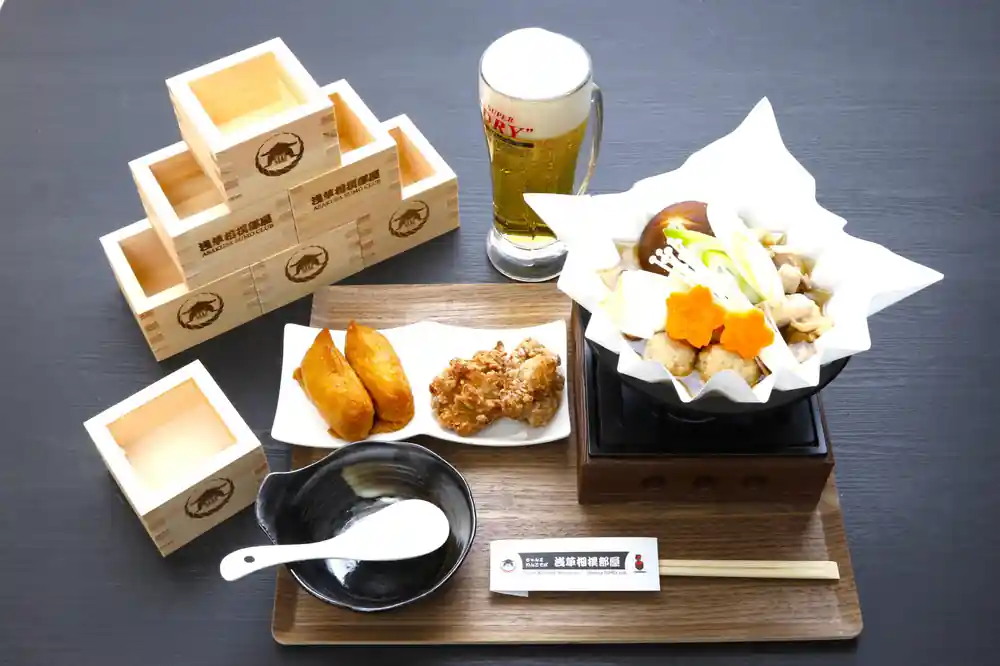
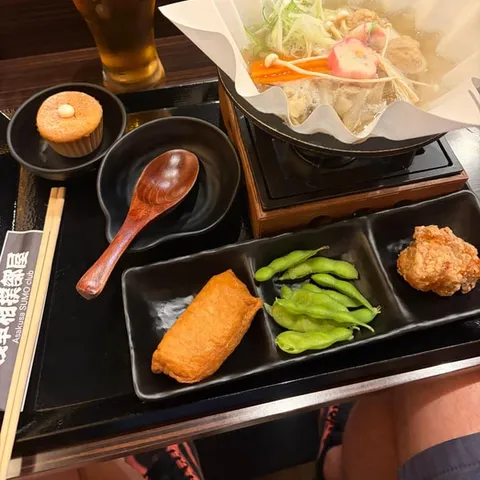
Those two hours cover both the ring and the table. Chicken hot pot arrives as a shared pot, and a geisha performance is part of the evening. A geisha's role is to make guests feel at ease with conversation, drinking games and dance performances[7], so the room tends to loosen up as the meal goes on. It suits anyone who wants the whole night in one booking rather than a separate dinner after a show, and the small group setting means you are never far from what is happening on the ring.
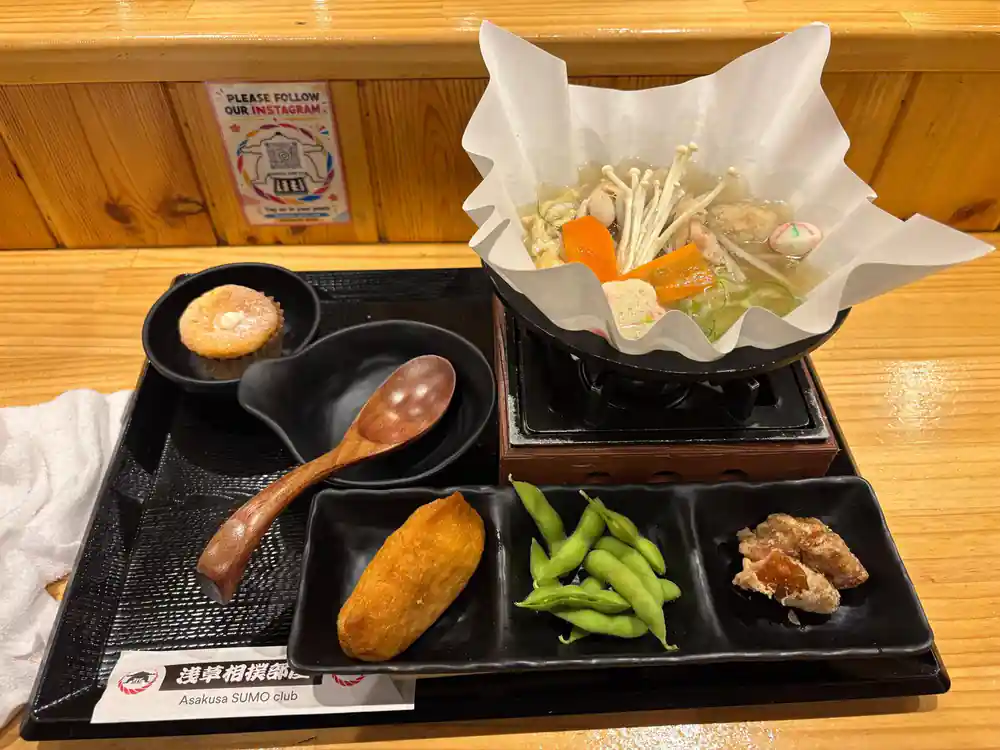
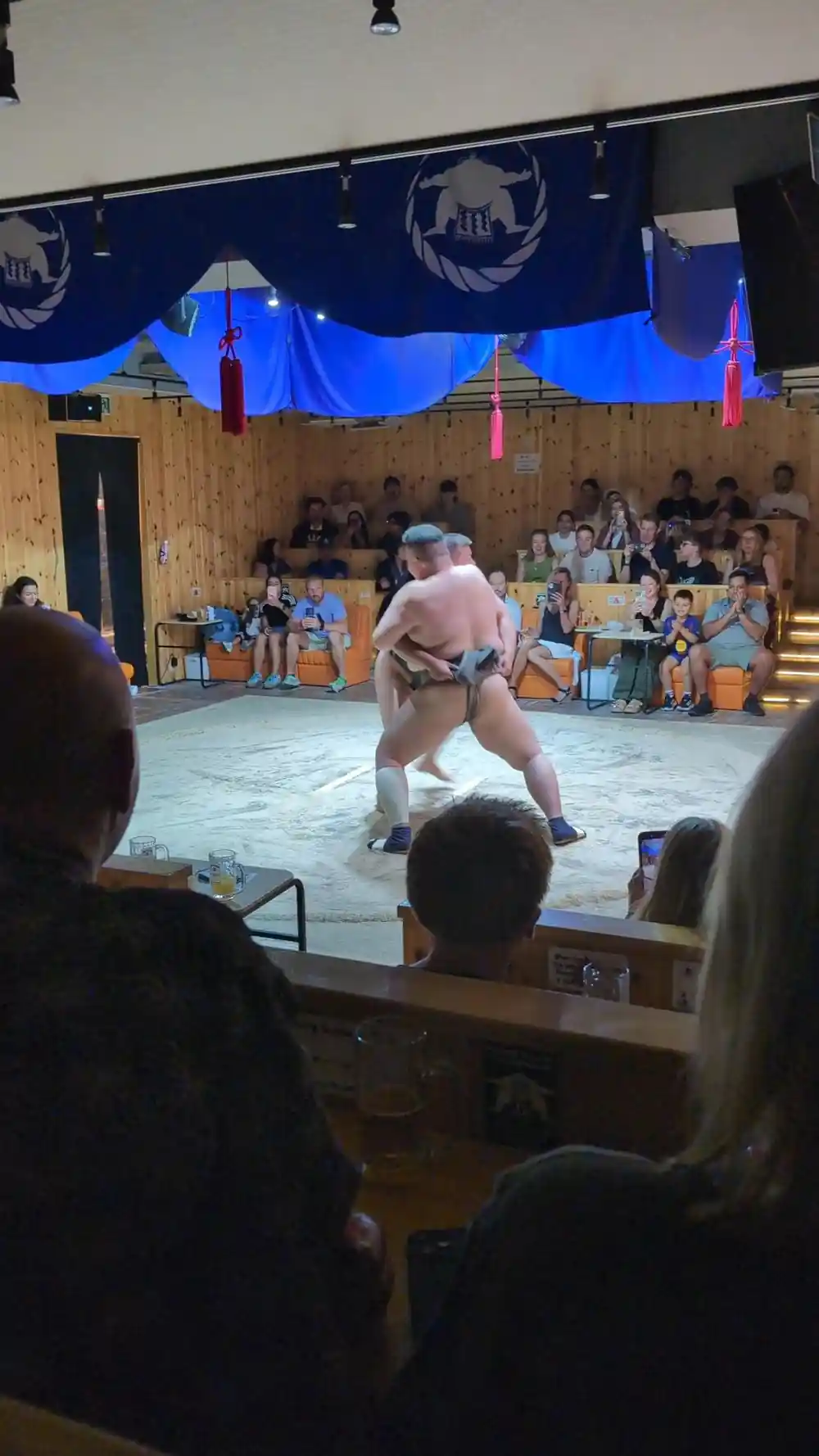
Wrestlers face off in the ring while the audience watches from cushions on the floor.
Morning practice or an evening show
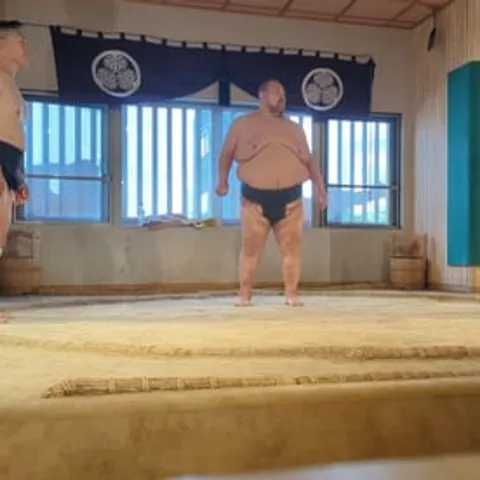
If you want the sport rather than the show, book a practice viewing. Morning practice typically begins between 5:00 and 7:30 AM and continues for 2-4 hours[5], and the exact start time varies by stable and season[5]. That means leaving the hotel while it is still dark and then sitting still and quiet for a long stretch. Photography rules are strict, phones go away and you do not get up and leave halfway through. In return you watch the real work: heavy repetitions, coaching, and wrestlers pushing each other with nobody to perform for.
Evening shows ask far less of you. There is a seat, a meal, a translation and no obligation to stay silent. For families, the workshop option is listed from US$62[3], runs 2 hours[3] and is rated 4.90 from 430 reviews[3]. It is wheelchair accessible[3] and has an instructor who speaks English and Japanese[3]. For a shorter night out, a Ginza show with a live performance and photo experience is listed from US$61[2] and rated 4.57 from 1,459 reviews[2], while a luxury show with Japanese cuisine and a drink is listed from US$102[4].
What it costs and how to read the reviews
Sorting through Tokyo sumo experience reviews is easier once you know what the numbers mean. These ratings come from travellers who booked the same product, and the review count matters as much as the score. A 4.79 from 8,004 reviews[1] is a very different signal from a 4.90 from 430 reviews[3], even though the second score is higher. Read the most recent comments for the practical details: how long the queue was, whether the food arrived hot, and whether the host was easy to follow in English.
Prices for Tokyo shows sit in the middle range of a night out in the city. A Ginza show with a live performance and a photo experience is listed from US$61[2] and a Shinjuku show with a photo from US$65[8]. The show booked from this site is listed from US$102[1], the same from-price as a luxury Tokyo show with Japanese cuisine and a drink[4], and a family workshop with lunch is listed from US$62[3]. Whether a Tokyo sumo show is worth it usually comes down to the meal: pay for it in the ticket, or pay less and eat somewhere else afterwards.
Morning practice tours sit in a similar range. One Tokyo stable visit with a specialist is listed from US$90[9], another with an English guide from US$95[10], and a visit led by sumo journalists from US$95[11]. These are viewing products rather than shows, and the differences between them are mostly about how long you stay, how close you get and whether a guide explains what you are watching.
from US$102
The from-price of the sumo show booked from this site, which pairs the ring with chicken hot pot and a geisha performance.
How a sumo bout actually works
Professional sumo is divided into six divisions, with Makuuchi as the top division containing 42 wrestlers[12]. Under the Nihon Sumo Kyokai there are 47 stables training nearly 700 wrestlers[13], so the men you see on a Tokyo ring are the survivors of a very deep field. They are also enormous. A study of 25 makuuchi wrestlers recorded an average weight of 161.2 kg and an average height of 186.3 cm[14]. Standing a few metres from that is a different experience from watching it on a screen.
The ring is smaller than most first-timers expect. The sumo dohyō has a diameter of 14.93 feet (4.55 m)[15], and that compact circle is why a single misplaced step can end a bout. In sumo there are 82 kimarite, or match winning techniques, and 5 non-techniques or ways to lose, all defined by the Japan Sumo Association[16], so very little about those few seconds is accidental. Six Grand Sumo Tournaments are held each year, in Tokyo in January, May and September, in Osaka in March, in Nagoya in July and in Fukuoka in November[17]. Tokyo's own arena, the Kokugikan in Ryogoku, has a spectator capacity of up to 10,000[18].
Booking, seats and accessibility
Book before you travel if your dates are fixed, and favour listings that let you reserve now and pay later[1]. The show booked from this site also comes with free cancellation up to 24 hours in advance for a full refund[1], which leaves room to change plans. Similar terms appear on other Tokyo listings[4][8]. Not every sumo product works that way, so read the cancellation line before you pay.
Access matters more than people expect at sumo venues, because much of the seating is on floor cushions. The show booked from this site is wheelchair accessible[1], and so is the family workshop[3]. At the Ryogoku Kokugikan sumo arena in Sumida City, Tokyo, which has a spectator capacity of up to 10,000[18], a wheelchair seat costs 8,000 yen and is for two people, a wheelchair user and one accompanying person[19]. Seats close to the ring are not automatically step-free, so if anyone in your group needs level access, sort it out before the night rather than at the door.
A simple plan for your sumo evening
Eat light at lunchtime, because a chanko pot is a serious meal. Wear clothes you can sit on the floor in, and bring socks, since shoes come off in many Japanese seating areas. Arrive with time to find the building, as Tokyo addresses are organised by block rather than by street and a venue that looks close on a map can take a while to reach on foot. If you have booked a morning practice, plan a slow afternoon, because the early start catches up with most people by lunch.
Keep the camera ready but your expectations realistic. The best pictures usually come during the demonstration and the photo session rather than mid-bout, when the wrestlers are a blur. Photo elements are part of the Ginza and Shinjuku listings[2][8]. If you want the full evening in one go, the show booked from this site bundles the ring, the chicken hot pot and the geisha performance into 2 hours[1], which still leaves the rest of the night free.
How long each Tokyo sumo tour lasts
Durations in hours as listed on these GetYourGuide tours:[1],[4],[3],[2],[8].
What each Tokyo sumo tour costs
From-prices per person in US dollars, from these GetYourGuide listings:[1],[4],[3],[2],[8]. Child rates are not listed.
When to book and when to go
Plan your Tokyo sumo night
Pick show or practice
Evening shows are seated entertainment with a meal. Morning practice is a quiet stable visit, typically starting between 5:00 and 7:30 AM[5].
Match the meal to the ticket
Chicken hot pot and a geisha performance come with some listings, others include Japanese cuisine, a drink, or lunch for families.
Book with free cancellation
The show booked from this site offers free cancellation up to 24 hours in advance for a full refund[1].
Check the starting time
Starting times vary, so check availability on the listing before you build the rest of your day around it[1].
Turn your phone to silent
Photos are welcome at the shows, but flashes and ringtones disrupt a working training stable and the people sitting near you.
See the Tokyo sumo show with chicken hot pot and geisha
from US$102Reserve now & pay later