Worth remembering
- Runs 2 hours from US$102, rated 4.79 from 8,004 reviews, small group available and wheelchair accessible.[1]
- The Ginza sumo show runs 1.5 hours from US$61 and is rated 4.57 from 1,459 reviews.[2]
- The family sumo workshop with lunch runs 2 hours from US$62, rated 4.90 from 430 reviews, wheelchair accessible.[3]
- Six Grand Sumo Tournaments are held each year; Tokyo hosts January, May and September.[4]
- A morning practice tour with a ring-side seat runs 2 hours from US$95, rated 4.81 from 129 reviews.[5]
- Top choice Sumo Show & Geisha from US$102 Duration2 hours[1]Rating4.79 from 8,004 reviews[1]Good to knowSmall group available[1]CancellationCancel up to 24 hours in advance[1] Check availability
- Family Sumo Workshop from US$62 Duration2 hours[3]Rating4.90 from 430 reviews[3]Good to knowSkip the line entry[3]CancellationCancel up to 24 hours in advance[3] See this tour
- Ginza Sumo Show from US$61 Duration1.5 hours[2]Rating4.57 from 1,459 reviews[2]Good to knowWheelchair accessible[2]CancellationCancel up to 24 hours in advance[2] See this tour
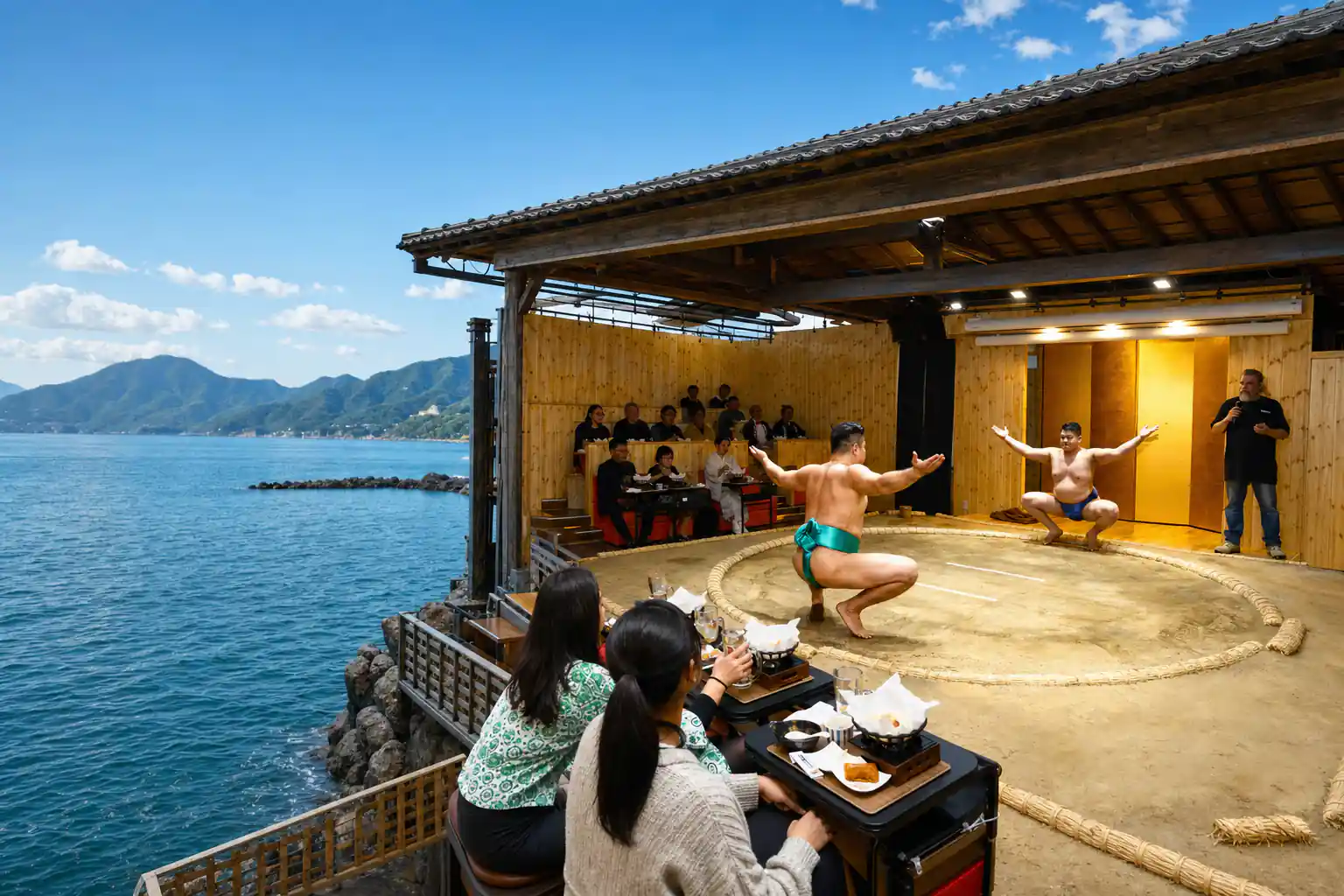
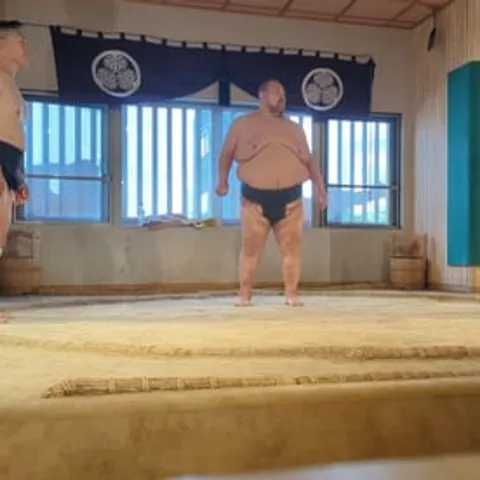
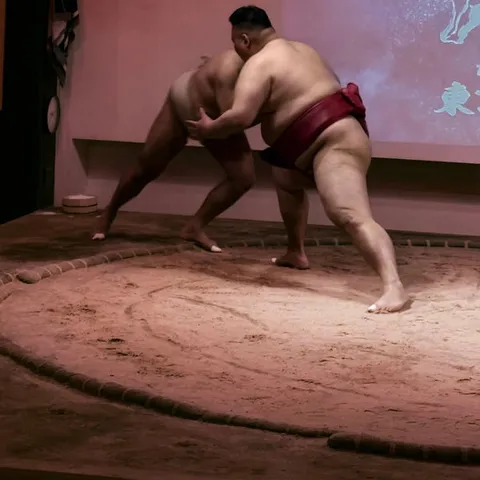
In sumo, there are 82 kimarite, or match winning techniques and 5 non-techniques or way to lose, all defined by Japan Sumo Association.
Which Tokyo Sumo Experience Fits You
Booking basics
- Prices are from-prices, so open the listing for your date and group size
- Free cancellation is common on Tokyo sumo listings, but check the cut-off on your own booking
- A wheelchair seat costs 8,000 yen and is for two people[6]
- Small group places are listed on several of the Tokyo sumo shows
On the day
- Morning practice typically starts between 5:00 and 7:30 AM[7]
- Bring your booking confirmation, and check whether your tour skips the line
- Dress in layers and wear clothes you can sit on the floor in
- Say yes if you are invited into the ring, and let the wrestlers set the pace
Three Ways to See Sumo in Tokyo
Can you see sumo wrestling in Tokyo? Yes, and there are three very different formats to choose between. How to see sumo Tokyo style really comes down to this one decision, and it shapes your whole evening or your whole morning. There is the entertainment show, staged indoors with food and music, close enough that you can hear the slap of skin on skin. There is a tournament day at Ryogoku Kokugikan, where the sport is played for keeps. And there is morning practice at a sumo stable, where you sit quietly at the edge of the training floor and watch wrestlers work. Whichever you choose, you end up closer to the action than the photographs suggest.
The three formats ask different things of you. A show asks only that you turn up and look; a tournament asks for a long afternoon and patience with ceremony; a practice visit asks you to be early and quiet. Six Grand Sumo Tournaments are held each year, in Tokyo in January, May and September, plus Osaka in March, Nagoya in July and Fukuoka in November.[4] Morning practice typically begins between 5:00 and 7:30 AM and continues for 2-4 hours, with the exact start time varying by stable and season.[7] Under the Nihon Sumo Kyokai there are 47 stables training nearly 700 wrestlers.[8] And once the wrestlers are on the clay, bouts last 20-30 seconds.[9]
The Asakusa Entertainment Show: Up Close and Personal
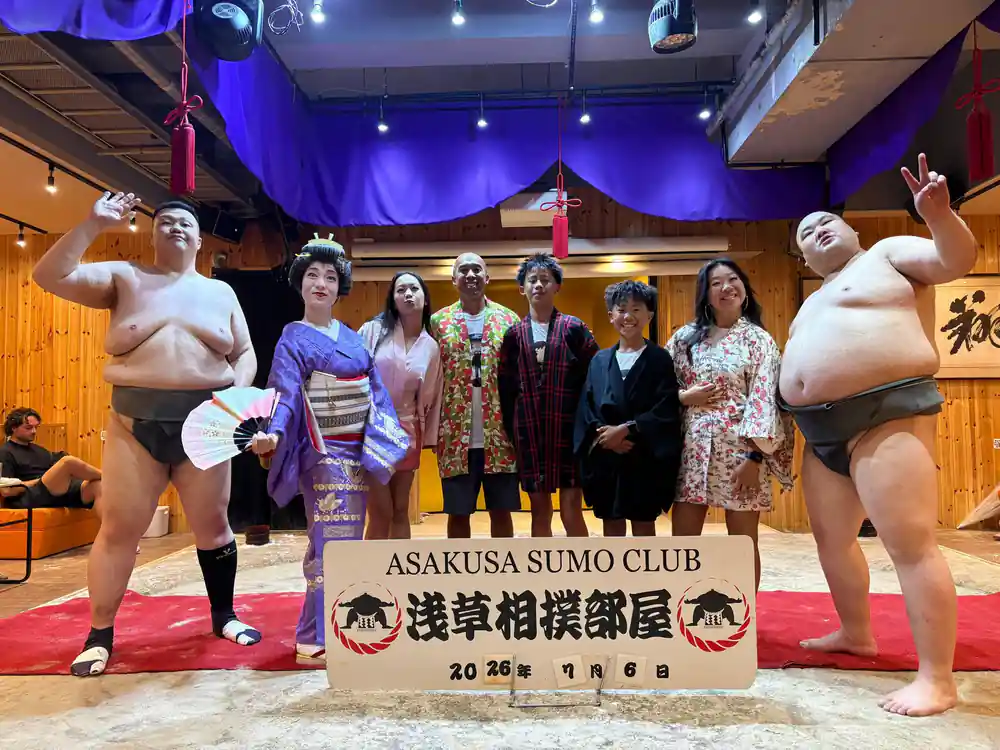
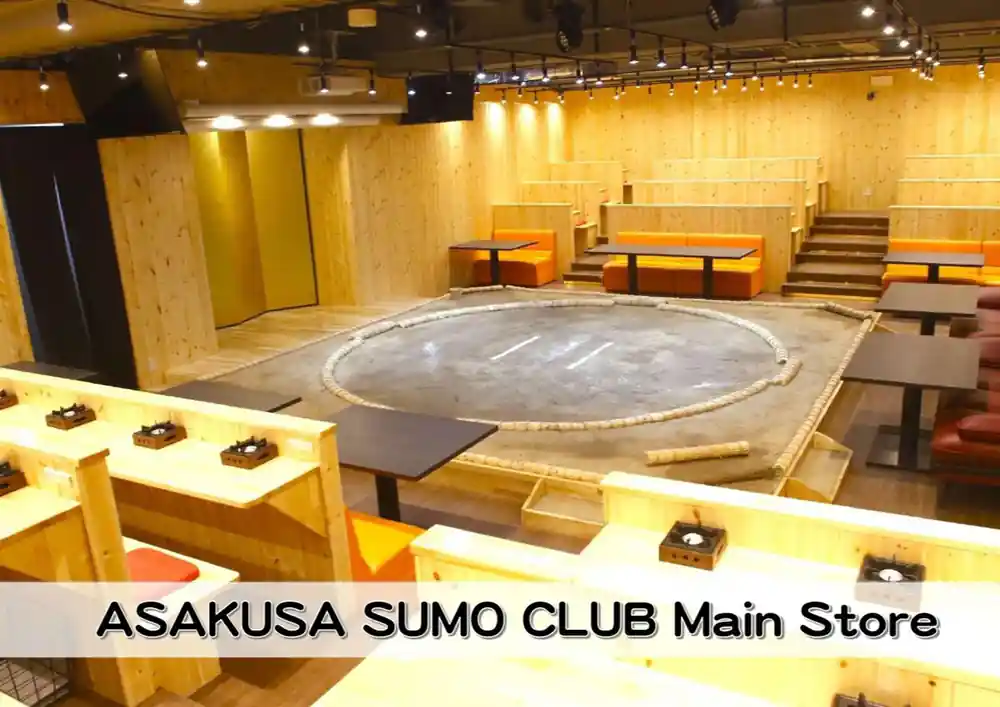
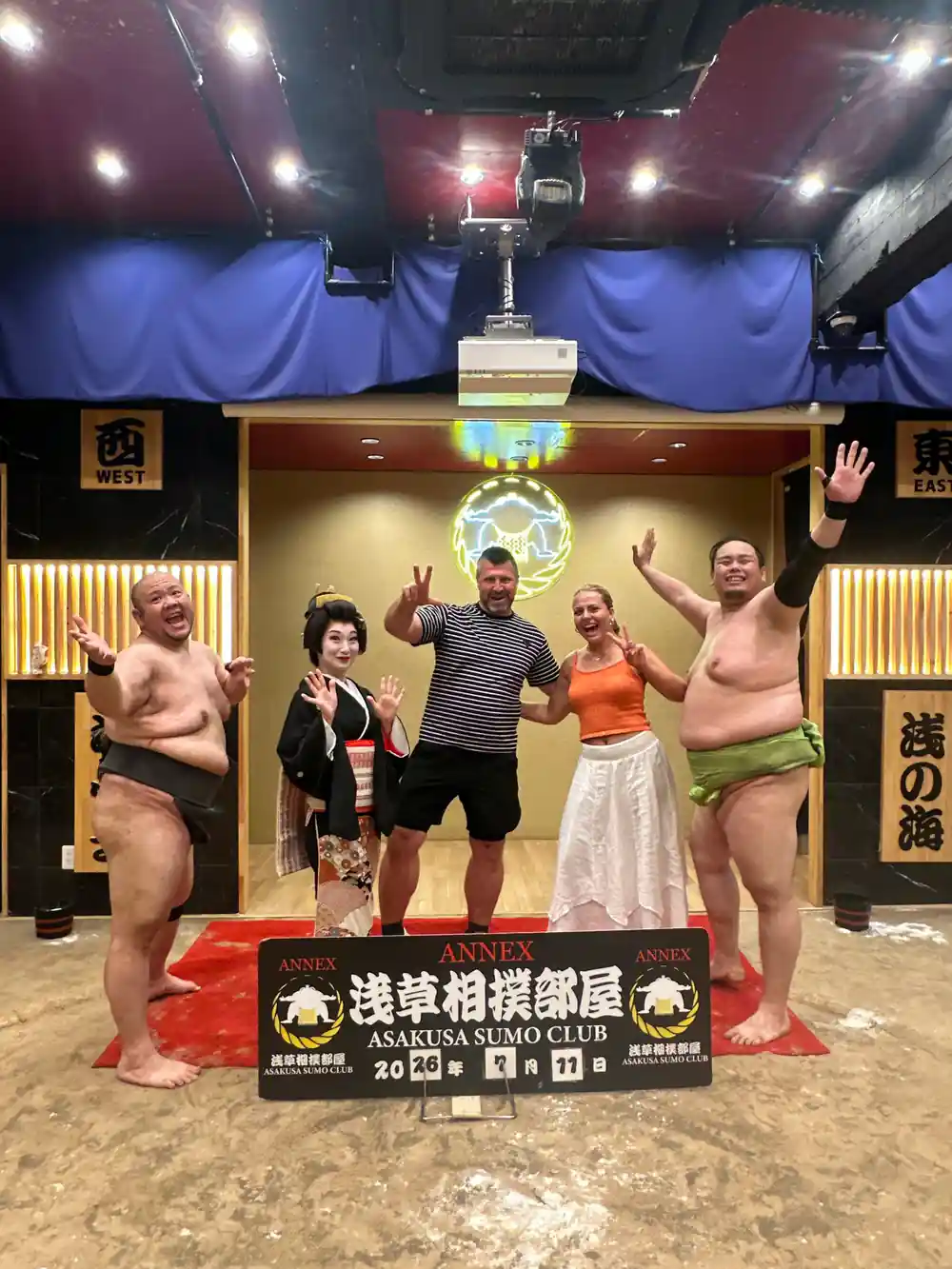
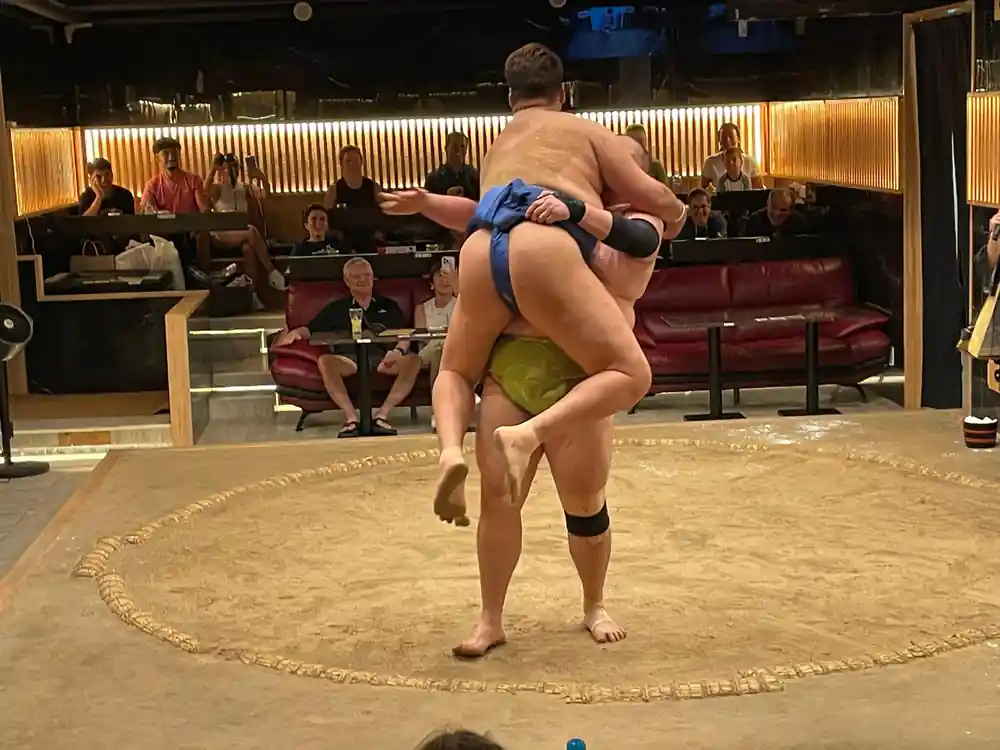
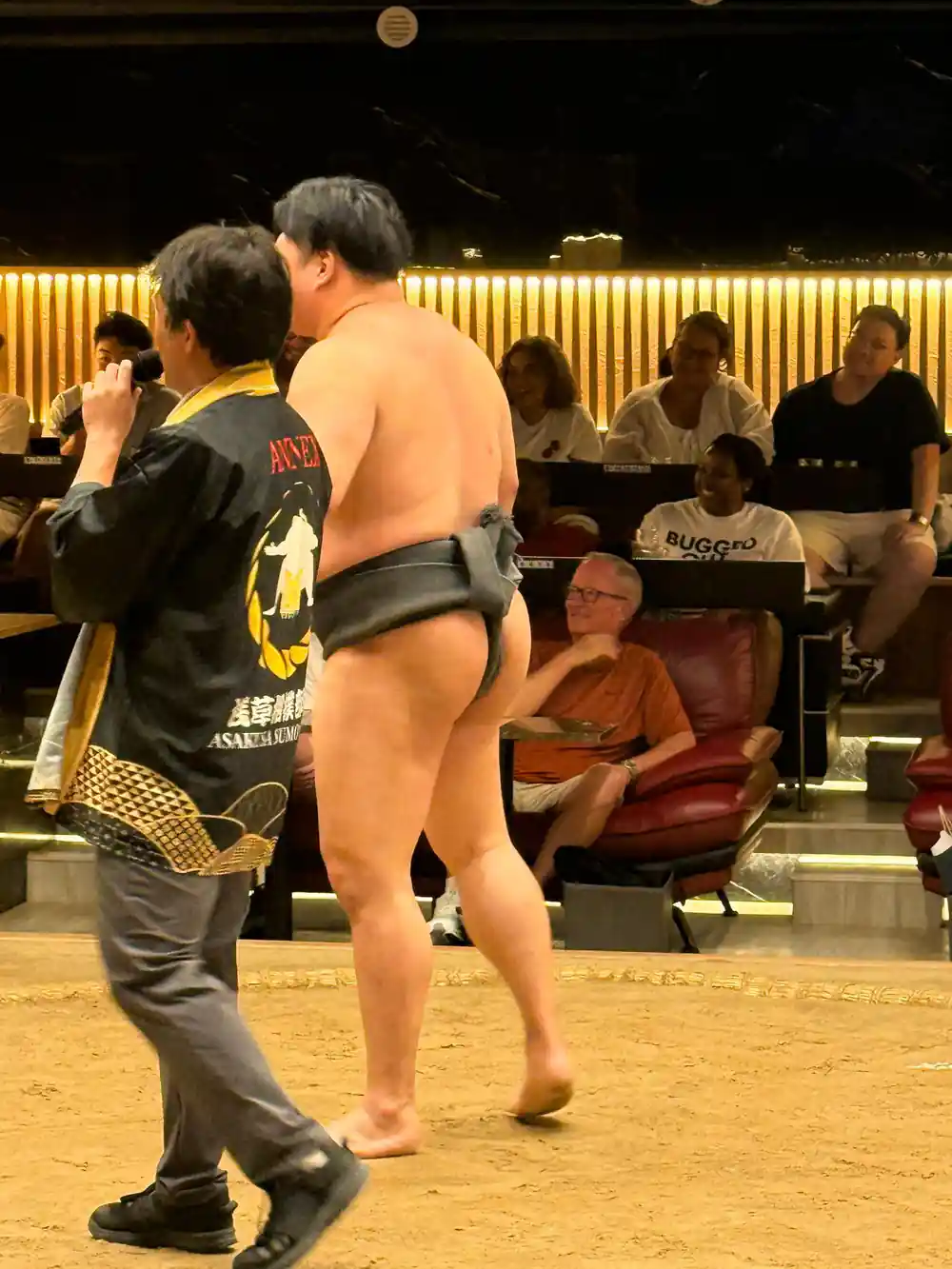
This site's own booking is the Tokyo: Sumo Entertainment Show with Chicken Hot Pot & Geisha. It runs 2 hours from US$102, and it is rated 4.79 from 8,004 reviews.[1] Small group places are available, it is wheelchair accessible, and you can reserve now and pay later, with free cancellation up to 24 hours in advance.[1] The shape of the evening is dinner theatre: wrestlers demonstrate their craft at close range, guests get pulled in for challenges, and the whole thing is paced like a show rather than a match. The storefront signs for the Asakusa Sumo Club show you what to look for on the street.
Other Tokyo shows sit in the same family. A Ginza live performance and photo experience runs 1.5 hours from US$61, rated 4.57 from 1,459 reviews.[2] A Shinjuku show and photo experience runs 1.5 hours from US$65, rated 4.84 from 7,180 reviews, with a live tour guide in English.[10] A family workshop and live wrestling show with lunch runs 2 hours from US$62, rated 4.90 from 430 reviews, wheelchair accessible, with skip the line entry through a separate entrance.[3] A luxury show with Japanese cuisine and a drink runs 2 hours from US$102, rated 4.72 from 920 reviews.[11]
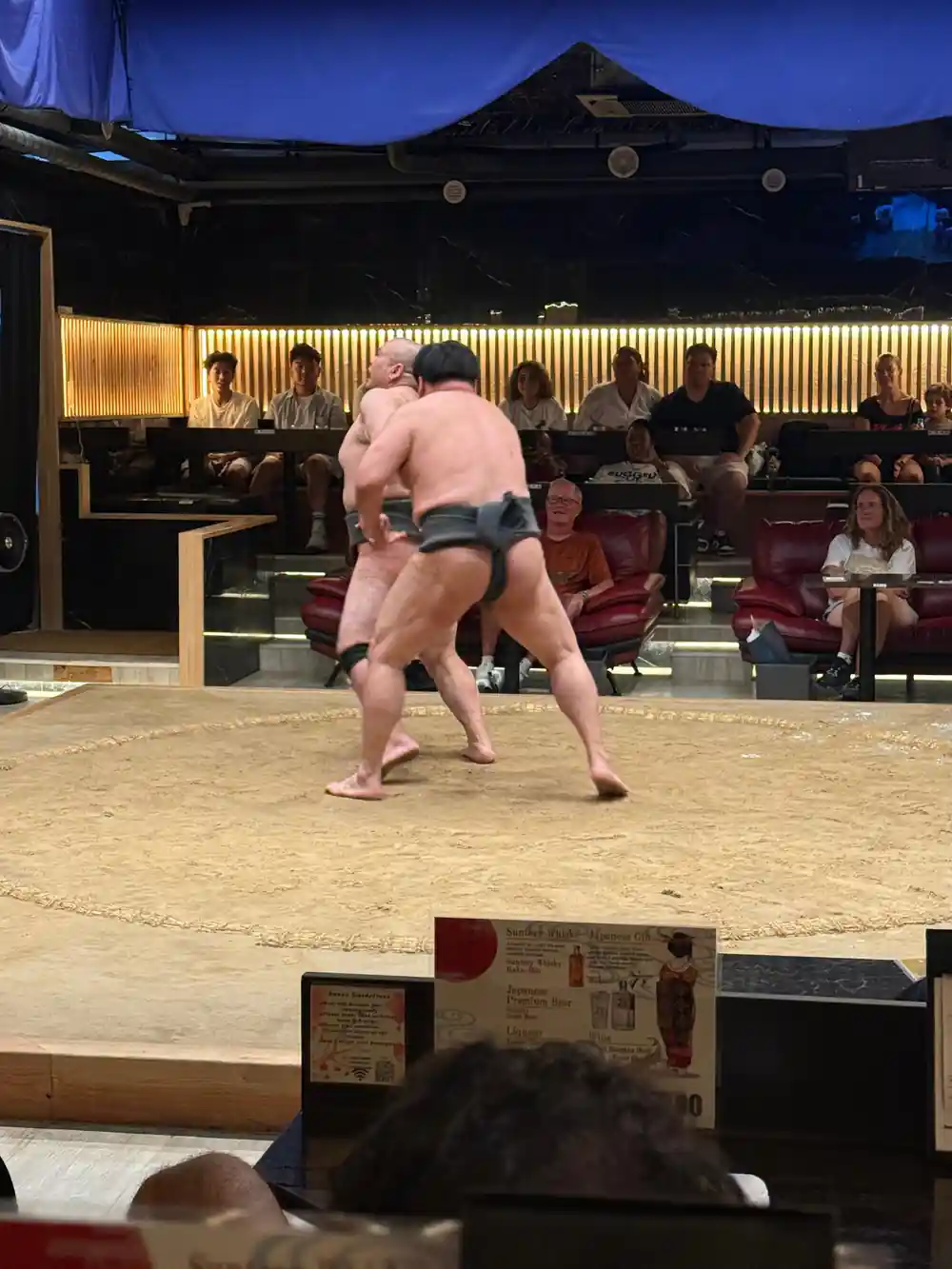
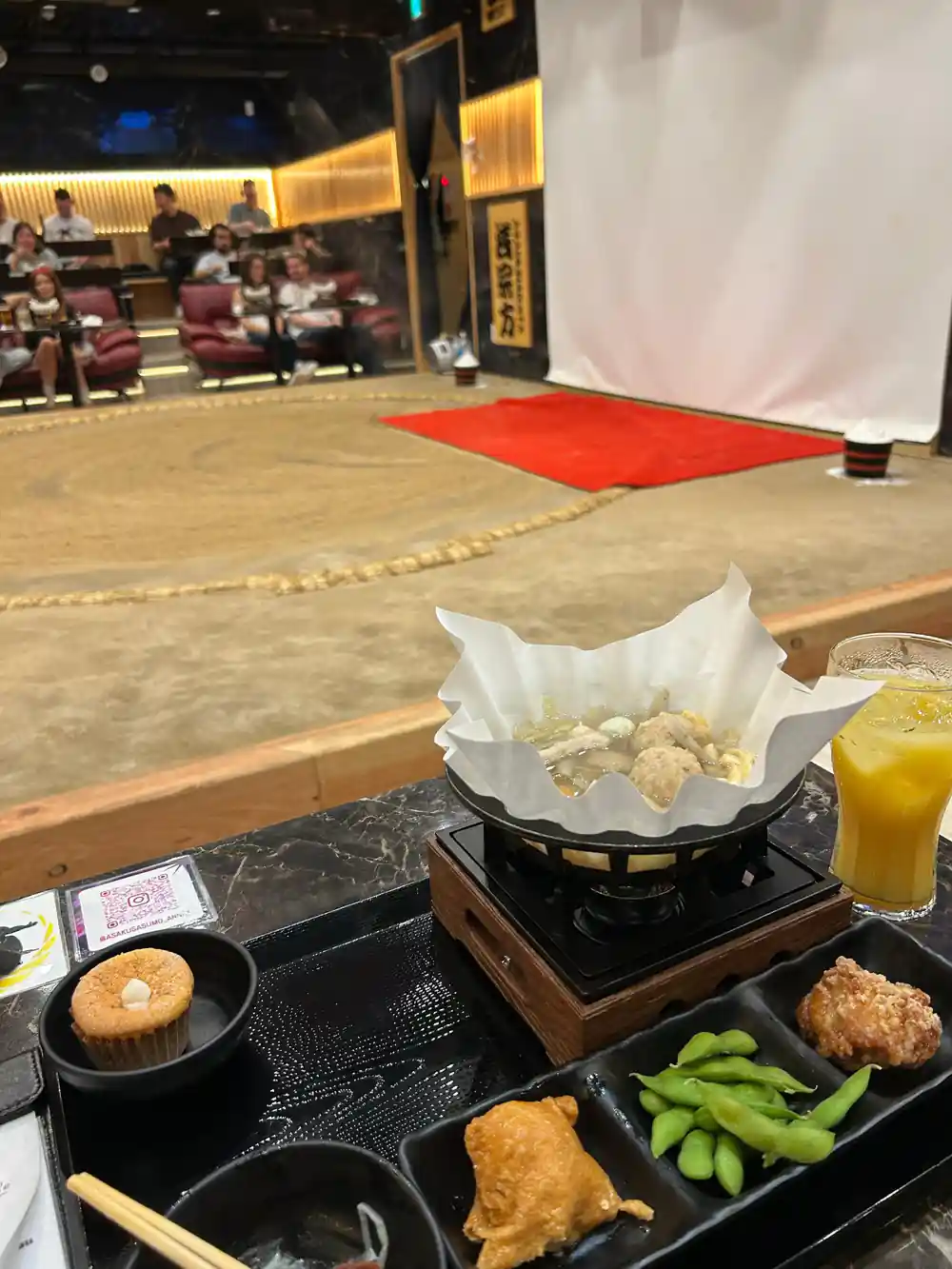
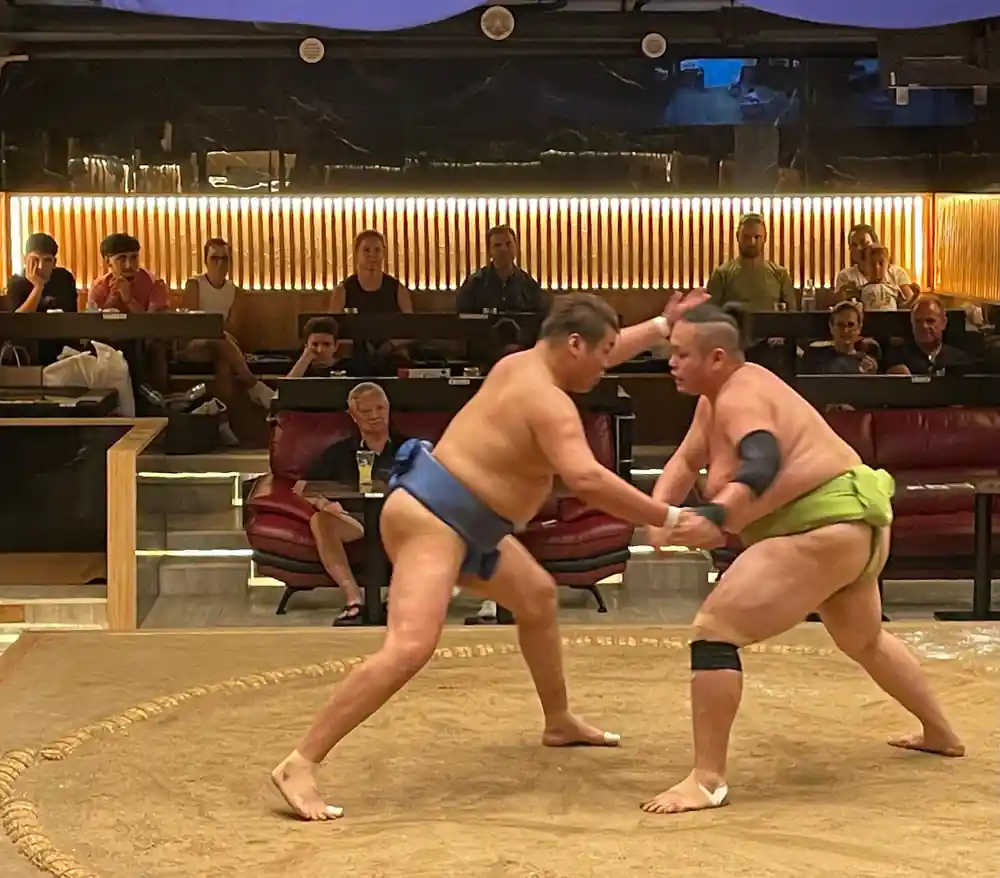
Chanko pots, a clay ring and a small crowd: an evening sumo show in Tokyo.
Ryogoku Kokugikan: The Grand Tournament
Tournament sumo is the real thing. Professional sumo is divided into six divisions, with Makuuchi as the top division containing 42 wrestlers.[12] These are big men. According to Keio University Sports Medicine Research Center research, reported on a sumo experience site, 25 makuuchi wrestlers averaged 161.2 kg in weight and 186.3 cm in height.[13] They fight on a dohyo that has a diameter of 14.93 feet (4.55 m).[14] The setting matters too: Ryogoku Kokugikan in Sumida City, Tokyo has a spectator capacity of up to 10,000.[15] The hall is loud and close, with tiered seating wrapped around the clay.
Tickets are the fiddly part of a tournament day. Seats sell for a specific day, and guided tournament tours are listed only around each tournament, so check what is on sale for your dates. For step-free seating, a wheelchair seat costs 8,000 yen and is for two people, a wheelchair user and one accompanying person.[6]
Tokyo Sumo Stable Morning Practice: Training Behind the Scenes
Morning practice is the opposite of a performance. Wrestlers repeat the same pushes, grips and falls for hours while you sit at the edge of the training room and say very little. Morning practice typically begins between 5:00 and 7:30 AM and continues for 2-4 hours, with the exact start time varying by stable and season.[7] It is also where the sheer size of the athletes lands: the optimal weight for a modern Japanese sumo wrestler is between 400 and 600 pounds, and it is sustained by a daily diet of 20,000 calories.[16]
Several Tokyo operators run these visits. A morning practice tour with a ring-side seat and photoshoot runs 2 hours from US$95, rated 4.81 from 129 reviews, limited to 10 participants and with a live tour guide in English.[5] A professional practice explained by experts runs 3 hours from US$90, rated 4.84 from 77 reviews, with a live tour guide in English and Japanese.[17] A journalist-led practice tour runs 3 hours from US$95, rated 4.89 from 236 reviews, wheelchair accessible, with transfers between Takasago-beya Sumo Stable, Ryogoku Edo NOREN and a finishing point.[18] Find Your Favorite Wrestler at Morning Sumo Practice runs 3 hours from US$95 and is limited to 8 participants.[19]
from US$102
Tokyo: Sumo Entertainment Show with Chicken Hot Pot & Geisha, rated 4.79 from 8,004 reviews.[1]
Duration and Pacing: What to Expect in Real Time
The clock separates the three formats faster than anything else. The show with chicken hot pot and geisha runs 2 hours from US$102.[1] The Ginza show runs 1.5 hours from US$61.[2] The luxury show with cuisine runs 2 hours from US$102.[11] A morning practice tour with a ring-side seat runs 2 hours from US$95.[5] A tournament day is the longest of the three, built around a seat you buy for one date. Whichever you pick, the time you spend seated is the thing to plan around.
Inside those hours the rhythm could hardly be more different. Bouts last 20-30 seconds, so a tournament afternoon is mostly ceremony, salt, crouching, staring and the hush before the charge, punctuated by short bursts of action.[9] A show compresses the same skills into a tidy programme you can follow without knowing a single rule. A practice visit is repetition, and the interesting part is watching how a wrestler resets after each attempt. If you book morning practice, remember that the 5:00 to 7:30 AM range is a start time, so plan your travel the night before.[7]
English Commentary and Understanding What You're Watching
Language support varies more than price does. A Tokyo morning practice tour with a ring-side seat has a live tour guide in English.[5] A Shinjuku show has a live tour guide in English.[10] A family workshop lists an instructor in English and Japanese.[3] A chanko and mochi experience lists an instructor in English and Japanese.[20] A professional practice with experts has a live guide in English and Japanese.[17]
A little vocabulary goes a long way. In sumo there are 82 kimarite, or match winning techniques, and 5 non-techniques or ways to lose, all defined by the Japan Sumo Association.[21] You will not memorise them, but recognising a belt grip or a push out makes a 20 to 30 second bout legible.[9] Shows and guided practice visits are the gentler introduction, with commentary running alongside what you are seeing. At a tournament you mostly read the room, and half the pleasure is the noise when a favourite is pushed towards the edge.
Food, Drink and Meeting the Wrestlers
Chanko nabe, the chicken hot pot, is the dish most associated with sumo, and the show booked from this site is built around it. Tokyo: Sumo Entertainment Show with Chicken Hot Pot & Geisha runs 2 hours from US$102, rated 4.79 from 8,004 reviews.[1] The geisha element is part of the evening rather than the background. A geisha's role is to make guests feel at ease with conversation, drinking games and dance performances.[22] For a longer meal, a Ginza sumo show with an authentic kaiseki dinner runs 2 hours from US$121 and is non-refundable.[23] A luxury show with Japanese cuisine and a drink runs 2 hours from US$102.[11]
Meeting the wrestlers is the other draw. A Tokyo experience that puts you in a mawashi on a real clay ring runs 1.5 hours from US$46 and is wheelchair accessible.[24] A session with a former wrestler and a meal runs 2 hours from US$81.[25] A family workshop with lunch runs 2 hours from US$62, rated 4.90 from 430 reviews, and is wheelchair accessible.[3] Then there is the photo at the edge of the ring, which tends to be the part that ends up on the wall.
How long each Tokyo sumo session runs
Durations are the ones stated on each named GetYourGuide listing.[1][2][5]
Tokyo sumo from-prices in US dollars
All amounts are US dollar from-prices of the named GetYourGuide listings.[1][2][3][11]
Grand Sumo Tournament months
Choose your sumo format
Decide what you want to watch
Real competition, a staged show, or a training session. Each one looks completely different from where you sit.
Check the tournament months
Tokyo hosts Grand Sumo Tournaments in January, May and September, so those are the dates for the top division.[4]
Match it to your day
The booked show runs 2 hours, and a morning practice with experts runs 3 hours.[1][17]
Book before you fly
Tournament dates are fixed, so lock those in first and build the rest of your Tokyo days around them.
Prepare for the room
Shows and practice sessions happen indoors, often with floor seating. Layers and socks help on a long sit.
See the Tokyo sumo show with chicken hot pot and geisha
from US$102Reserve now & pay later