Worth remembering
- The Sumo Entertainment Show with Chicken Hot Pot and Geisha runs 2 hours, with starting times shown when you check availability.[1]
- The Family Sumo Workshop and Live Wrestling Show with Lunch is wheelchair accessible, runs 2 hours and starts from US$62.[2]
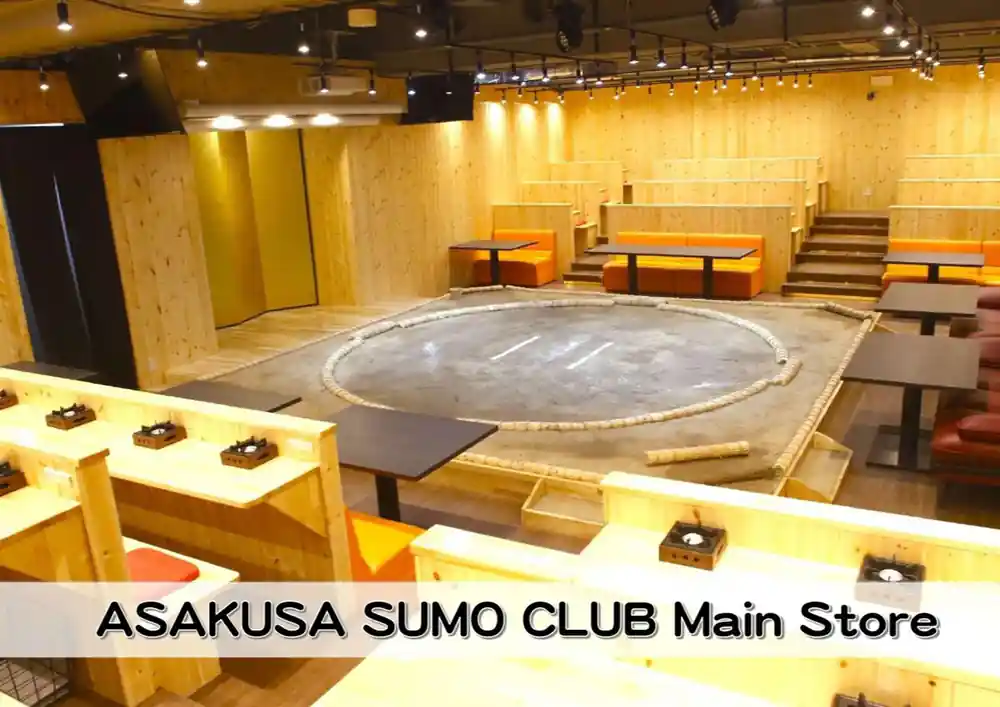
- The dohyo is 14.93 feet (4.55 m) across, and these shows are staged in small rooms where every table sits close to the ring.[3]
- The show is listed as wheelchair accessible, and free cancellation is offered up to 24 hours in advance for a full refund.[1]
- Tokyo sumo show listings start from US$61, US$62 and US$102 depending on the format, the meal and the venue.[1][2][4]
- Top choice Sumo Show & Chicken Hot Pot from US$102 Guest rating4.79 from 8,004 reviews[1]Duration2 hours[1]Wheelchair accessWheelchair accessible[1]Free cancellationUp to 24 hours in advance[1] Check availability
- Luxury Sumo Show & Cuisine from US$102 Guest rating4.72 from 920 reviews[5]Duration2 hours[5]Wheelchair accessNot listed in the detailsFree cancellationUp to 24 hours in advance[5] See this tour
- Family Sumo Workshop from US$62 Guest rating4.90 from 430 reviews[2]Duration2 hours[2]Wheelchair accessWheelchair accessible[2]Free cancellationUp to 24 hours in advance[2] See this tour
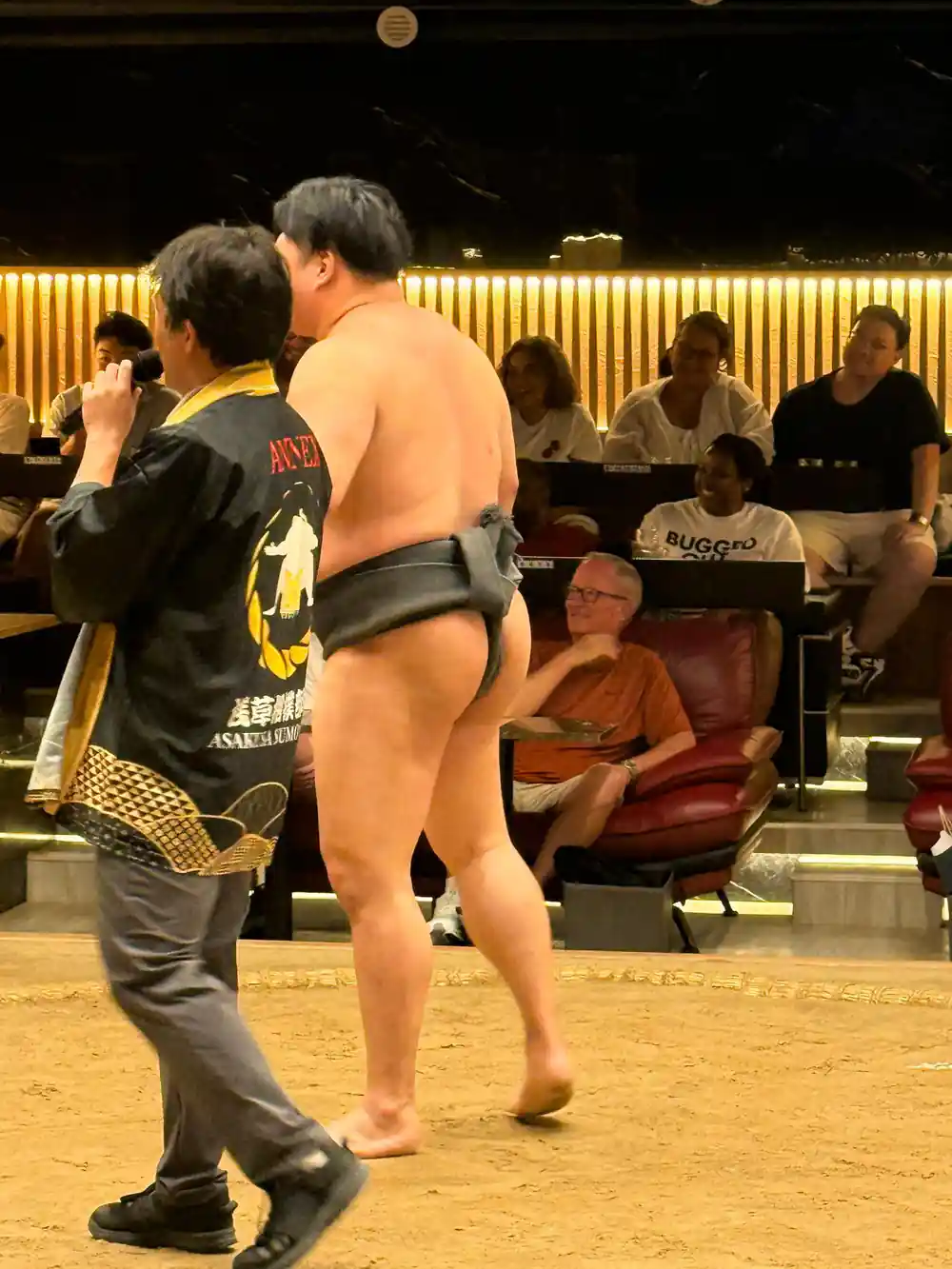
Their role is to make guests feel at ease with conversation, drinking games and dance performances.
Families, kids and accessibility: the verdict
Read before booking
On the day
- Allow extra time to find the venue and take off shoes at the entrance.
- Dress in light layers, because hot chicken pot on the table makes the room warm.
- Keep children close when the room empties at the end of the show.
- Let the hot pot cool before small children eat from the shared table.
Age rules, babies and booking for families
Sumo is a family sport in Japan, and the Tokyo dinner shows are built for mixed tables of adults and children. The Sumo Entertainment Show with Chicken Hot Pot and Geisha runs 2 hours[1], about the length of a film, and it is listed as wheelchair accessible with small group available[1]. Where the listing stays quiet is age. Check the age rules and the starting times shown for your date before you pay, and ask whether a baby needs a seat of their own.
Babies and toddlers are a judgement call rather than a rule. A live show brings drumming, stamping feet, cheering and sudden claps, plus long quiet stretches while two wrestlers stare each other down. A sling or soft carrier is easier than a stroller in a room of low tables and floor cushions, and a seat near the door gives you a fast exit if your baby needs one. Nap and feed times matter more than anything else at this age.
If you want a shorter outing, the Family Sumo Workshop and Live Wrestling Show with Lunch is wheelchair accessible, runs 2 hours and starts from US$62[2], and the Ginza Sumo Show runs 1.5 hours from US$61[4]. Both are small, indoor shows, and both keep children within a few steps of the ring.
Keeping children entertained for two hours
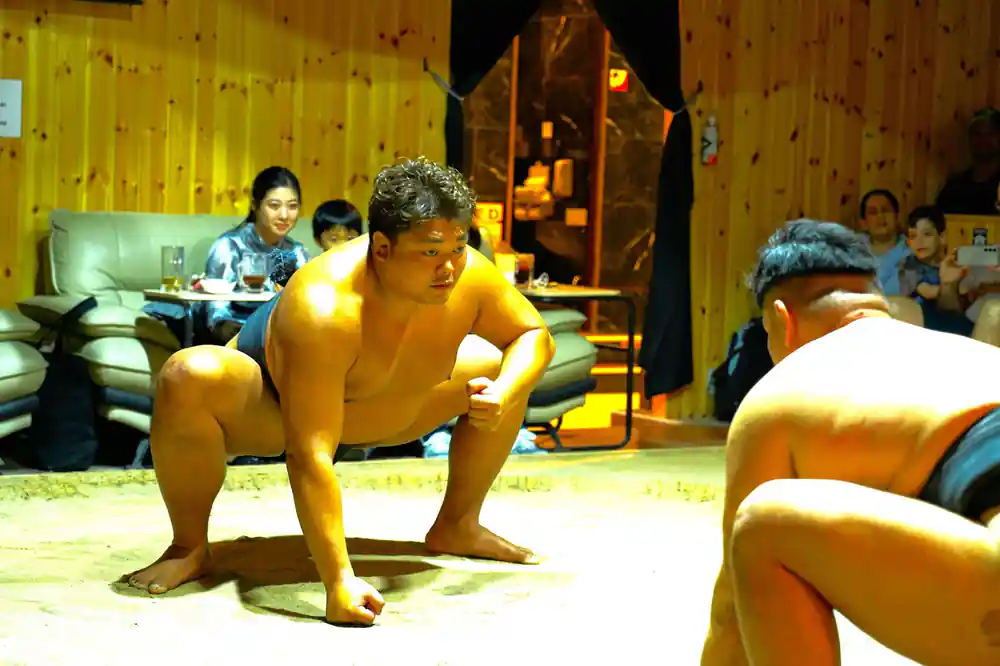
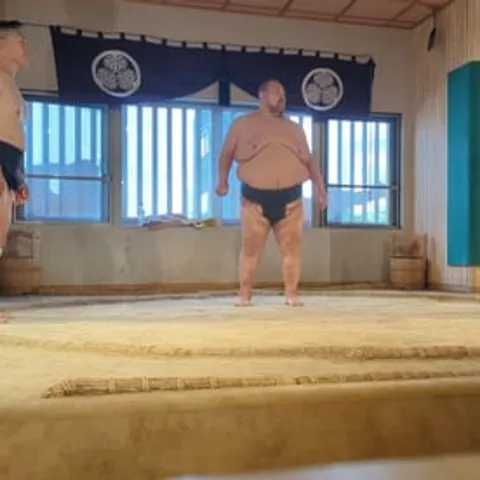
Two hours sounds long for a young child, but a sumo show is not a play with a plot to follow. A bout lasts 20-30 seconds[6]. In practice that means a build-up, a clash, a result and applause, then the whole thing starts again. That rhythm suits children who lose patience with long performances. Between bouts there is drumming, bowing, salt being thrown and the slow crouch of two enormous men facing each other.
Numbers help children stay interested. Wrestlers in the top division are huge: research on 25 makuuchi wrestlers found an average weight of 161.2 kg and an average height of 186.3 cm[7]. Training diets are famous too, with a daily intake of 20,000 calories linked to an optimal weight of between 400 and 600 pounds for a modern Japanese sumo wrestler[8]. Children who like facts and records get plenty to chew on.
Practical kit for families: a charged phone for photos, a small snack for the gaps, and a light layer, since a room with hot pot bubbling on the table gets warm. If your child would rather not sit on the floor, ask for a chair at the edge of the room when you book. Keep expectations loose. A happy half hour works better than a stressed two hours.
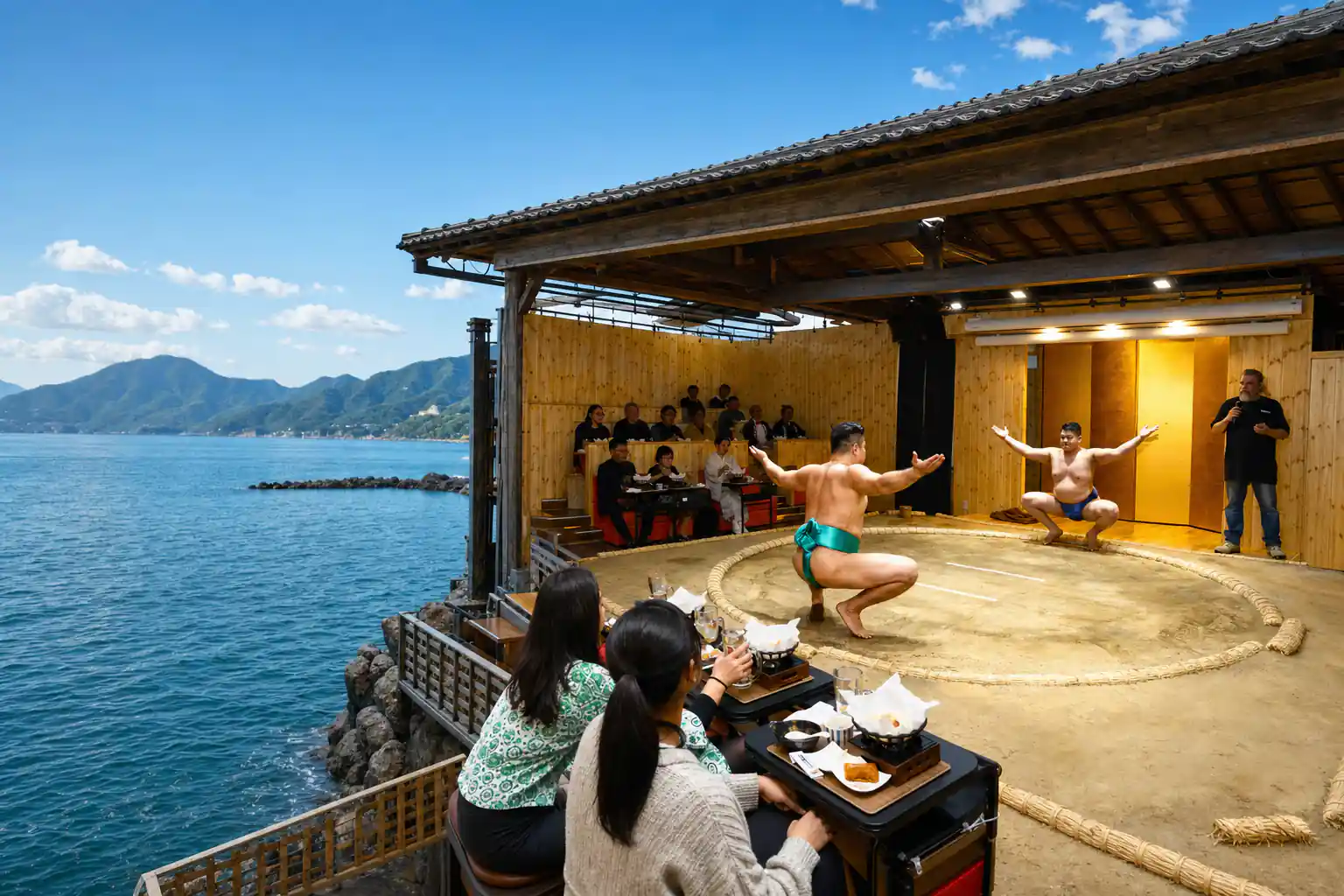
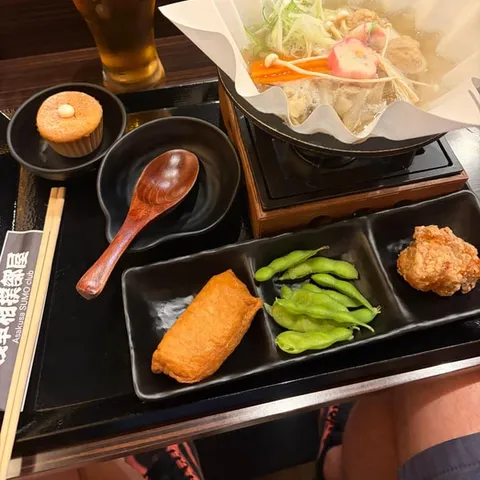
Chicken hot pot, rice and side dishes served in wooden boxes before the show begins.
Seating, floor cushions and where to sit
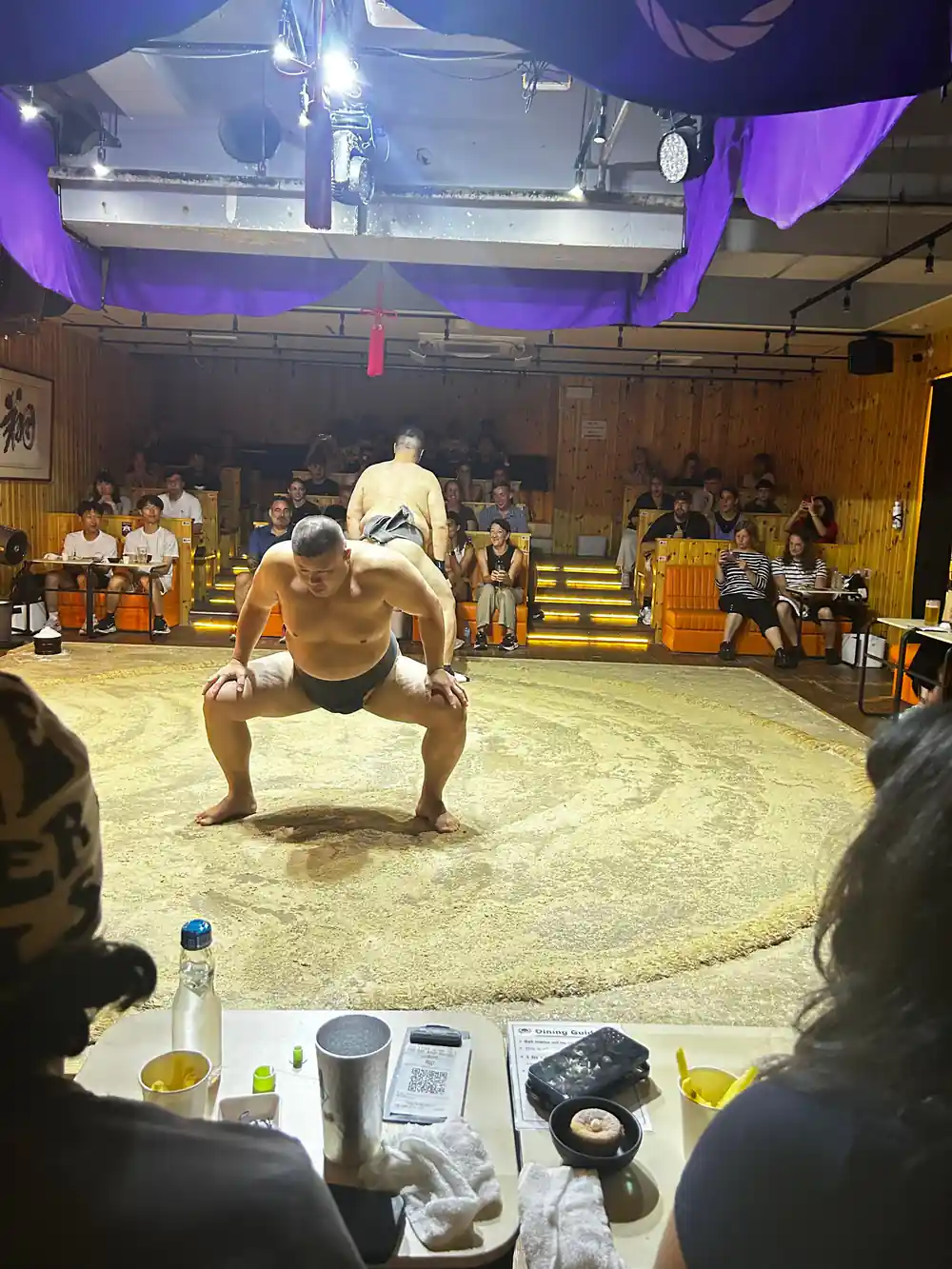
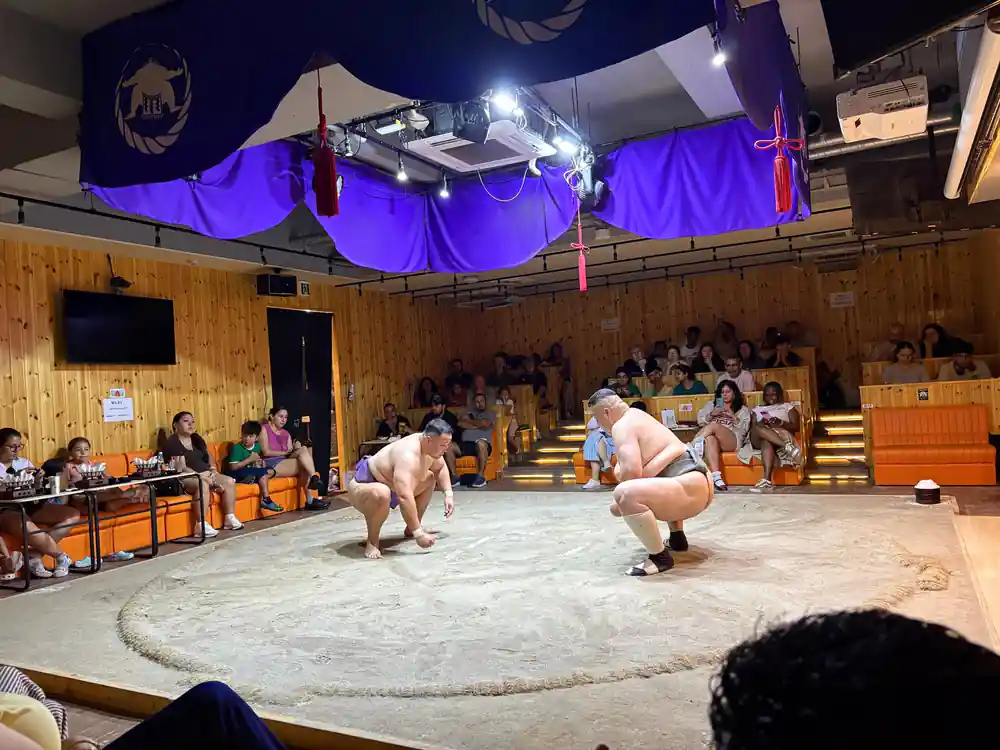
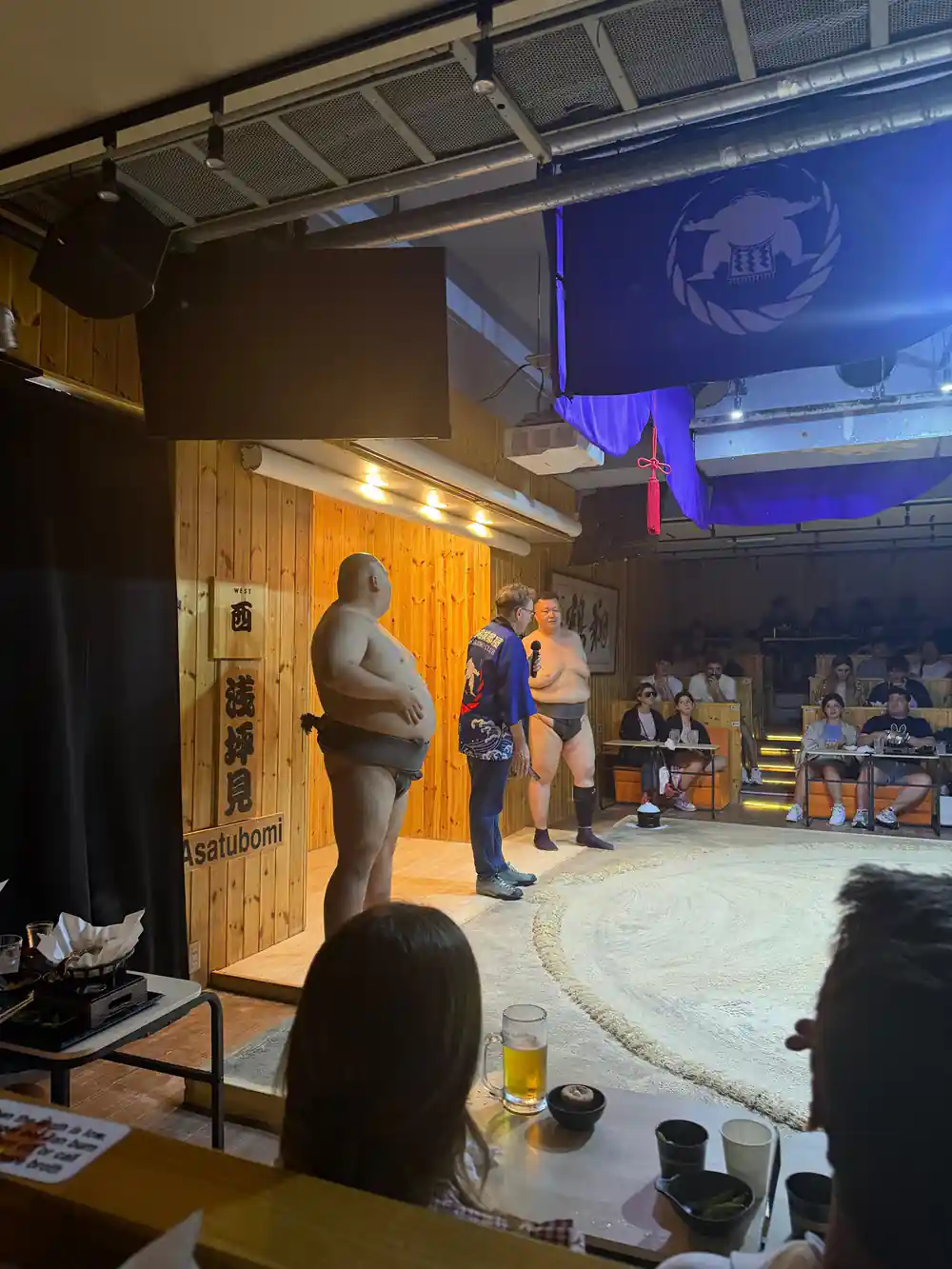
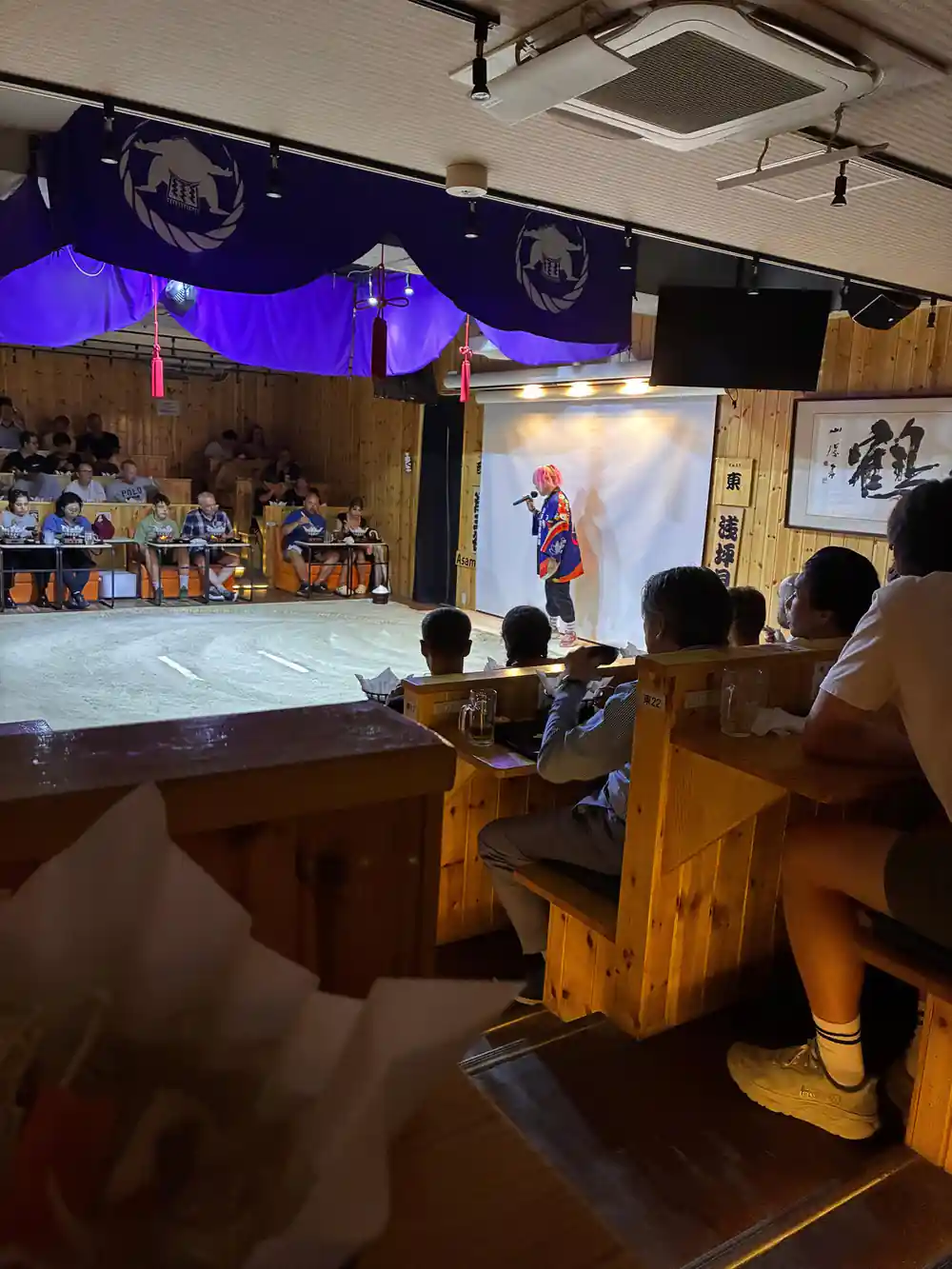
A sumo wrestling Tokyo seating plan rarely looks like the seat map of a theatre. These shows are staged in small halls and dining rooms, with the ring in the middle and tables arranged around it. The dohyo itself is 14.93 feet (4.55 m) across[3]. From the back of a small room you are still only a few steps away from the clay.
Floor seating usually means a cushion, often a zabuton, on tatami or wood, with a low table in front of you and shoes left at the entrance. Sitting cross-legged through a whole show is harder than it looks for adults and easier for most children. If knees, hips or a back are a problem, ask about chairs when you book rather than on the night. Cushion rows are also the easiest place for a child to sprawl.
Front rows put you closest to the stomping, the salt and the collision. Further back you see the whole ring at once, which is often better with a wriggly child, and an aisle seat lets you step out without climbing over other guests. There is usually space to set a small bag beside you rather than on your lap.
Sharing tables and the sumo wrestling crowd
The sumo wrestling crowd at a Tokyo dinner show is a mixed one: travellers, couples, local families and a few serious fans, all circling the same ring. Long low tables are often shared in this style of dining, so you may end up sitting next to strangers, which is usually part of the fun. This listing has small group available[1], which helps if your family needs a calmer corner.
Cheering is part of the evening, and children usually enjoy the clapping and the drumming. Compare that with a tournament day at the Ryogoku Kokugikan, an arena with a spectator capacity of up to 10,000[9], which is a far bigger and more formal occasion. A dinner show is the gentler introduction to the sport for a family.
The Tokyo show is rated 4.79 from 8,004 reviews[1], and the Kyoto version of the same format is rated 4.81 from 1,411 reviews[10]. Keep an eye on small children when the room empties at the end, and hold hands in the street outside. Expect to leave with a few blurry photographs of a wrestler mid stomp.
from US$102
The Sumo Entertainment Show with Chicken Hot Pot and Geisha is rated 4.79 from 8,004 reviews and runs 2 hours.[1]
Wheelchair access and limited mobility
The Sumo Entertainment Show with Chicken Hot Pot and Geisha is listed as wheelchair accessible[1], and the Family Sumo Workshop and the Ginza Sumo Show are wheelchair accessible as well[2][4]. That matters more than it sounds, since many sumo venues and stable visits involve steps, narrow corridors and floor level seating at a low table.
Tournament seating is a separate route: a wheelchair seat costs 8,000 yen and is for two people, a wheelchair user and one accompanying person[11]. Treat that as its own booking if you plan to combine a tournament day with a dinner show later in the trip.
For limited mobility, ask about the entrance, the toilets and floor level seating when you book, and say in your notes whether you need a chair instead of a cushion. Rooms with tatami are not all the same, and a step free route at one venue is not a promise at another. Arriving a little early gives staff time to seat you before the room fills.
Following the show without Japanese or English
Sumo is unusually easy to read without words. Two men crouch, stare, charge, and one goes out or down. Across the sport there are 82 kimarite, or match winning techniques, and 5 non-techniques or ways to lose, all defined by Japan Sumo Association[12]. The referee points, the crowd reacts, and the result is obvious even when the announcement is not.
Geisha entertainment is part of this show's name, and a geisha's role is to make guests feel at ease with conversation, drinking games and dance performances[13]. A drinking game and a short dance cross a language gap quickly, and the clapping and counting need no translation at all. Children follow the rhythm of the room long before they follow any explanation.
Learn one thing before you go and the evening becomes richer. Professional sumo is divided into six divisions, and the top division, Makuuchi, includes the top 42 wrestlers[14]. Under the Nihon Sumo Kyokai there are 47 stables training nearly 700 wrestlers[15]. Historians agree that the origins of sumo date back 2,000 years, though it did not really flourish as a spectator sport until the early 1600s[16].
Noise levels and atmosphere for toddlers
Expect drums, wooden claps, stamping feet and a room full of cheering, then sudden quiet while two wrestlers stare each other down. A toddler who dislikes sudden noise may find the first clash startling, and a toddler who loves a crowd will be delighted. Sitting near a door helps if you need to step out, and ear defenders are worth packing for a noise sensitive child.
The show runs 2 hours[1], which is short enough to plan around a nap. Aim to feed your children during the meal rather than before it, keep hot chicken pot and small hands apart, and let portions cool at the edge of the table. A quick exit after the last bout usually beats a slow goodbye in a crowded room.
Morning practice is a different kind of outing. Asageiko typically starts between 5:00 and 7:30 AM and lasts 2-4 hours, with the exact start time varying by stable and season[17]. That is a pre-dawn trip, and it suits older children, early risers and anyone who wants to watch the sport rather than a show. With a toddler in the group, an evening dinner show is usually the easier plan.
How long the Tokyo sumo shows run
Durations in hours as listed on GetYourGuide, from[1],[5],[2] and[4].
From-prices for Tokyo sumo shows
US dollar from-prices of four Tokyo sumo show listings.[1][2][4][5]
When to book the Tokyo sumo show
How to plan the visit
Pick a date
Open the listing and look at the starting times shown for your date, then choose one that leaves room for dinner and an early night.
Read the age rules
Check the age rules and whether a baby needs a seat of their own before you pay, and ask the operator if anything is unclear.
Choose your seats
Front cushions for the closest view, back or aisle seats for a wriggly child. Ask for a chair if floor sitting is hard for anyone.
Sort out access
If you use a wheelchair or need step free access, message the operator before booking and describe what you need at the venue.
Book and set reminders
Reserve your places, save the meeting point, and aim to arrive a little before the start so nobody in the family is rushed.
Book the Tokyo sumo show that suits your family
from US$102Reserve now & pay later