Worth remembering
- Tokyo: Sumo Entertainment Show with Chicken Hot Pot & Geisha. 2 hours, from US$102, rated 4.79 from 8,004 reviews.[1]
- Look for listings that say small group available or name a participant cap, from 10 people down to 8.[2][3]
- A Ginza training session with a former top-division wrestler starts from US$48; a Ginza live performance with photos starts from US$61.[4][5]
- Practice at a real stable typically begins between 5:00 and 7:30 AM and lasts 2-4 hours.[6]
- The show booked from this site offers reserve now and pay later, plus free cancellation up to 24 hours in advance.[1]
- Top choice Sumo show with hot pot from US$102 Length2 hours[1]Rating4.79 from 8,004 reviews[1]AccessWheelchair accessible[1]CancellationFree cancellation up to 24 hours[1] Check availability
- Luxury sumo and cuisine from US$102 Length2 hours[7]Rating4.72 from 920 reviews[7]AccessNot stated on the listingCancellationFree cancellation up to 24 hours[7] See this tour
- Family sumo workshop from US$62 Length2 hours[8]Rating4.90 from 430 reviews[8]AccessWheelchair accessible[8]CancellationFree cancellation up to 24 hours[8] See this tour
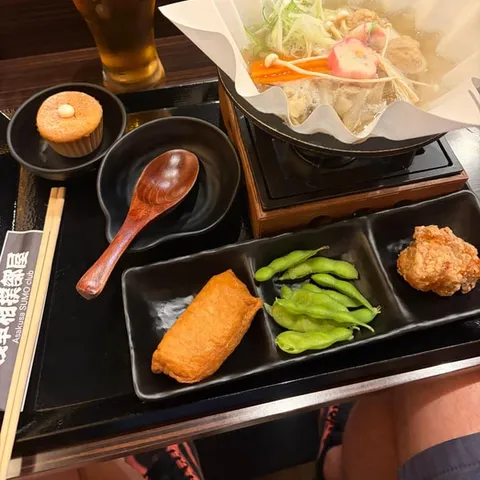
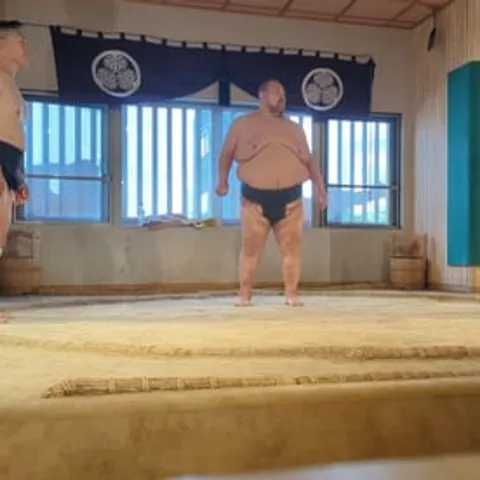
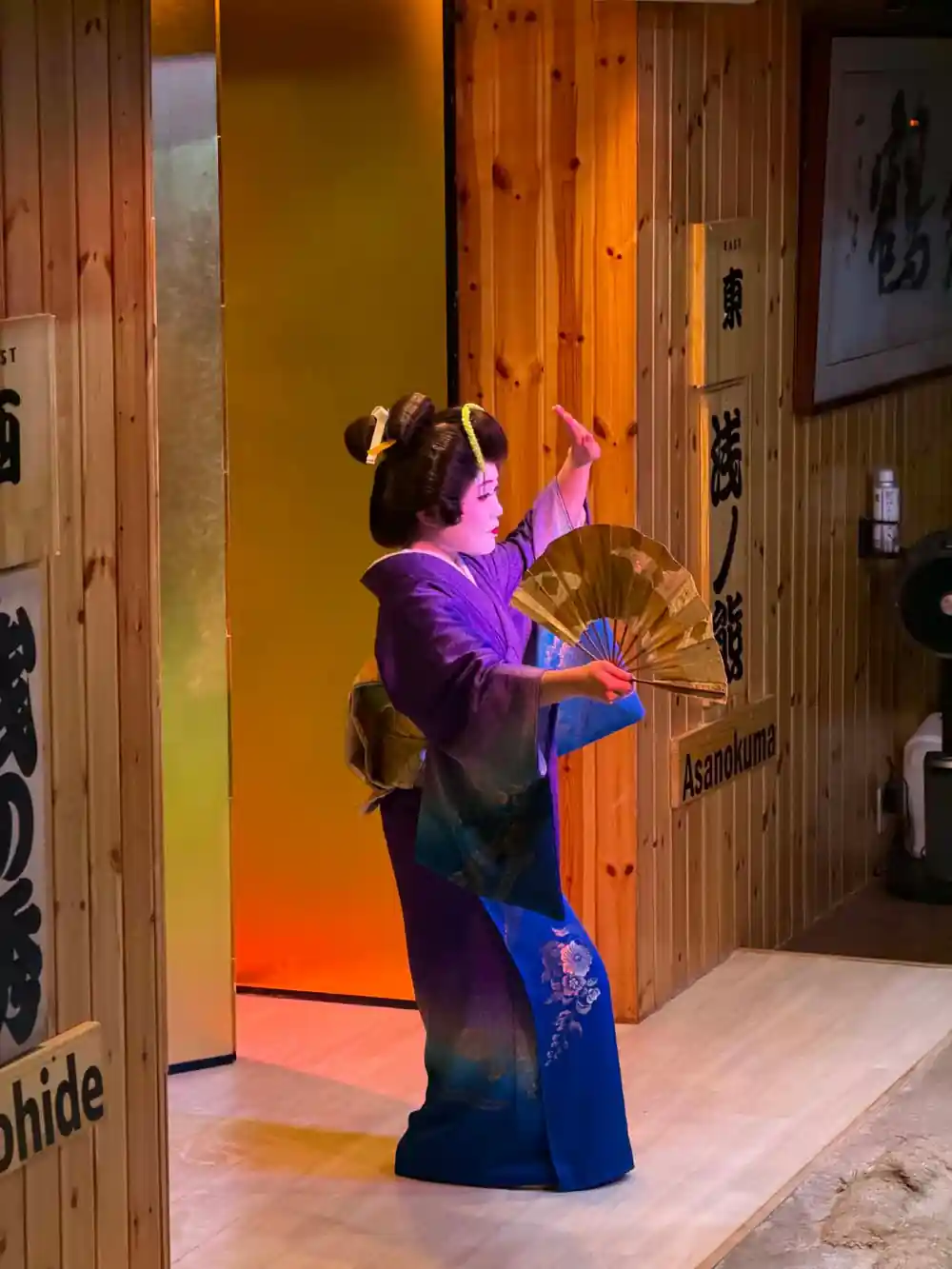
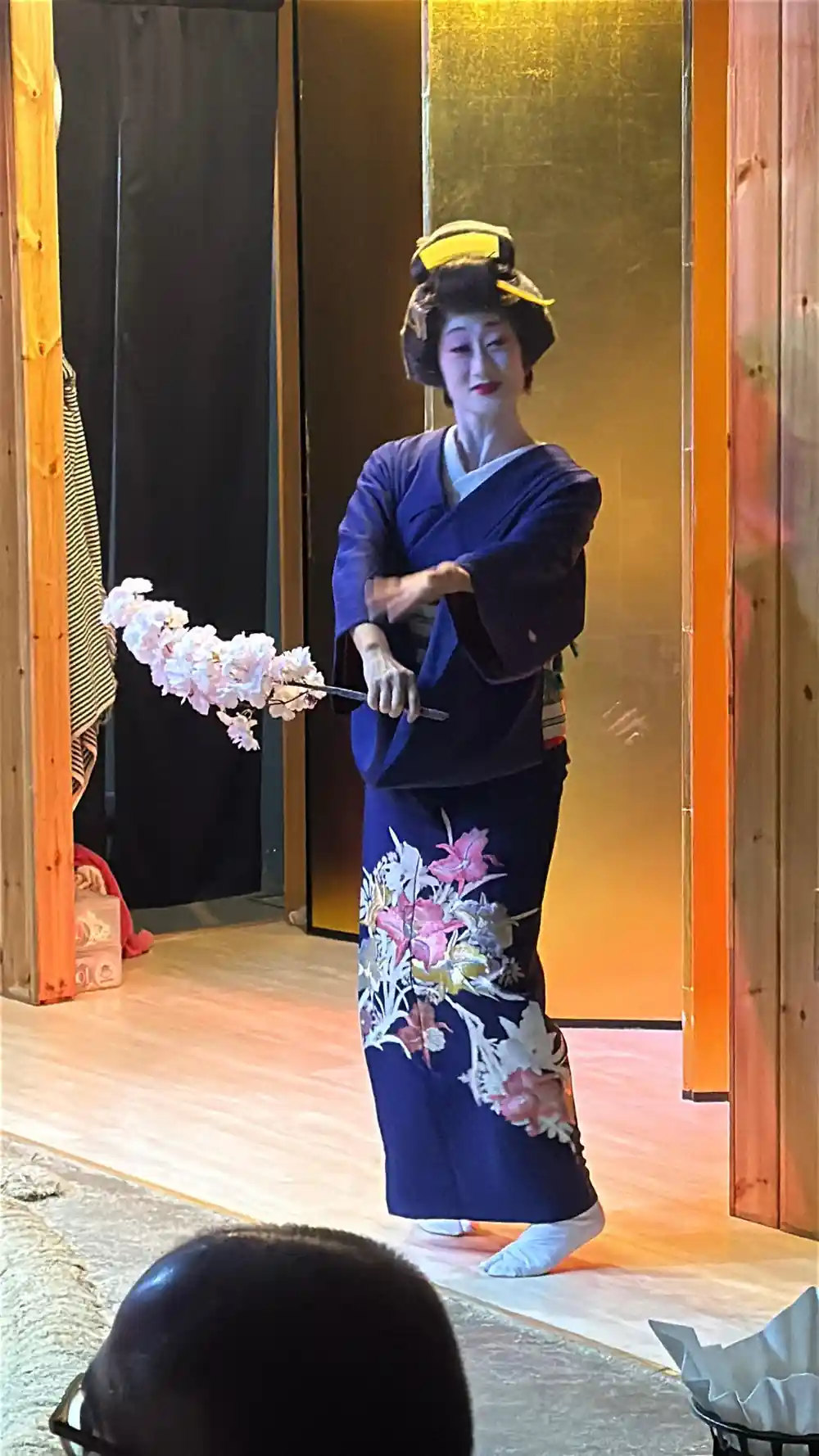
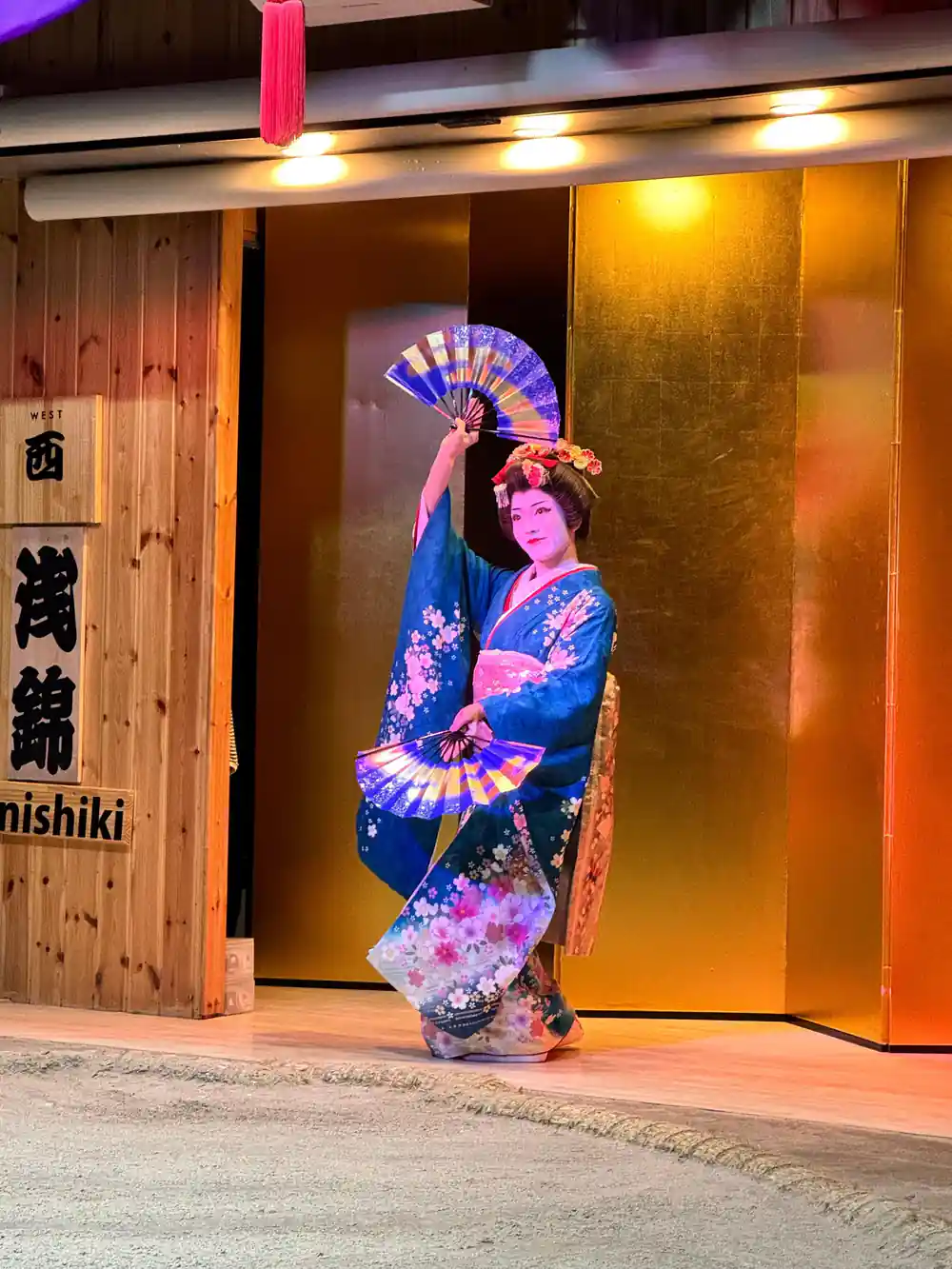
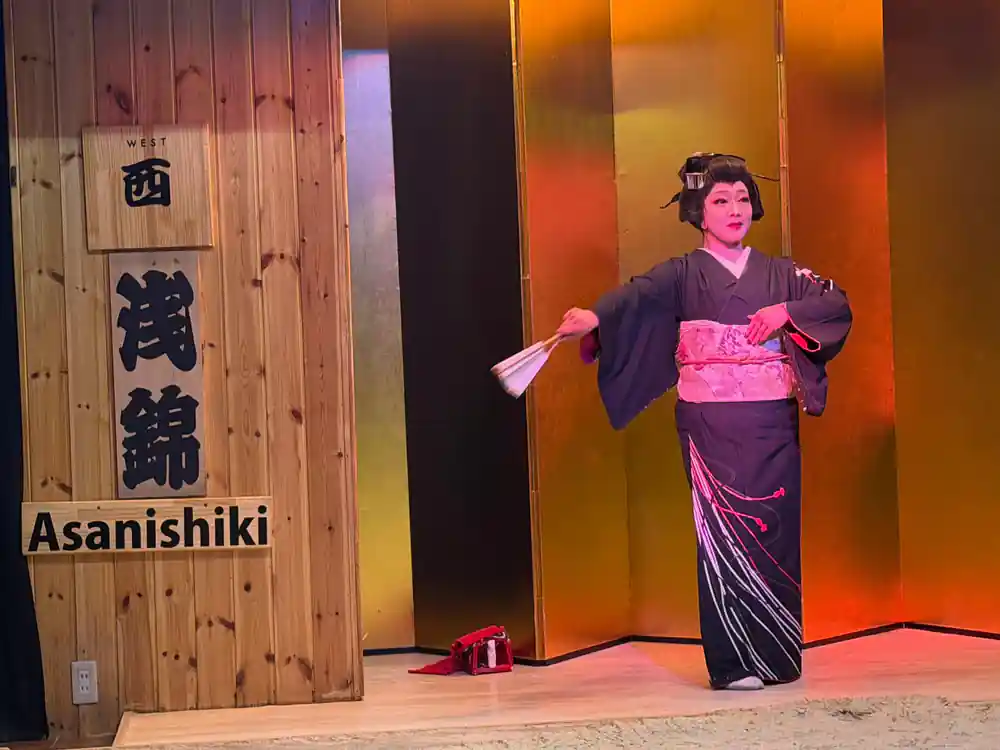
Their role is to make guests feel at ease with conversation, drinking games and dance performances.
Our verdict on a Tokyo sumo night out
Read before booking
What a sumo show in Tokyo really is
A Tokyo sumo show is a performance rather than a tournament. You sit around a clay ring and watch wrestlers go through the rituals of a basho: the salt throw, the squat, the long stare, and then a bout that is over before you have settled into your seat. The show booked from this site, Tokyo: Sumo Entertainment Show with Chicken Hot Pot & Geisha, lasts 2 hours and starts from US$102.[1] It is rated 4.79 from 8,004 reviews, and a small group is available.[1] The ring is small, the wrestlers are enormous, and the whole evening has the feel of a dinner party with a competition in the middle.
The other half of the Tokyo sumo scene is the morning practice visit. Instead of a staged show you watch real training at a stable, usually from the edge of the room, with no music and no commentary. Morning practice typically begins between 5:00 and 7:30 AM and continues for 2-4 hours, and the exact start time varies by stable and season.[6] Many travellers book one of each on the same trip: a meal and a show in the evening, then an early alarm for a stable the next morning.
Private, small group or a full house
The wording of a listing tells you more about room size than the venue does. The show booked from this site lists a small group available, runs 2 hours and starts from US$102.[1] A ring-side practice tour with a photoshoot limits the group to 10 participants and starts from US$95.[2] A professional practice tour also limits the group to 10 participants and starts from US$90.[11] A morning practice tour is limited to 8 participants and starts from US$95.[3]
If what you have in mind is a tokyo sumo private tour in the strict sense, look for a listing that says private or small groups available. Few sumo listings are private in the strict sense; small groups are more common, with some morning practice tours limited to 8 participants.[3] A small group show is the practical middle ground: you see the ring clearly, you are close enough for photos, and the meal still arrives hot. The show booked from this site is built that way.[1]
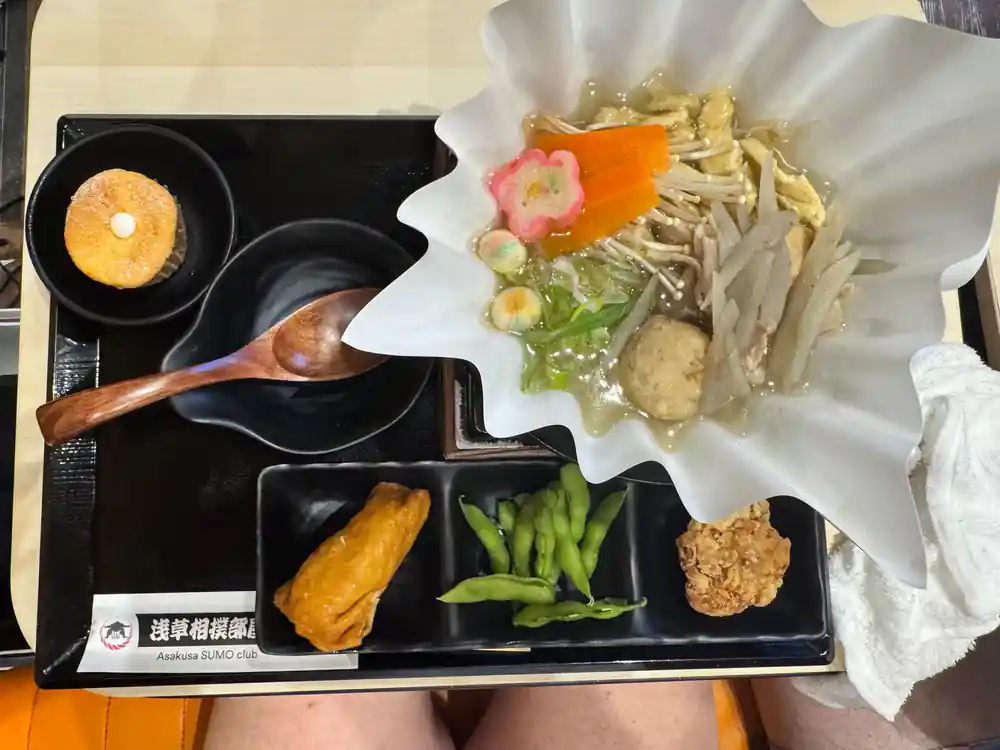
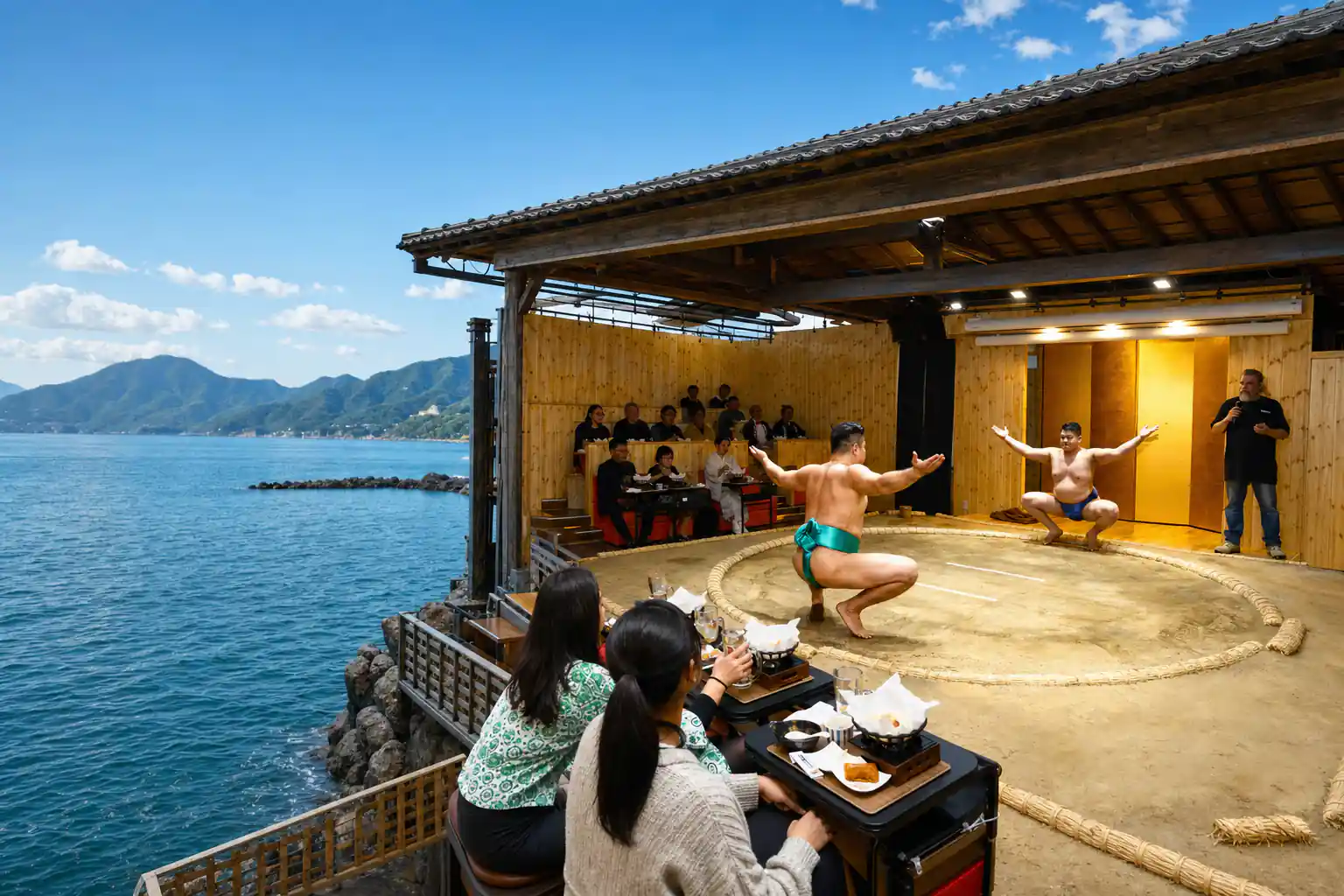
Wrestlers crouch at the ring before the first charge while the crowd watches from the floor.
Hot pot, chanko nabe and the meal
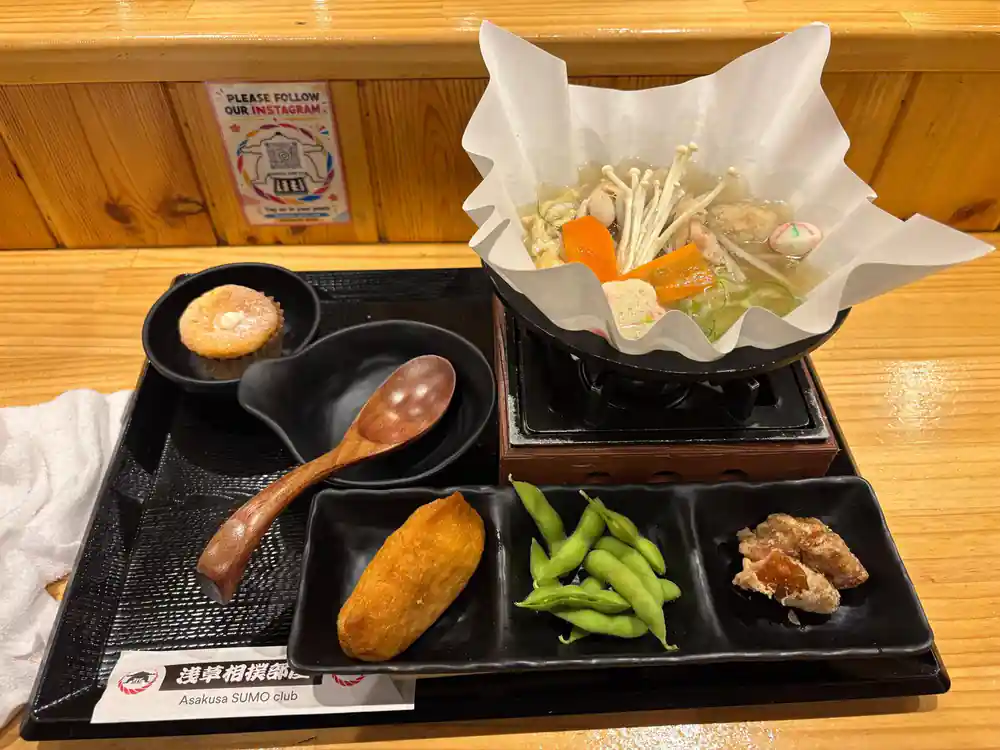
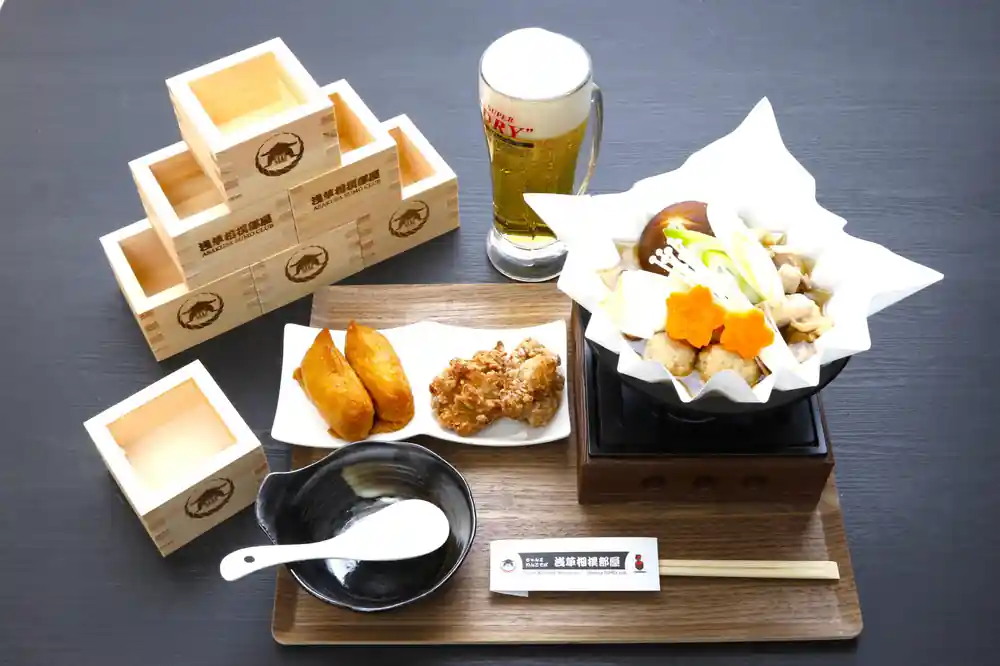
Food is not a side note at a sumo show. Chanko nabe, the communal hot pot at the centre of a stable's day, is the dish these evenings are built around, and the listing names tell you what is on the table. The show booked from this site names chicken hot pot, runs 2 hours and starts from US$102.[1] A luxury version pairs the show with Japanese cuisine and a drink, also 2 hours from US$102.[7] A family workshop with lunch runs 2 hours from US$62.[8]
The appetite behind the sport is startling. Research cited by the Keio University Sports Medicine Research Center put 25 makuuchi wrestlers at an average of 161.2 kg (about 355 lbs) and 186.3 cm in height.[12] Another account describes an optimal weight of between 400 and 600 pounds sustained by a daily diet of 20,000 calories.[13] Nobody expects a guest to eat like that. What you get instead is a generous pot, rice, sides and a drink, shared around a table with strangers who usually turn into company.
How a sumo bout actually works
The action is short. Sumo bouts last 20-30 seconds, and the ritual before them, the salt, the stamping, the crouch and the stare, takes far longer.[14] The ring is small too: the dohyo has a diameter of 14.93 feet (4.55 m).[15] Watching that small circle fill with two wrestlers is half the drama. Two large men on a tiny patch of clay with nowhere to hide produce the sudden, unglamorous collisions that make the sport so watchable.
Winning is codified in detail. In sumo there are 82 kimarite, or match winning techniques, and 5 non-techniques or ways to lose, all defined by the Japan Sumo Association.[16] Professional sumo is divided into six divisions, and the top division, Makuuchi, contains 42 wrestlers.[17] The origins of the sport stretch back 2,000 years, though it did not really flourish as a spectator sport until the early 1600s.[18] At a show, a host or a former wrestler usually explains what you just saw and how the decision was reached.
from US$102
The Tokyo sumo show with chicken hot pot and geisha lasts 2 hours and holds a 4.79 rating from 8,004 reviews.[1]
Ryogoku, the Kokugikan and the tournament year
Ryogoku, in Sumida City, is the heart of the sport in Tokyo. The Kokugikan arena there has a spectator capacity of up to 10,000.[10] If you go to a Grand Sumo Tournament at Ryogoku Kokugikan and need step-free seating, a wheelchair seat costs 8,000 yen and is for two people, a wheelchair user and one accompanying person.[19] The arena sits in a neighbourhood of sumo stables, small restaurants and souvenir shops, and the streets around it fill with food stalls on tournament days.
Six Grand Sumo Tournaments are held each year: Tokyo in January, May and September, Osaka in March, Nagoya in July and Fukuoka in November.[9] If your trip lands on one of those months, buy a seat for the day you want early; guided tournament tours, when listed, appear only close to each tournament. Outside tournament months, the shows and the morning practice visits are your options.
Mornings, clothing and getting around
Morning practice is the part of sumo that stays with people. You are a guest in a working stable, watching wrestlers train on a clay ring, and some tours walk you between stops in the Ryogoku area, including Takasago-beya Sumo Stable and Ryogoku Edo NOREN.[20] Plan for an early start, comfortable clothes and a quiet voice. A camera with a silent shutter and a small bag you can keep on your lap will make the visit easier for everyone in the room.
Evening shows are easier to fit around sightseeing. They run indoors, they include a meal, and they usually sit within walking distance of a station. Dress in layers, because a hall can be warm while a stable room in the early morning is not. Some tours move on foot and some by coach, and a few include a transfer between the stable and the arena district.[20] Wear shoes you can slip off quickly, and keep a little cash for snacks and souvenirs on the way back.
Prices, payment and cancellation
Tokyo sumo prices spread widely, so it pays to compare before you commit. A Ginza training session with a former top-division wrestler starts from US$48.[4] A Ginza live performance with a photo experience starts from US$61.[5] A Shinjuku sumo show with a photo starts from US$65.[21] A show and dining experience at a historic sumo house starts from US$89.[22] The show with chicken hot pot and geisha starts from US$102.[1]
Payment terms are worth reading before you book. The show with chicken hot pot and geisha lets you reserve now and pay later, and gives free cancellation up to 24 hours in advance for a full refund.[1] Some activities are stricter: a Ginza sumo show with an authentic kaiseki dinner is non-refundable.[23] Check that line first, especially around tournament dates when seats are scarce.
From-prices for Tokyo sumo shows
Every value is the from-price of that GetYourGuide listing:[1][5][7][8][21].
Tokyo sumo shows in US dollars, from-prices per person
US dollar from-prices of these tour listings:[1][5][7][8].
When to book, and when you can still cancel
How to book a sumo seat
Pick your format
Choose between an evening performance with a meal and a morning visit to a real stable.
Check the start time
Listings say to check availability to see starting times, and morning practice begins between 5:00 and 7:30 AM.[1][6]
Read the ratings
The Ginza live performance with photos is rated 4.57 from 1,459 reviews.[5]
Book and pay later
The show booked from this site lets you reserve now and pay later.[1]
Note the cancellation
Free cancellation runs up to 24 hours in advance for a full refund on the show booked from this site.[1]
Book the Tokyo sumo show with chicken hot pot and geisha
from US$102Reserve now & pay later