Worth remembering
- Tournaments in Ryogoku, morning practice at a stable, and evening shows with hot pot and a geisha on stage.
- Tokyo hosts Grand Sumo Tournaments in January, May and September.[1]
- Practice typically starts between 5:00 and 7:30 AM and lasts 2-4 hours.[2]
- The Sumo Entertainment Show with Chicken Hot Pot & Geisha runs 2 hours and is wheelchair accessible.[3]
- Shows start from US$102 on the tour booked from this site, with free cancellation up to 24 hours in advance.[3]
- Top choice Sumo Show & Geisha from US$102 Duration2 hours[3]Rating4.79 from 8,004 reviews[3]Wheelchair accessWheelchair accessible[3]Free cancellationFree cancellation up to 24 hours[3] Check availability
- Family Sumo Workshop from US$62 Duration2 hours[4]Rating4.90 from 430 reviews[4]Wheelchair accessWheelchair accessible[4]Free cancellationFree cancellation up to 24 hours[4] See this tour
- Ginza Sumo Show from US$61 Duration1.5 hours[5]Rating4.57 from 1,459 reviews[5]Wheelchair accessWheelchair accessible[5]Free cancellationFree cancellation up to 24 hours[5] See this tour
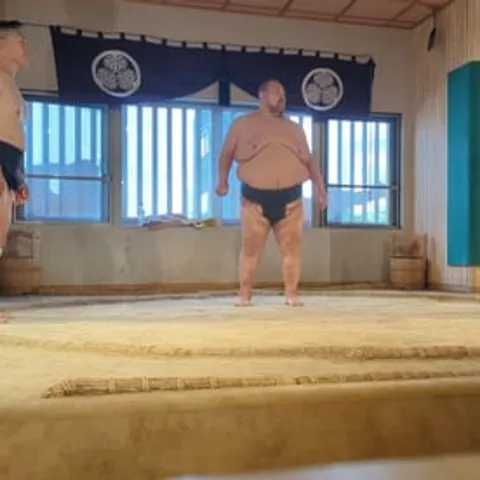
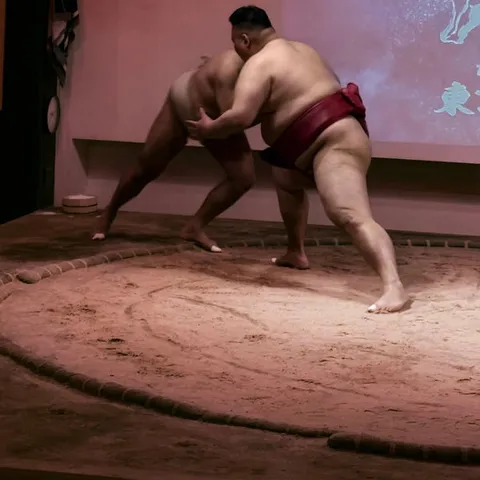
The Kokugikan National Sumo Arena located in Ryogoku (Sumida City, Tokyo) boasts a capacity of up to 10,000.
Our Verdict on Watching Sumo in Tokyo
Read before booking
Where to Watch Sumo Wrestling in Tokyo
Tokyo is the centre of professional sumo, and the sport shows up here in three quite different forms. You can take a seat at a Grand Sumo Tournament in Ryogoku, stand quietly at the edge of a training stable before breakfast, or spend an evening at a sumo show with hot pot, a ring you can step into and a geisha performance. Each one gives you a different angle on the same sport, and none of them requires any Japanese.
If you are working out where to see sumo wrestling in Tokyo, start with the calendar. The Kokugikan arena in Sumida City has a spectator capacity of up to 10,000, and on tournament days the streets around it fill with banners, food stalls and fans in team colours.[6] Outside those days the district goes quiet, and sumo moves indoors to the stables and the show venues. Ryogoku is a short train ride from the centre of the city and makes an easy half day, with the arena and the chanko restaurants within a few minutes of each other.
The Grand Sumo Tournaments in Tokyo
Six Grand Sumo Tournaments are held each year, and Tokyo hosts the ones in January, May and September. The other three are in Osaka in March, Nagoya in July and Fukuoka in November.[1] Historians agree that the origins of sumo date back 2,000 years, but it did not really flourish as a spectator sport until the early 1600s.[7] Watching a tournament today is a way to meet that old sport inside a modern arena.
A tournament day is long, loud and slow in the best way. Bouts last 20-30 seconds, so the action arrives in short bursts between ceremonies, salt throws and long stares.[8] Professional sumo is divided into six divisions, and the top division, Makuuchi, contains 42 wrestlers.[9] There are 82 kimarite, or match winning techniques, and 5 non-techniques or ways to lose, all defined by the Japan Sumo Association.[10] The judges' huddle at the edge of the ring makes more sense once you know that.
A wheelchair seat at a Grand Sumo Tournament costs 8,000 yen and is for two people, a wheelchair user and one accompanying person.[11] Tournament tickets are the part of a Tokyo sumo trip worth sorting out first, so it is worth checking the schedule before you fix your travel dates.
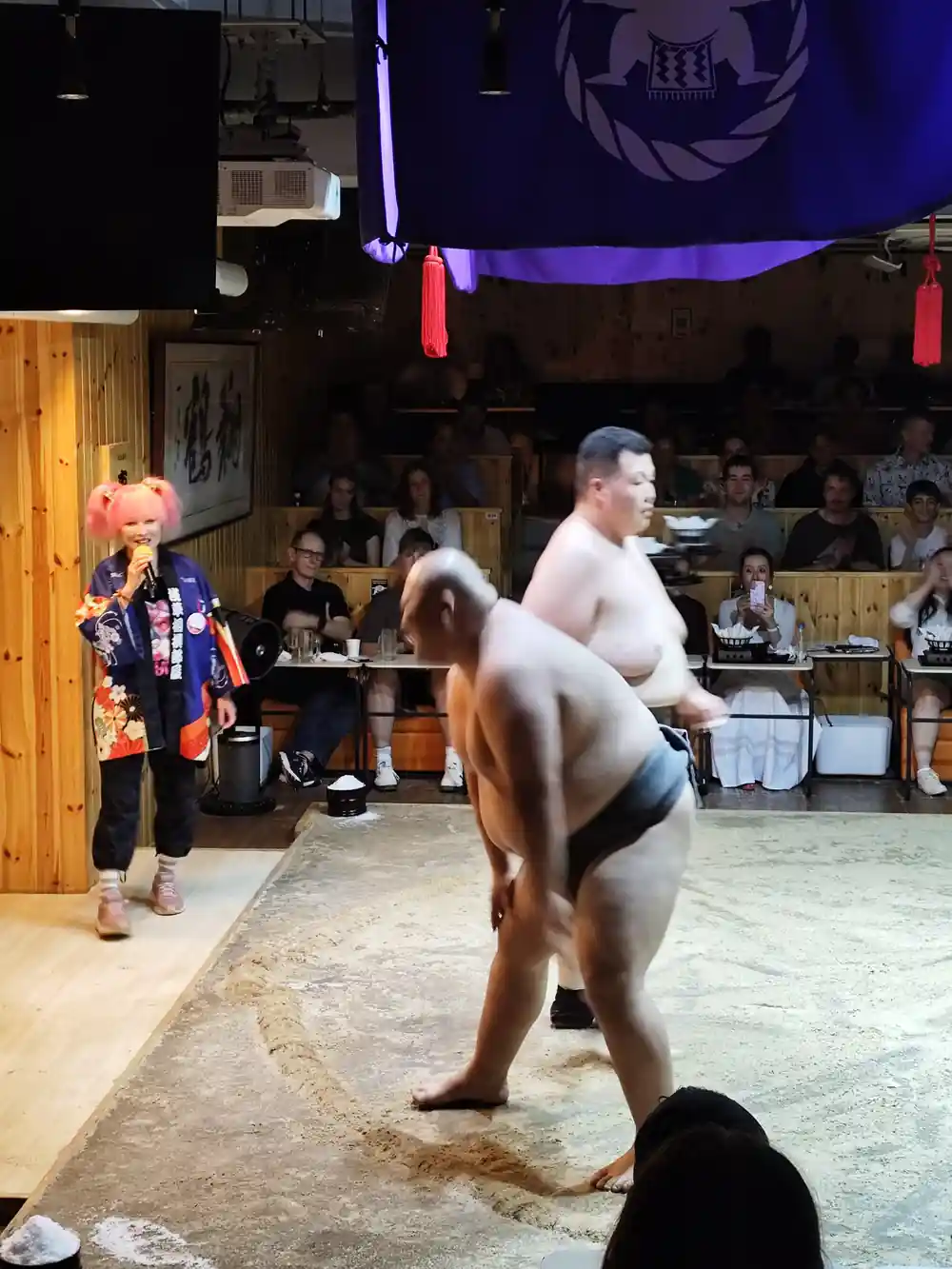
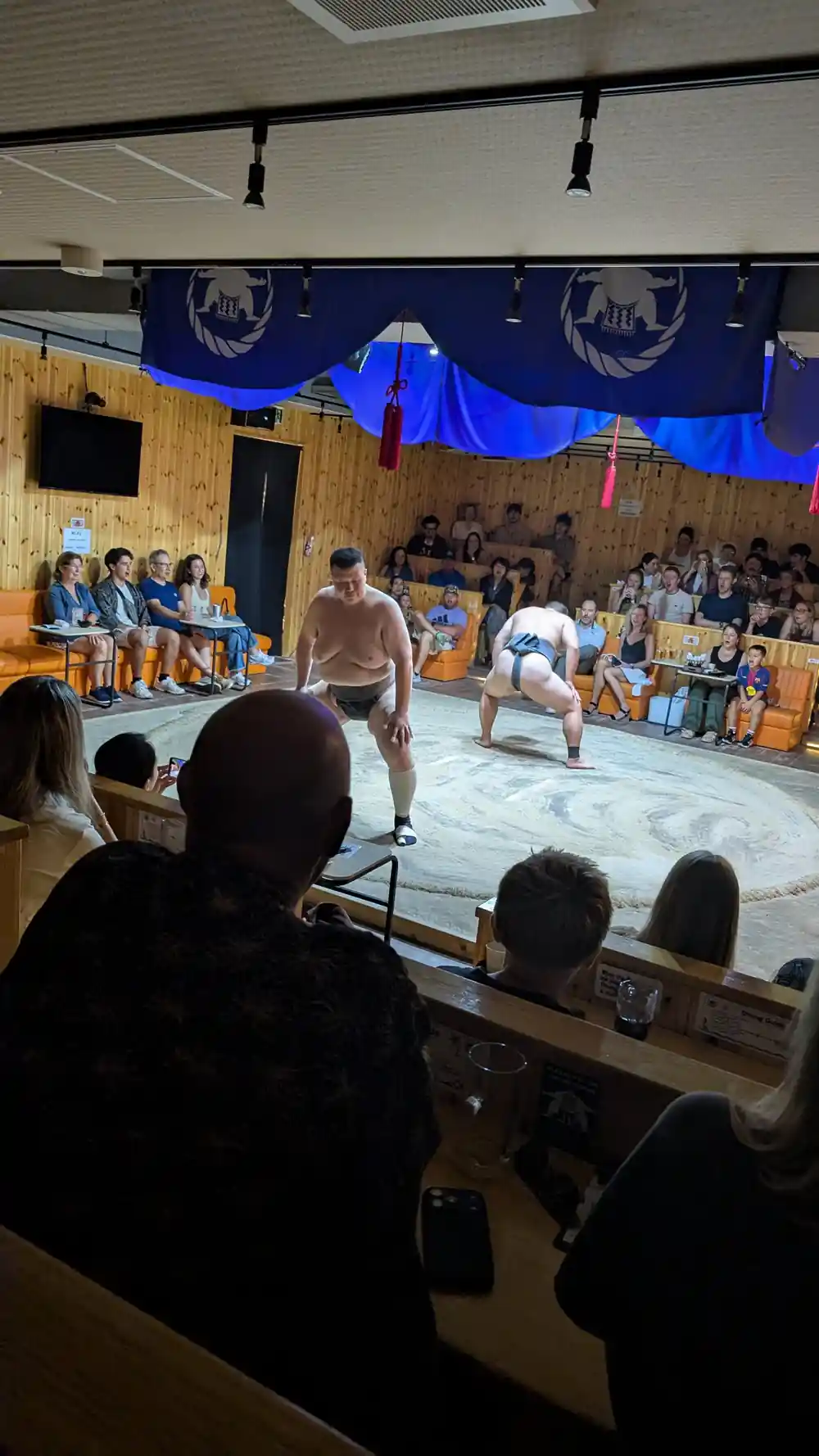
Two wrestlers crouch and set their grip before the first push.
Morning Practice at a Sumo Stable
Morning practice, known as asageiko, typically starts between 5:00 and 7:30 AM and lasts 2-4 hours, and the exact start time varies by stable and season.[2] You sit at the side of the training room while the wrestlers stretch, drill and fight round after round. Nobody claps, phones stay down, and the sound of two large men hitting the clay is the whole show. It is the closest most visitors get to the ordinary working day of a rikishi.
Several guided visits are built around this. One is from US$95 and runs 2 hours, with an English live guide, a ring-side seat and a photoshoot.[12] Another, from US$95, lasts 3 hours and is wheelchair accessible, with stops at Takasago-beya Sumo Stable and Ryogoku Edo NOREN.[13] A session explained by experts is from US$90 and lasts 3 hours, with a guide in English and Japanese.[14] Starting times are shown when you check availability, and the practice times themselves are set by the stable.[12]
Winter mornings in an unheated training room are cold by any standard, so dress in warm layers you can sit in on the floor, and expect to take your shoes off at the door.
Sumo Shows and Dinner Experiences in Tokyo
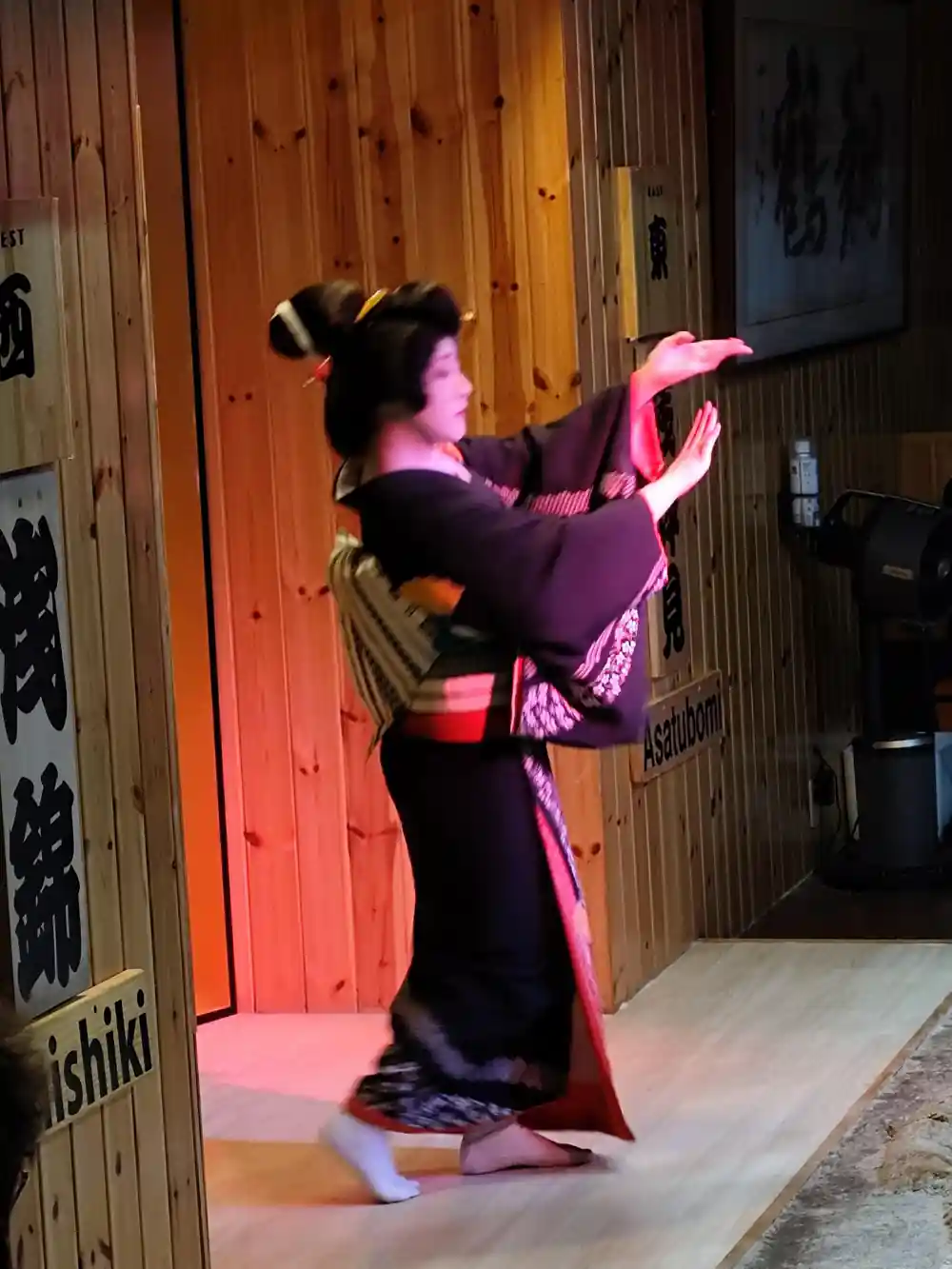
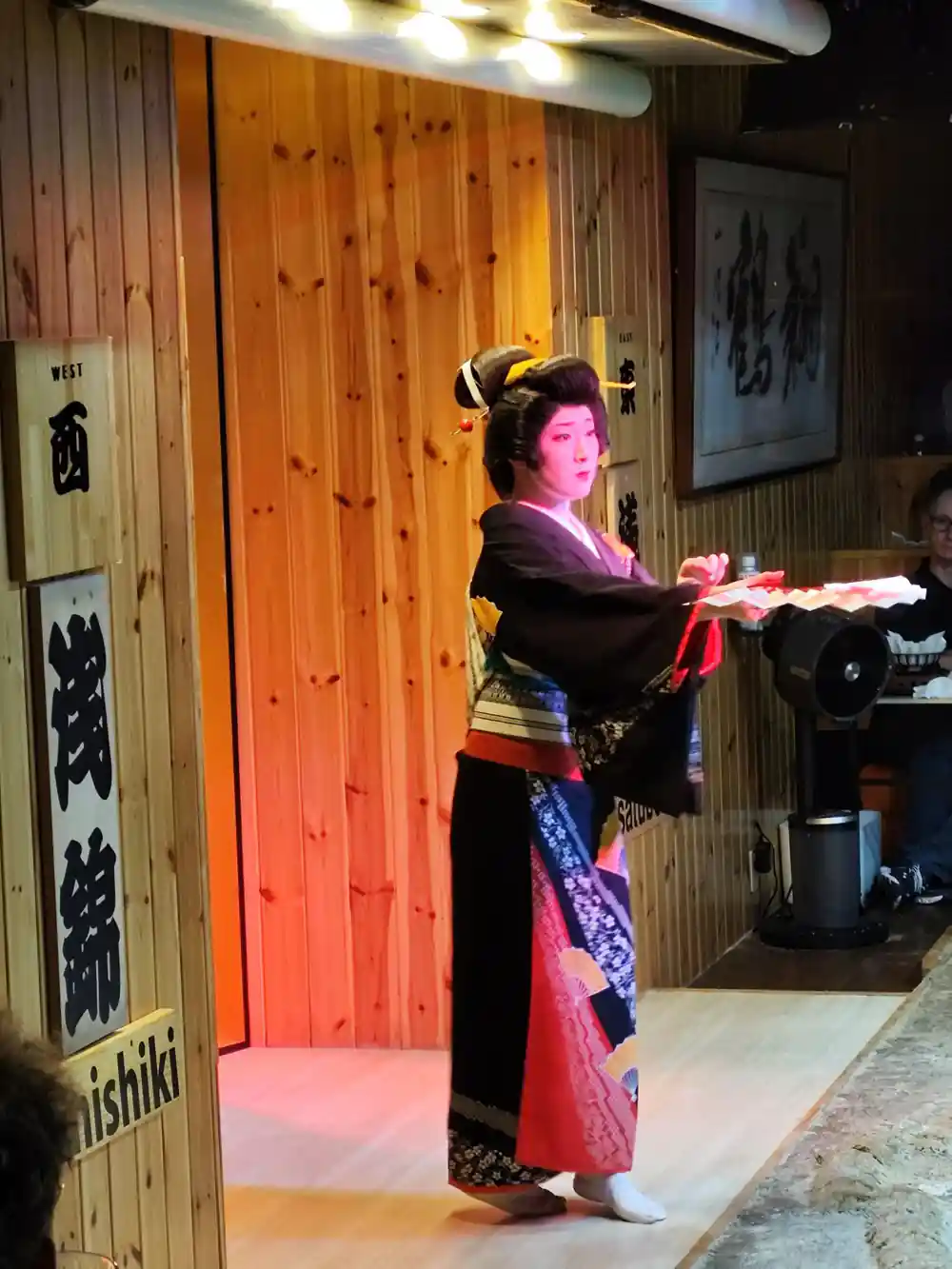
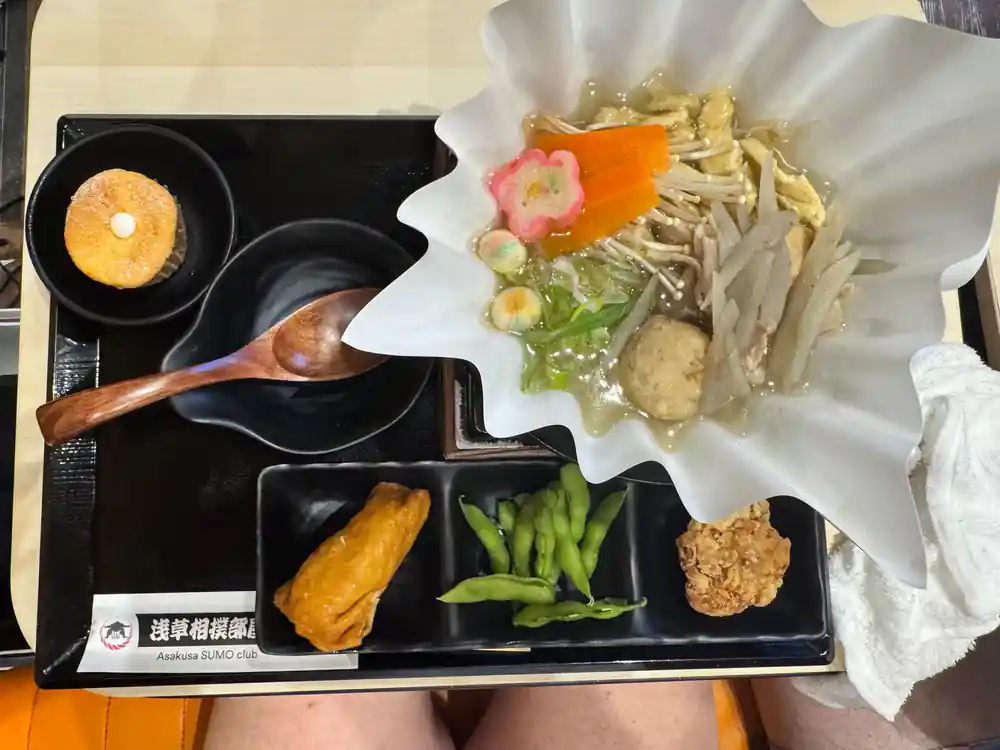
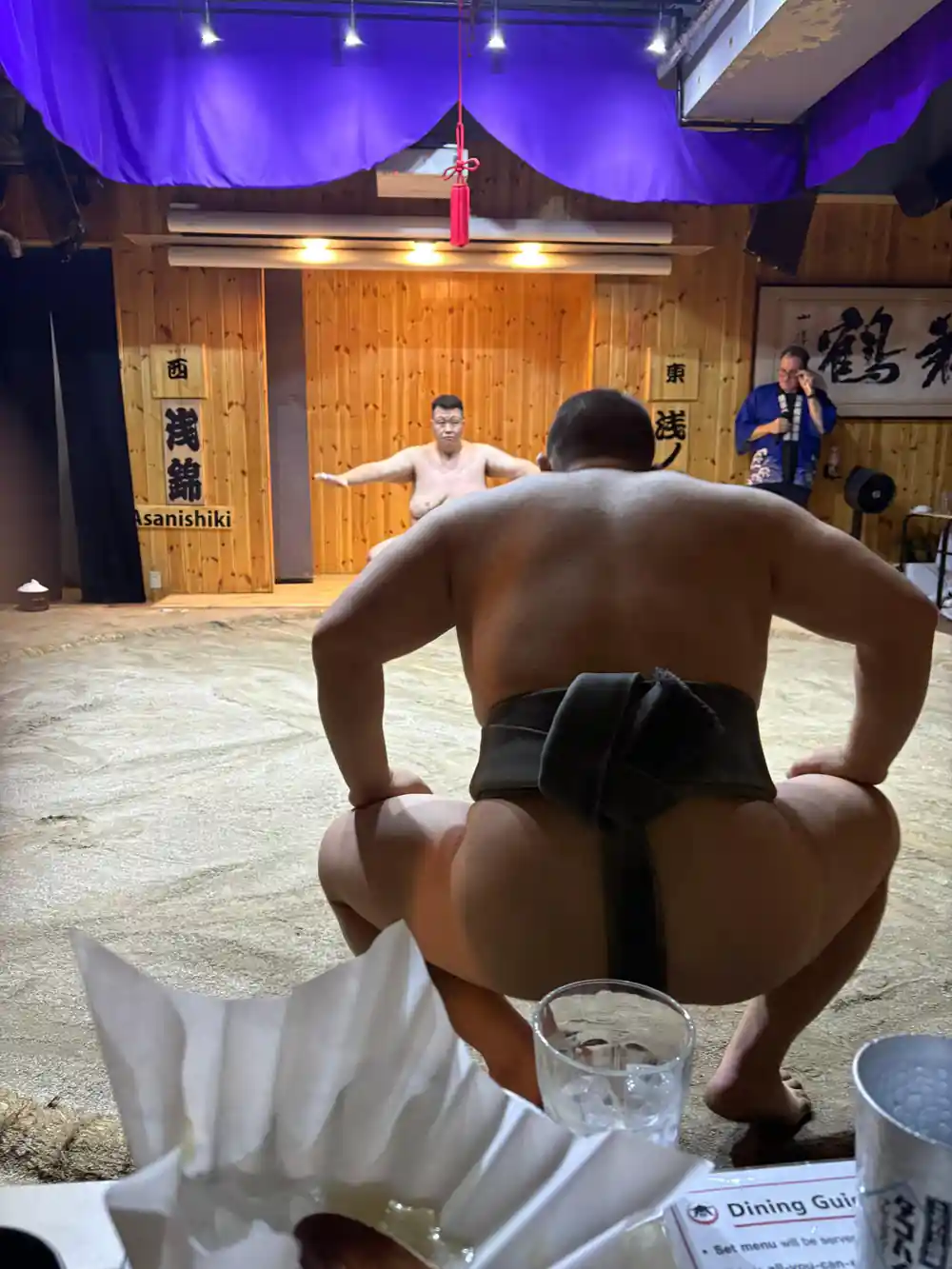
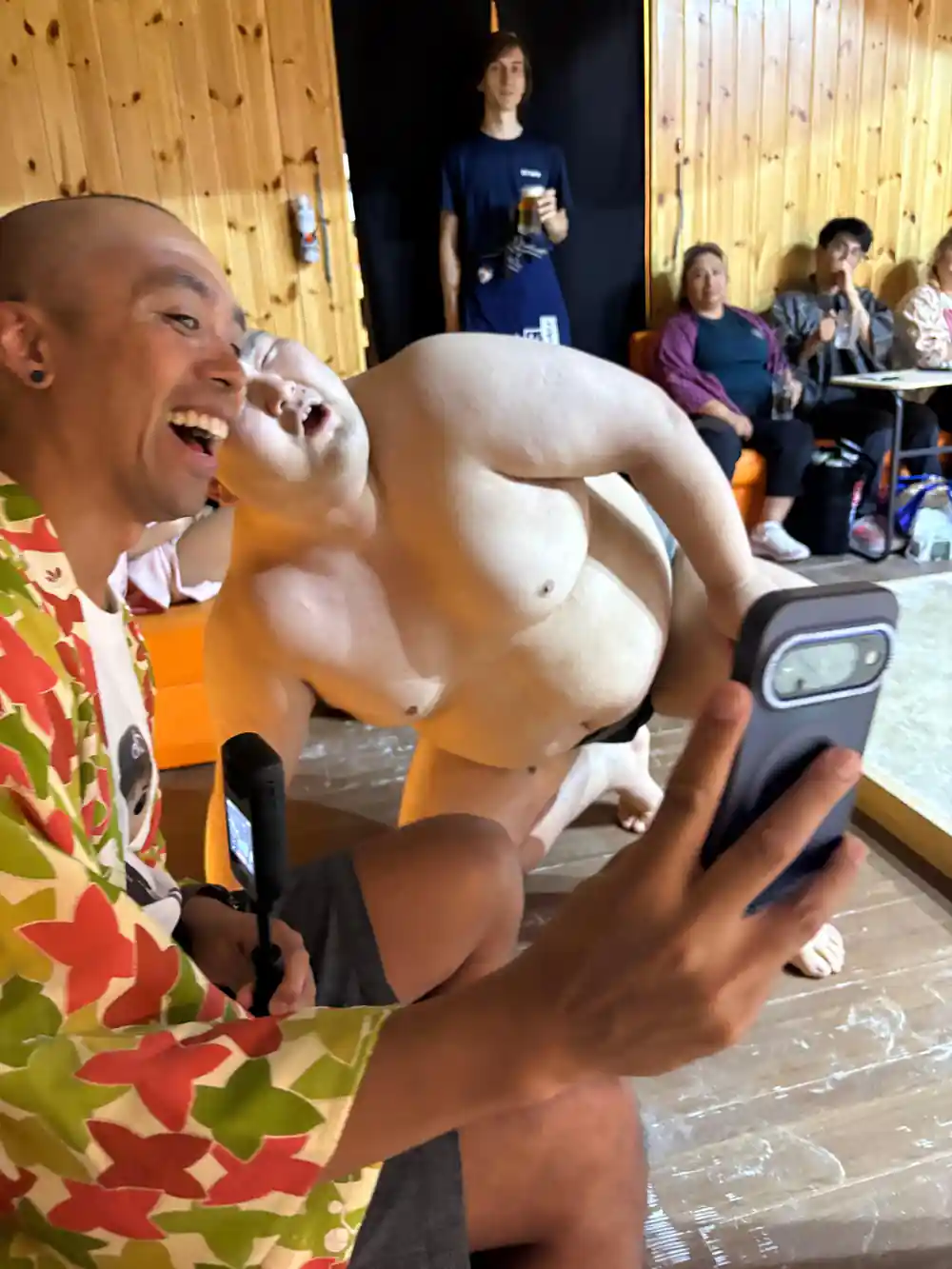
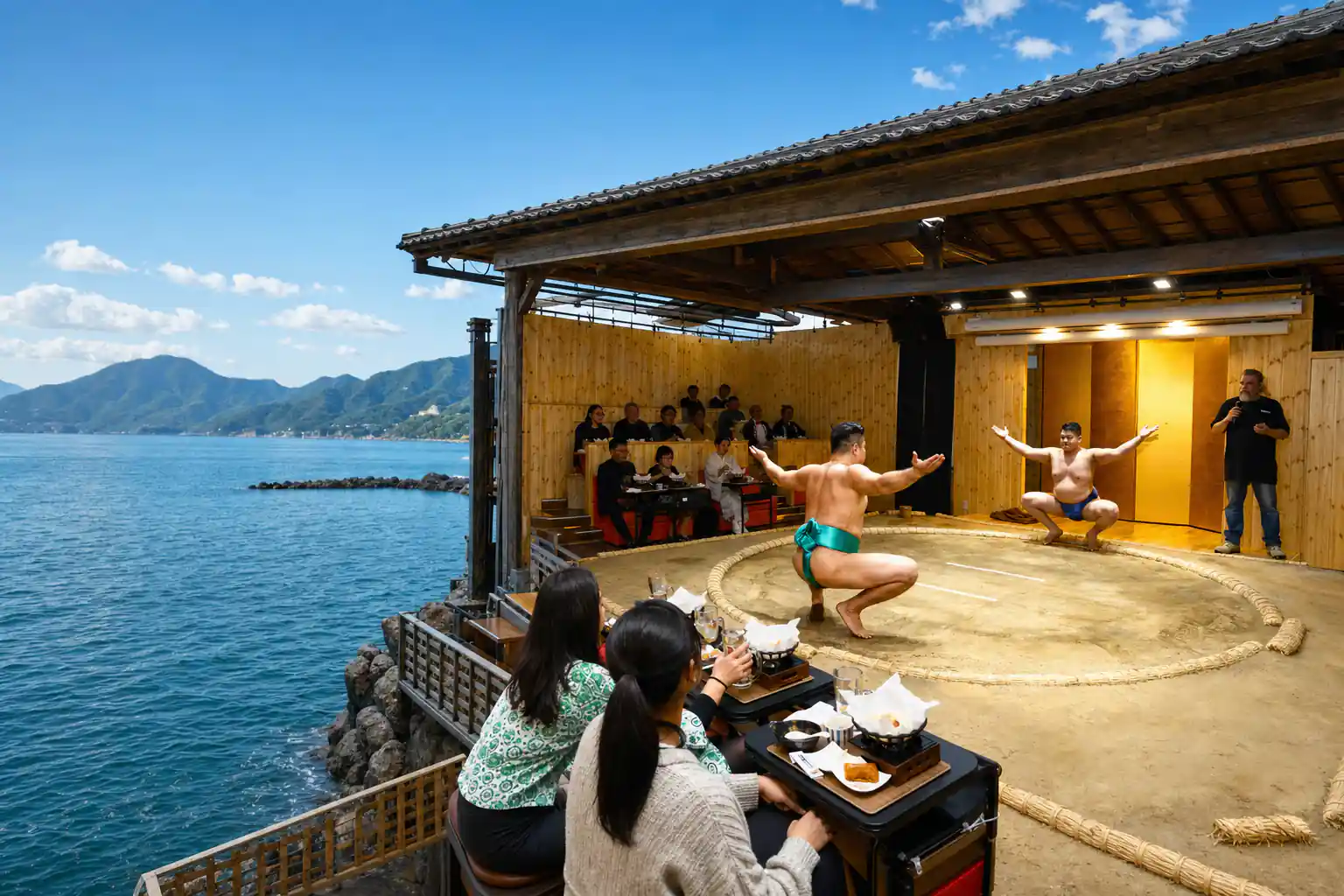
Evening shows are the easy way to see sumo in Tokyo, and the listing booked from this site is the Tokyo: Sumo Entertainment Show with Chicken Hot Pot & Geisha, from US$102. It runs 2 hours, is rated 4.79 from 8,004 reviews, has a small group option and is wheelchair accessible.[3] You can reserve now and pay later, and free cancellation applies up to 24 hours in advance for a full refund.[3] Dinner is chicken hot pot, the ring is close enough to feel, and a geisha performs as part of the evening.
There is plenty of choice around it. The Luxury Sumo Show Experience with Japanese cuisine and drink is from US$102 and runs 2 hours, rated 4.72 from 920 reviews.[15] The Family Sumo Workshop and Live Wrestling Show with Lunch is from US$62, rated 4.90 from 430 reviews, runs 2 hours, is wheelchair accessible and comes with an instructor who speaks English and Japanese.[4] The Ginza show is from US$61 and runs 1.5 hours, rated 4.57 from 1,459 reviews.[5]
If you want something shorter, the Shinjuku sumo show and photo experience is from US$65 and lasts 1.5 hours, and the Sumo Show & Dining Experience at a historic sumo house is from US$89 and runs 1.5 - 2 hours.[16][17] Lower-priced picks include wearing a mawashi on a real clay ring from US$46 and the Ginza sumo training session with a former top-division rikishi from US$48, which lasts 1 hour.[18][19]
from US$102
Sumo Entertainment Show with Chicken Hot Pot & Geisha: 2 hours, a small group option, and free cancellation up to 24 hours in advance.[3]
The Ring, the Rules and the Wrestlers
The dohyo, the clay ring the wrestlers fight on, has a diameter of 14.93 feet (4.55 m).[20] Bouts last 20-30 seconds, so most of what you watch is the build-up: the salt, the crouch, the stare, then a sudden burst of pushing, gripping and throwing.[8] There are 82 kimarite, or match winning techniques, and 5 non-techniques or ways to lose, all defined by the Japan Sumo Association.[10]
Professional sumo is divided into six divisions, and the top division, Makuuchi, contains 42 wrestlers.[9] They are big men. According to research from the Keio University Sports Medicine Research Center, 25 makuuchi wrestlers averaged 161.2 kg in weight and 186.3 cm in height.[21] A modern Japanese sumo wrestler's optimal weight of between 400 and 600 pounds is sustained by a daily diet of 20,000 calories, and chanko nabe is the meal most closely tied to that training life.[22]
Historians agree that the origins of sumo date back 2,000 years, but it did not really flourish as a spectator sport until the early 1600s.[7] The rituals around the ring carry that long history with them, even when the bout itself is over in half a minute.
Tickets, Seats and Booking in Practice
Tournament tickets are sold for specific days and seat blocks, and a wheelchair seat costs 8,000 yen and is for two people, a wheelchair user and one accompanying person.[11] For the rest of the year, the shows are the practical option: the Tokyo: Sumo Entertainment Show with Chicken Hot Pot & Geisha runs 2 hours and offers free cancellation up to 24 hours in advance for a full refund, plus reserve now and pay later.[3]
If your dates are fixed, look at the cancellation terms on each listing. The Ginza show and the Luxury Sumo Show also offer free cancellation up to 24 hours in advance.[5][15] The Family Sumo Workshop and the Shinjuku show do the same.[4][16] The morning practice visits compared here follow the same 24-hour rule.[12][14]
Check whether your listing is wheelchair accessible if that matters to you, since several Tokyo shows are, including the Sumo Entertainment Show and the Family Sumo Workshop.[3][4] Group sizes vary by listing as well: the Sumo Entertainment Show has a small group option, and the Family Sumo Workshop runs with an instructor who speaks English and Japanese.[3][4]
What to Wear and How to Behave
Sumo is formal in a way that is easy to get wrong by accident. Arrive a little early, take your shoes off where you are asked to, keep your voice down during practice, and put the phone away unless a guide says photos are fine. At the shows the mood is much looser, and you will be encouraged to clap, cheer and take pictures.
A geisha's role is to make guests feel at ease with conversation, drinking games and dance performances.[23] At a show with a geisha on the bill, expect to be drawn into a game or two before the evening is out.
For morning practice, wear warm, comfortable clothes you can sit on a floor in, and bring socks. For an evening show, anything from smart casual upwards works, and you will be sitting close to a cooking pot, so leave the best white shirt at the hotel.
From prices for Tokyo sumo tours
Every bar is the from price of a GetYourGuide listing:[3],[4],[5],[17] and[16].
Build your Tokyo sumo budget
From prices taken from GetYourGuide listings[3],[4],[5] and[15].
When sumo happens in Tokyo
How to plan your sumo trip
Check the tournament months
Tokyo hosts Grand Sumo Tournaments in January, May and September, and the other three each year are in Osaka, Nagoya and Fukuoka.[1]
Choose morning or evening
Morning practice starts between 5:00 and 7:30 AM and lasts 2-4 hours, while the show booked from this site runs 2 hours.[2][3]
Book with a flexible policy
The Sumo Entertainment Show offers reserve now and pay later and free cancellation up to 24 hours in advance.[3]
Plan your route
Ryogoku is the sumo district, Ginza is central, and the stables sit in quiet residential streets, so build in travel time between stops.
Arrive early and stay warm
Doors open before the first bout or drill, and floors are cold in winter, so bring warm socks and a layer you can sit in.
See dates and book the Tokyo sumo show
from US$102Reserve now & pay later