Worth remembering
- The tour booked from this site runs for 2 hours, and you check availability to see starting times, so when you sit down depends on your date.[1]
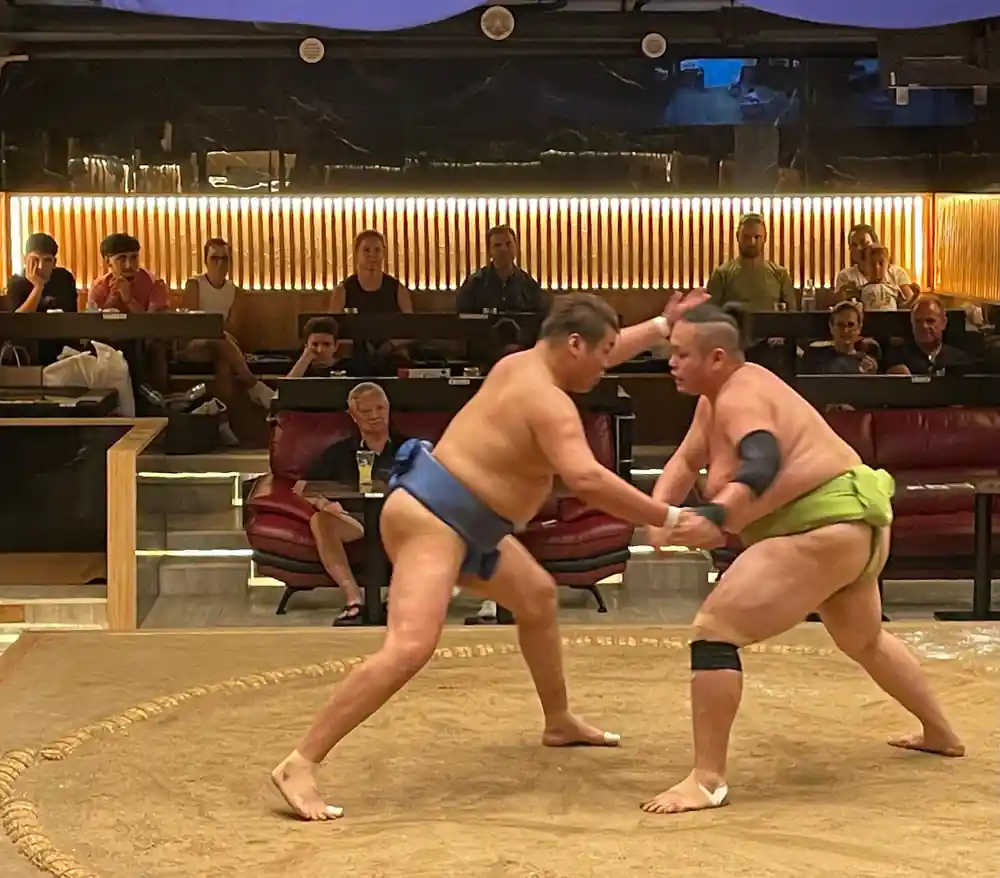
- Wrestling is the fast part: bouts last 20-30 seconds, so most of what you watch is ritual, build-up and one sudden finish.[2]
- Volunteers step onto the dohyō, a ring with a diameter of 14.93 feet (4.55 m), and try to move a wrestler.[3]
- A geisha's role is to make guests feel at ease through conversation, drinking games and dance performances, and chicken hot pot is the meal.[4]
- Small group places are available, and free cancellation runs up to 24 hours in advance, with reserve now and pay later.[1]
- Top choice Sumo show, hot pot, geisha from US$102 Duration2 hours[1]Rating4.79 from 8,004 reviews[1]Wheelchair accessWheelchair accessible[1]CancellationFree up to 24 hours ahead[1] Check availability
- Family workshop and lunch from US$62 Duration2 hours[5]Rating4.90 from 430 reviews[5]Wheelchair accessWheelchair accessible[5]CancellationFree up to 24 hours ahead[5] See this tour
- Ginza show and photos from US$61 Duration1.5 hours[6]Rating4.57 from 1,459 reviews[6]Wheelchair accessWheelchair accessible[6]CancellationFree up to 24 hours ahead[6] See this tour
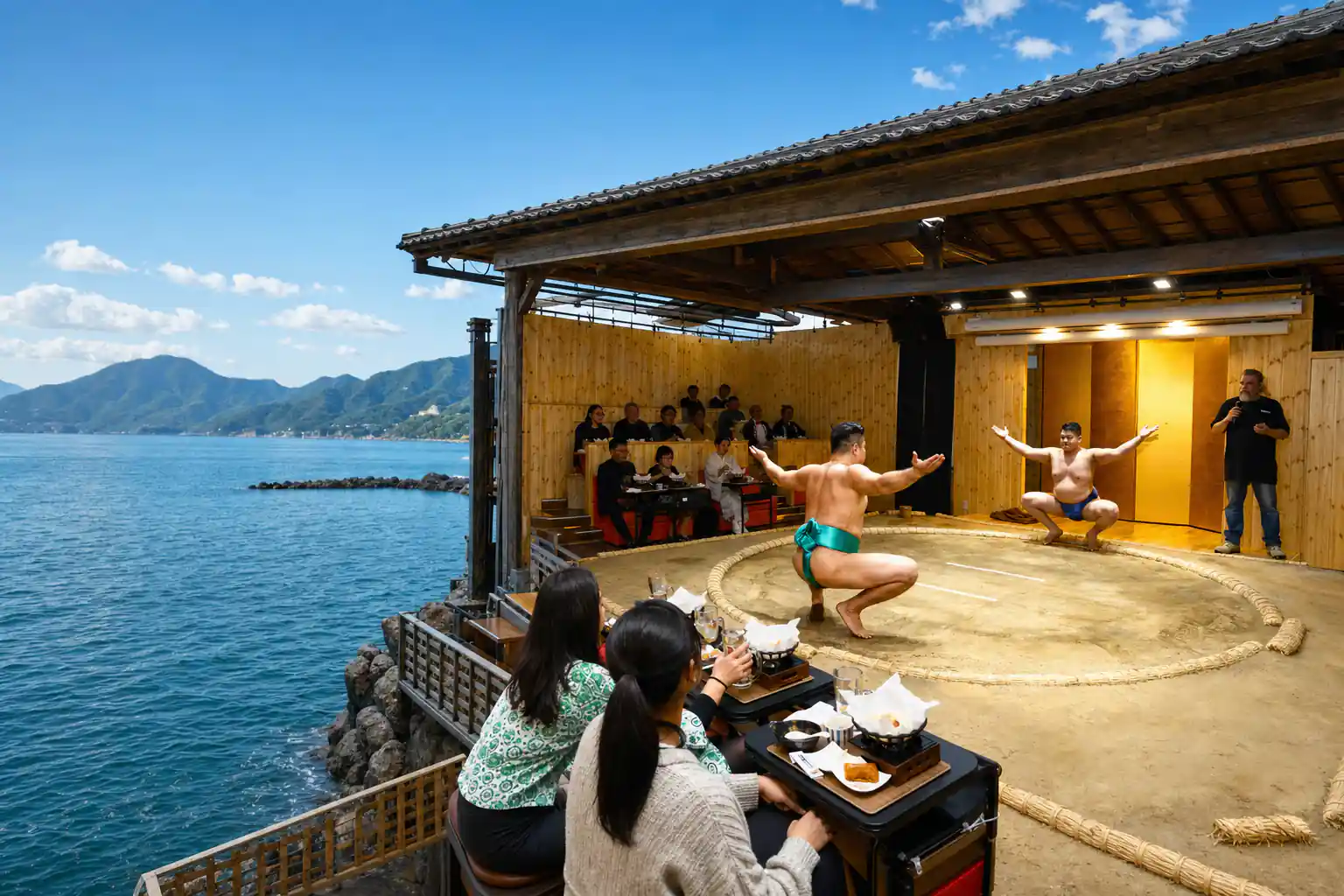
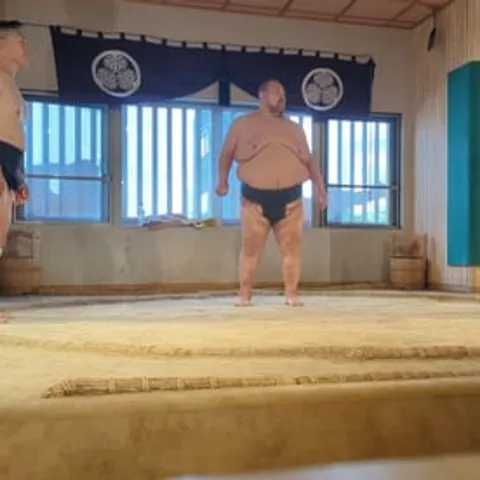
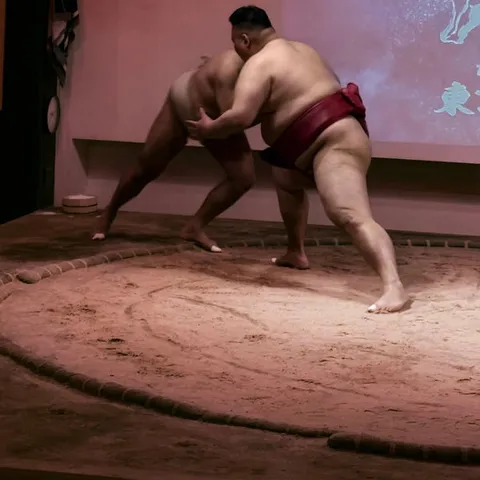
The bouts last 20-30 seconds and there is a ceremony before each bout.
Verdict: two hours that fit a busy Tokyo trip
Read before booking
- Pick a date and check the starting time for that day
- Look for small group dates if you prefer a quieter room
- Wheelchair accessible seating is listed for this tour
- Prices are shown per person in US dollars
On the night
- Arrive early enough to settle in before the first bout
- The chicken hot pot is served hot at the table and shared
- Tell staff about allergies before the meal starts
- Plan your route back before the show ends
Before the first bout: arriving and finding your seat
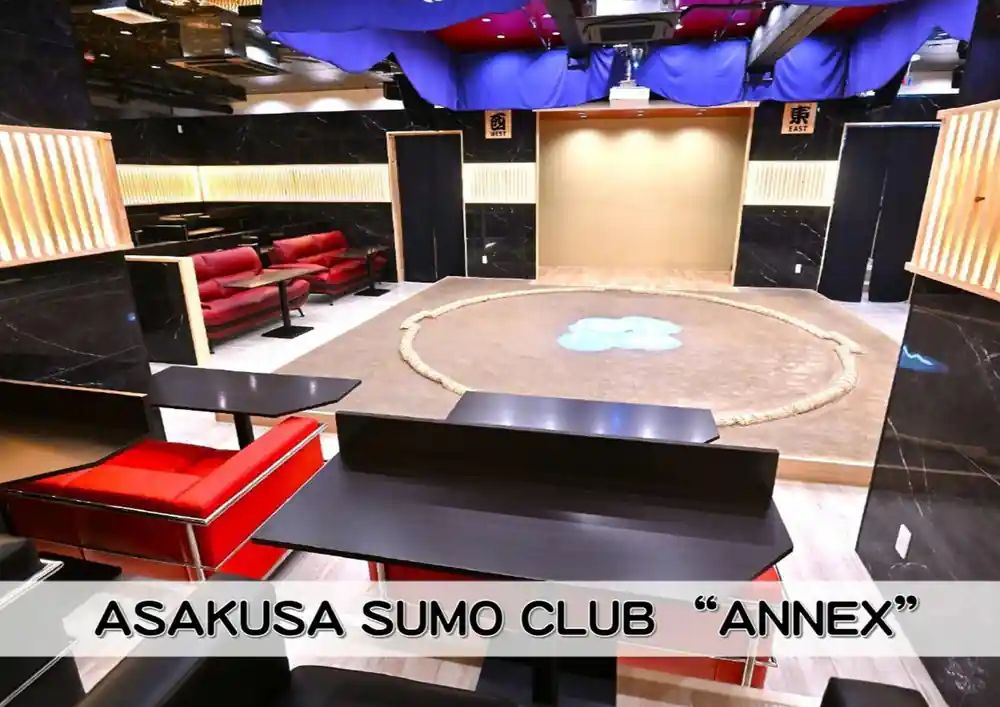
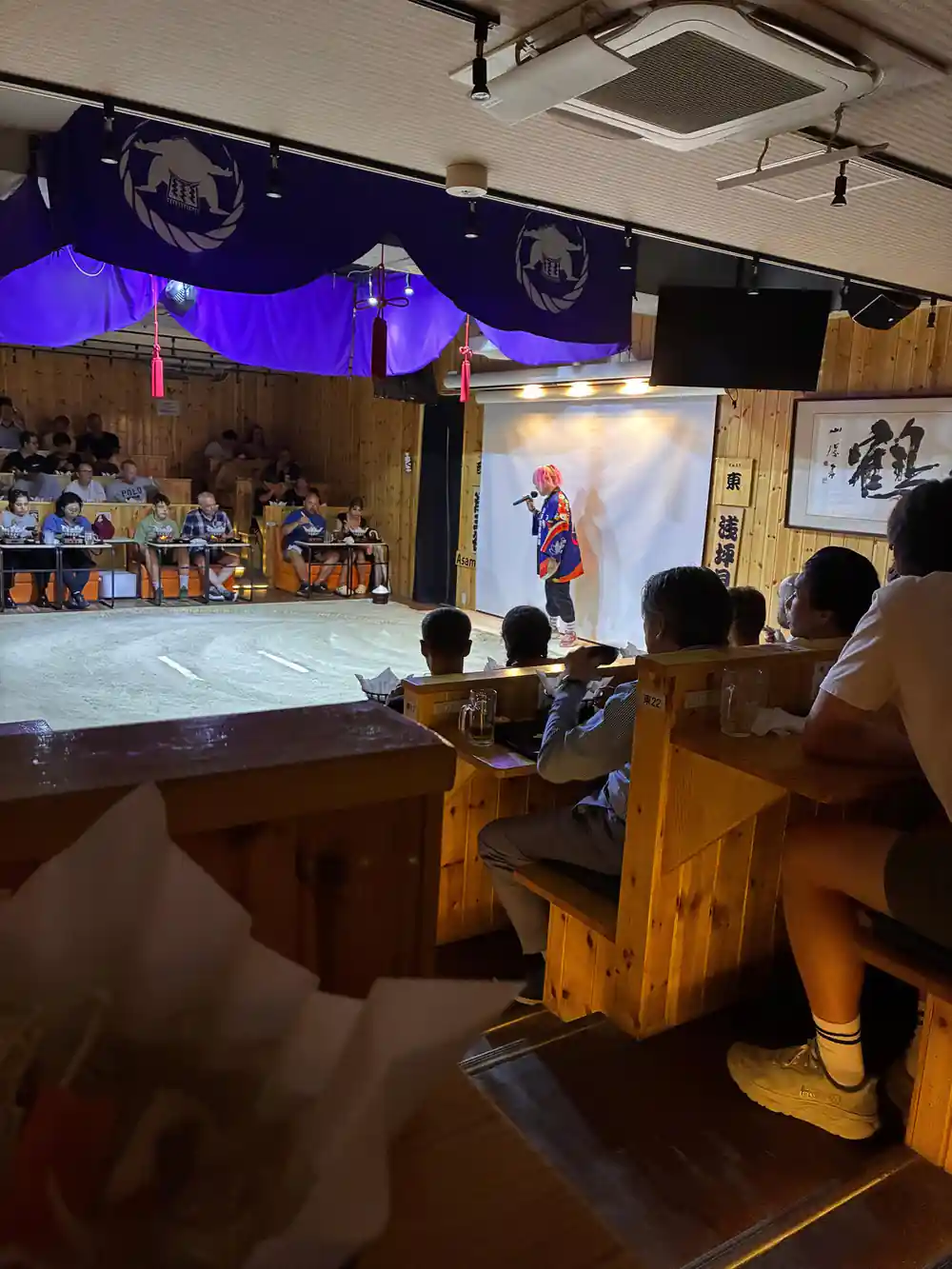
A sumo show evening is a seated, indoor, on-schedule affair, which makes it one of the easier big nights out to plan in Tokyo. The tour booked from this site, the Tokyo sumo show with chicken hot pot and geisha, runs for 2 hours, and you check availability to see starting times, so the clock time depends on the date you choose.[1] Arrive with a little time in hand, show your booking on your phone, and let the staff point you to your place. Seating is tiered around the ring, so a spot a few rows back still gives a clear view of the clay. Build in a buffer on a first visit: it is easier to sit and wait than to shuffle in during the opening explanation.
Wear what you would wear to a relaxed dinner, because the room is warm and the evening is informal. If you are carrying a suitcase or a heavy coat, sort out storage before the show starts rather than in the middle of it. Wheelchair accessible seating is listed for this tour, which keeps the evening simple if someone in your group uses a wheelchair or needs step-free access.[1] Small group places are also available on the listing, so look for those dates at the booking stage if you would rather not sit in a large crowd.[1]
How a sumo show works: the ring, the rules and the ranks
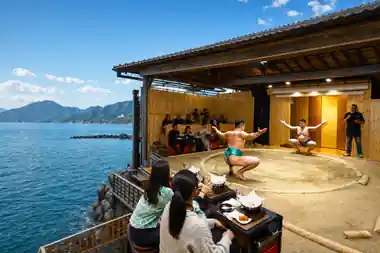
Between bouts, a host or commentator talks the room through what you are watching, and it is worth listening, because sumo is a small set of ideas repeated at speed. The ring itself, the dohyō, has a diameter of 14.93 feet (4.55 m), which is far smaller than most first-timers expect.[3] Once two wrestlers collide, a bout is usually over in moments: bouts last 20-30 seconds.[2] Everything around that, the stamping, the salt, the crouch and the long stare, is ritual and preparation rather than action.
There are 82 kimarite, or match winning techniques, and 5 non-techniques or ways to lose, all defined by the Japan Sumo Association, so the finishes you see have names behind them.[7] Professional sumo is divided into six divisions, with Makuuchi as the top division containing 42 wrestlers.[8] The whole sport sits under one governing body: under the Nihon Sumō Kyōkai there are currently 47 stables training nearly 700 wrestlers.[9] Sumo is also old. Historians agree that the origins of sumo date back 2,000 years, although it never really flourished as a spectator sport until the early 1600s.[10] None of that is required to enjoy the night, but it is the difference between watching two large men push each other and knowing why one of them just won.
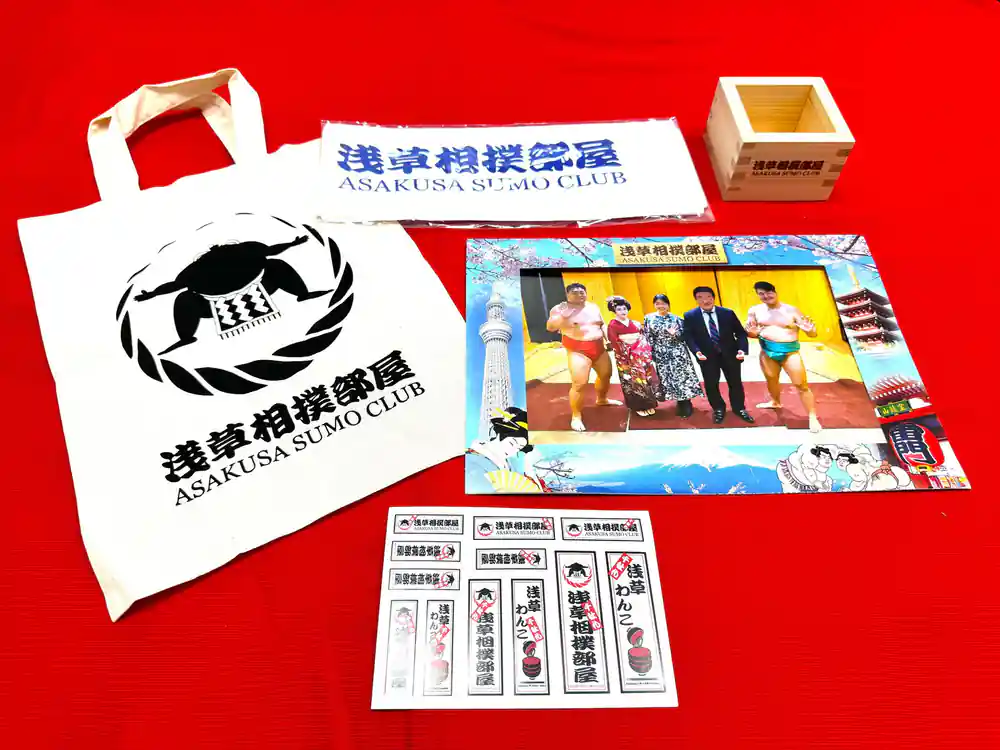
The ring is small; the men who fight in it are not.
Watching the bouts: the quick, loud heart of the show
Watching the bouts is the heart of the evening, and the first thing worth knowing is how long sumo match action actually lasts once the two wrestlers finally collide. Bouts last 20-30 seconds, so the wrestling itself is quick: a shove, a grip, a twist, and one man is out or down.[2] The long, still, tense part comes before, with the crouch, the breathing and the wait for both men to agree they are ready. For contrast, the other famous way to see sumo in Tokyo is morning practice, which typically begins between 5:00-7:30 AM and continues for 2-4 hours, with the exact start time varying by stable and season.[11]
The wrestlers are big in a way that photographs flatten. Research cited on a sumo experience page found that 25 makuuchi wrestlers averaged 161.2 kg in weight and 186.3 cm in height, and that an optimal weight of between 400 and 600 pounds is sustained by a daily diet of 20,000 calories.[12][13] Tournaments shape the year around them: six Grand Sumo Tournaments are held each year, in Tokyo in January, Osaka in March, Tokyo in May, Nagoya in July, Tokyo in September, and Fukuoka in November.[14] The main Tokyo venue, the Ryogoku Kokugikan in Sumida City, has a spectator capacity of up to 10,000.[15] A show like this one is not a tournament, but it borrows the ring, the rules and the ritual.
Your turn in the ring: the sumo challenge
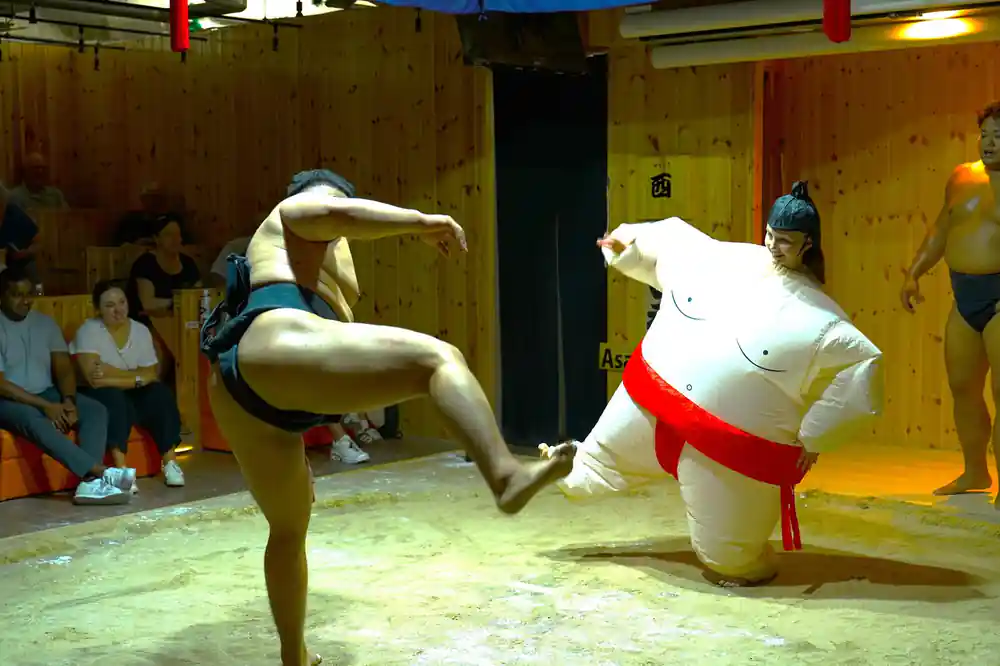
Your turn in the ring is often the part people remember, and it is offered to volunteers rather than sprung on anyone. You step onto the clay, follow the wrestler's instructions, and try to move a man who has spent years learning how not to be moved. Nobody expects technique, and the wrestlers make the moment fun rather than competitive. The ring you are standing in has a diameter of 14.93 feet (4.55 m), which feels considerably smaller when you are the one being pushed toward the edge.[3] Bring a phone or a small camera if your group wants pictures, and hand it to someone with a clear view before you step up.
A few practical bits help. Empty your pockets, take off anything loose, keep glasses somewhere safe and listen to the instructions before you crouch. The push you will attempt is the same idea as a real bout, just much slower and much funnier. Watching is perfectly acceptable too, and there is no pressure to be the one in the middle. Guests who use a wheelchair should ask about access to the ring area when they book, since wheelchair accessible seating is listed for this tour.[1]
from US$102
From price for the two-hour show with chicken hot pot and geisha. Free cancellation up to 24 hours in advance.[1]
The geisha interlude: music, games and dance
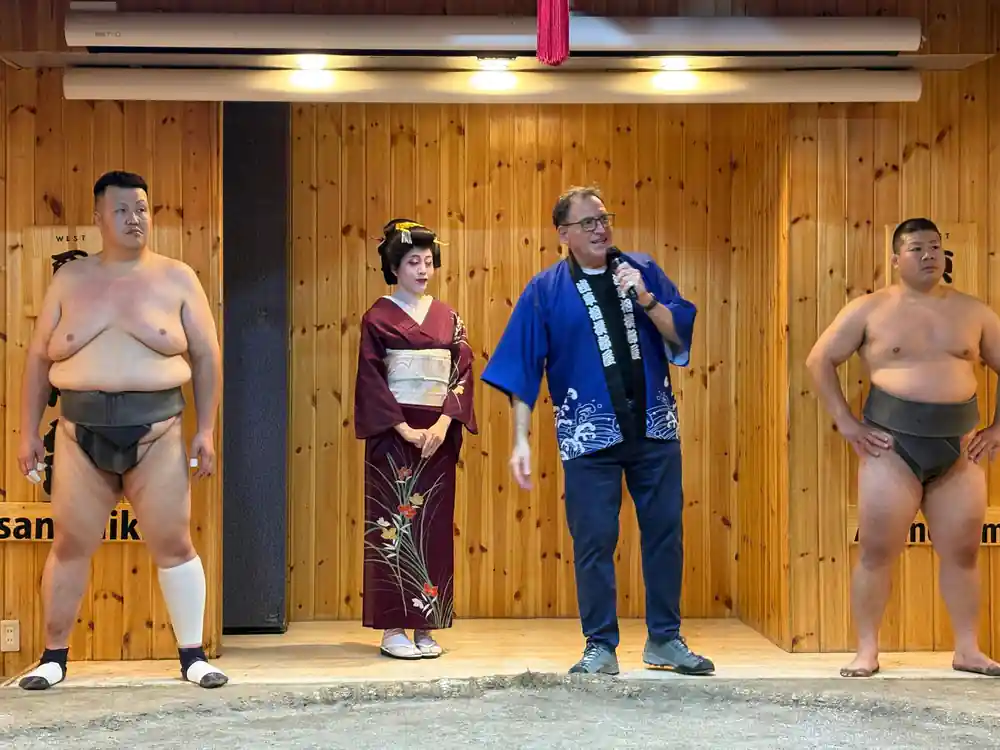
The geisha part of the evening slows everything down and moves it from sport to hospitality. A geisha's role is to make guests feel at ease through conversation, drinking games and dance performances, so expect talk, a few games, and a short set of music and dance rather than a theatre-style stage show.[4] If you do not speak Japanese, the games are usually explained as they go, and the point is joining in rather than getting anything right.
Etiquette here is simple: be polite, accept a cup if one is offered, ask before you photograph, and take part when the room is invited to. The dance and music sections are the quietest moments of the night, and they are a good time to put the phone down and watch properly. This is the part of the evening that stays with a lot of guests longest, because it is a conversation rather than a spectacle: it runs on small courtesies, and returning them is the enjoyment.
Chicken hot pot and the dining part of the evening
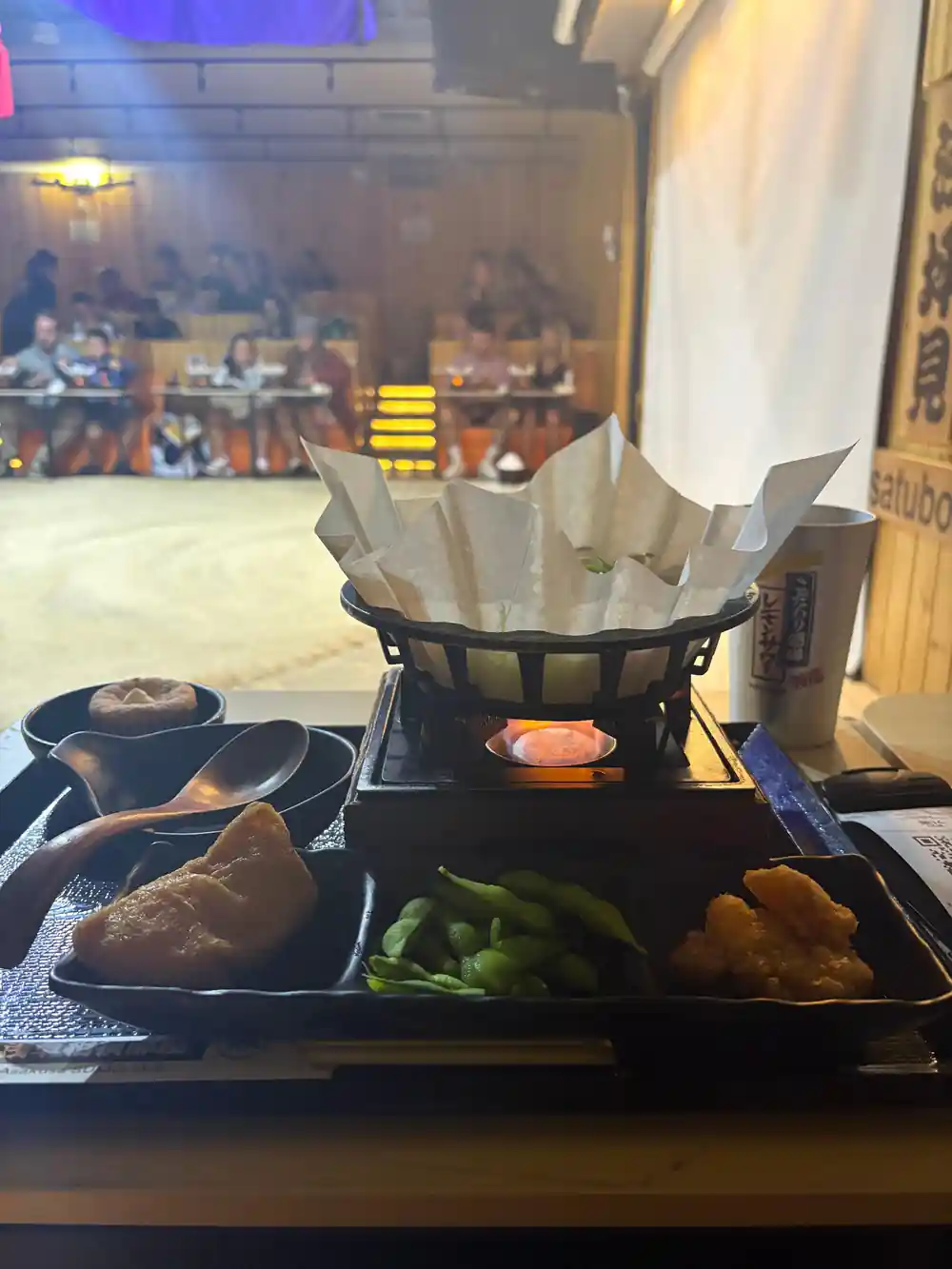
Chicken hot pot arrives once the wrestling is done, and it is the dish sumo is known for: a pot of stock at the table with chicken, vegetables, tofu and something to finish, usually noodles or rice. Chanko nabe is a shared meal, which is rather the point, since stables traditionally eat it together after training. The tour booked from this site is listed as a sumo entertainment show with chicken hot pot and geisha, and the whole thing runs for 2 hours.[1]
Eat as much or as little as you like, and tell staff early about allergies, vegetarian preferences or anything you cannot eat, because a hot pot is built around shared ingredients. Beer, soft drinks and tea are the usual companions at the table. Portions at these dinners are generous, so pace yourself: there is entertainment on both sides of the meal, and you do not want to be too full to enjoy the end of the evening. If you are with a group, sort out who sits where early, since the pot is shared and the table is the unit of the meal.
Breaks, facilities and leaving early with children
Breaks come between the main parts of the evening, and the room is small enough that you will not miss much if you slip out for a few minutes. It is a seated night with the ring in the middle, so it suits most ages and most energy levels, including guests who find a full day on their feet hard going. Children usually enjoy the bouts and the ring challenge most, and sitting at a table for the meal is easier for fidgety young guests than a formal theatre. The meal and the geisha set are the calmest stretches, which is useful if a young guest needs a reset.
If you may need to leave early, sit toward the back edge of the seating block, so you can slip out without walking in front of the ring, and mention it to staff at the start. Plans change, and the listing has free cancellation up to 24 hours in advance for a full refund, with reserve now and pay later.[1] That makes it an easy booking to move around a busy trip, and an easy one to keep if your dates hold.
From price per person, Tokyo sumo shows (US$)
Values are from prices per person on GetYourGuide listings:[1][5][6][16][17][18]
What a sumo show costs, by tour
US dollar from prices per person from the GetYourGuide listings.[1][5][6][18]
When to book a Tokyo sumo show
Your evening, step by step
Arrive and settle
Hand over your booking, find your seat and get comfortable before the room fills.
Learn the rules
A host explains the ring and the finishes, including the 82 kimarite defined by the Japan Sumo Association.[7]
Watch the bouts
Bouts last 20-30 seconds, so keep your eyes on the ring and your camera ready.[2]
Take the ring challenge
Volunteers step onto the clay and try to move a wrestler, with photos after.
Meet the geisha
Conversation, drinking games and dance performances fill the middle of the evening.[4]
Eat chicken hot pot
The shared hot pot arrives at the table and the evening winds down over food.
Ready for two hours of sumo, hot pot and geisha in Tokyo?
from US$102Reserve now & pay later