Worth remembering
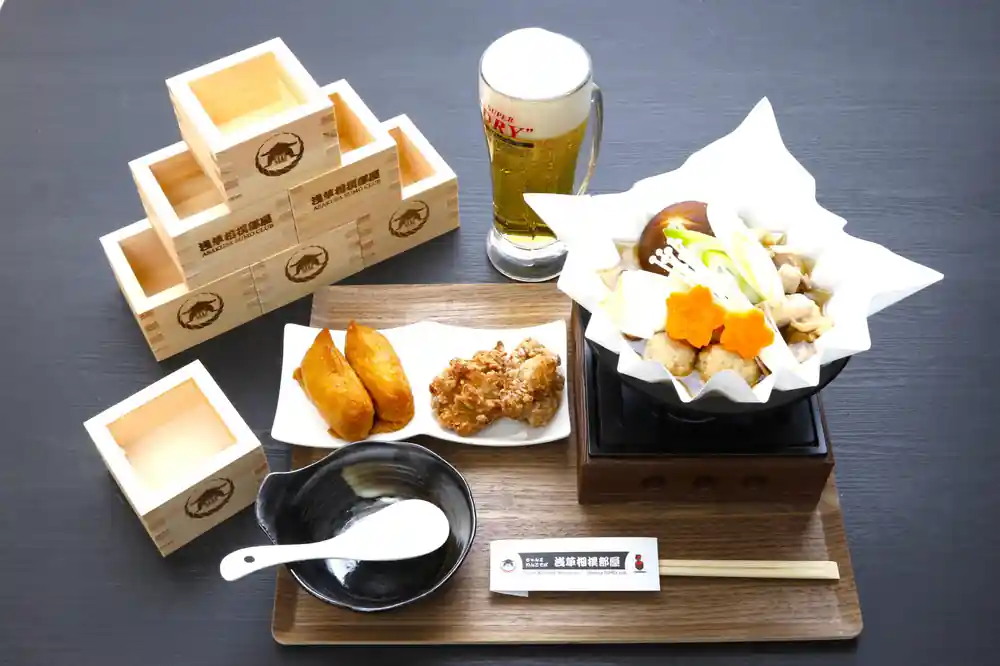
- Chicken chanko-nabe is the centre of the meal, with vegetables, tofu and meatballs simmered at the table and topped up as you eat.
- The Tokyo sumo show with chicken hot pot and geisha starts from US$102 per adult and runs 2 hours.[1]
- A luxury sumo show with Japanese cuisine starts from US$102[2], and a family workshop with lunch starts from US$62.[3]
- Vegetarian, vegan and allergy requests are easiest to handle when you flag them at booking, before the pot goes on the table.
- Reserve now and pay later on the chicken hot pot show, with free cancellation up to 24 hours in advance for a full refund.[1]
- Top choice Chicken Hot Pot & Geisha from US$102 Duration2 hours[1]Rated4.79 from 8,004 reviews[1]CancellationFree cancellation, cancel up to 24 hours before[1]AccessWheelchair accessible[1] Check availability
- Luxury Sumo Show & Cuisine from US$102 Duration2 hours[2]Rated4.72 from 920 reviews[2]CancellationFree cancellation, cancel up to 24 hours before[2]AccessNot stated See this tour
- Family Workshop & Lunch from US$62 Duration2 hours[3]Rated4.90 from 430 reviews[3]CancellationFree cancellation, cancel up to 24 hours before[3]AccessWheelchair accessible[3] See this tour
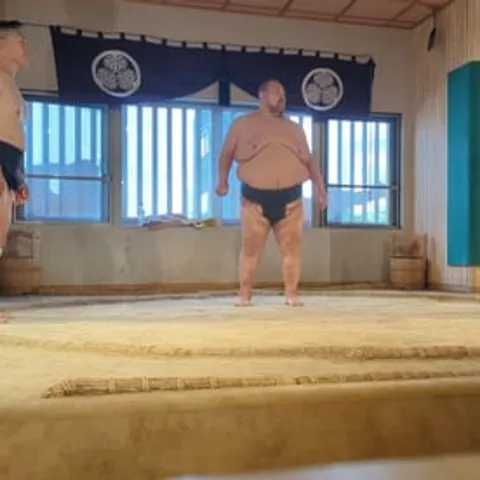
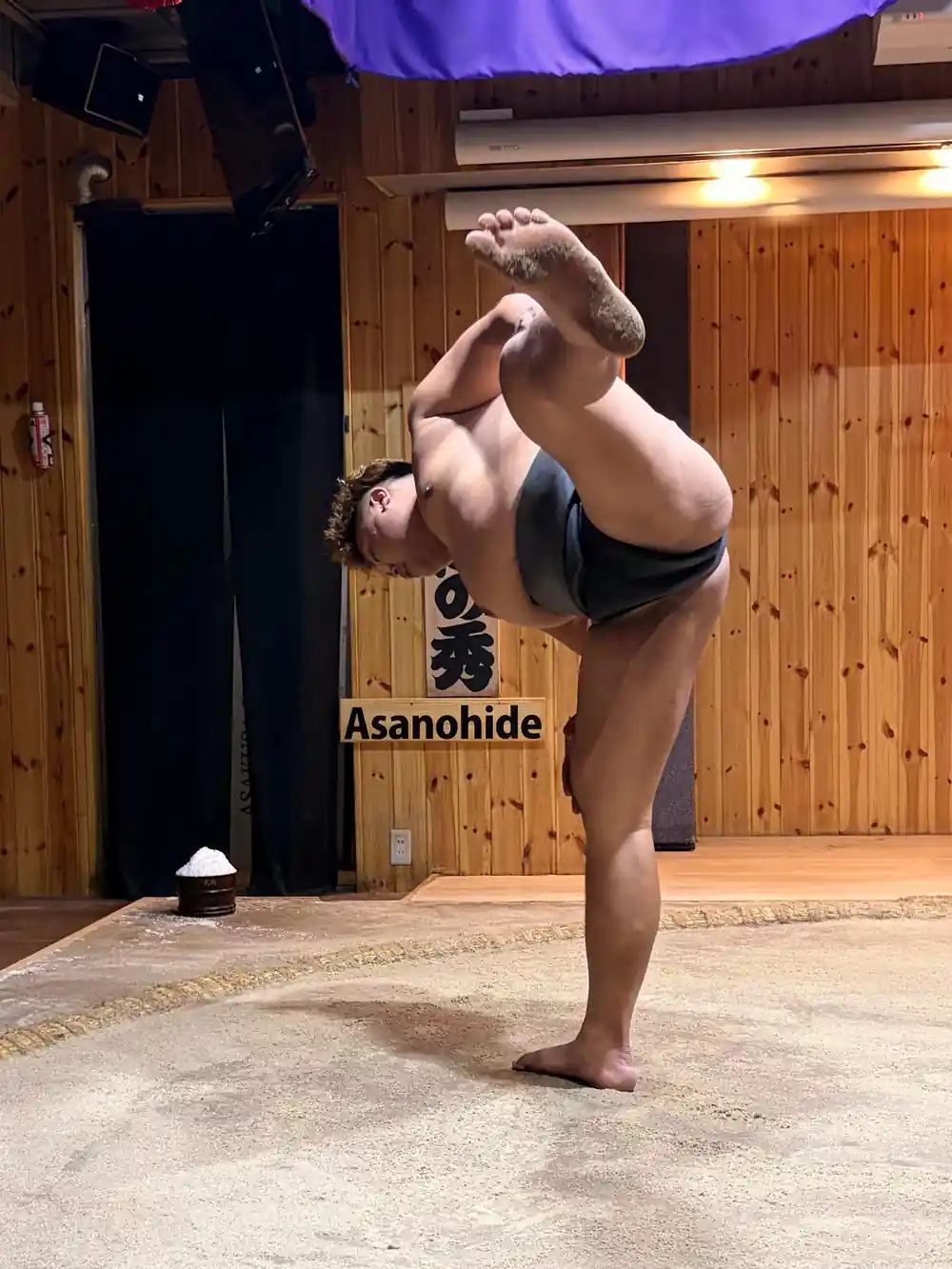
The optimal weight for a modern Japanese sumo wrestler is between 400 and 600 pounds, and that’s sustained by a daily diet of a whopping 20,000 calories!
Is the Chicken Hot Pot Show Worth It?
Booking essentials
At the table
- The broth arrives hot and keeps simmering; let it cool a moment before the first spoonful
- Say hello to the people on your table early, since the pot is shared and refilled through the meal
- Mention allergies and dietary needs at booking, not at the table
- Pace yourself: the pot keeps coming, and there is no prize for finishing first
Chanko-Nabe, the Hot Pot at the Centre of the Meal
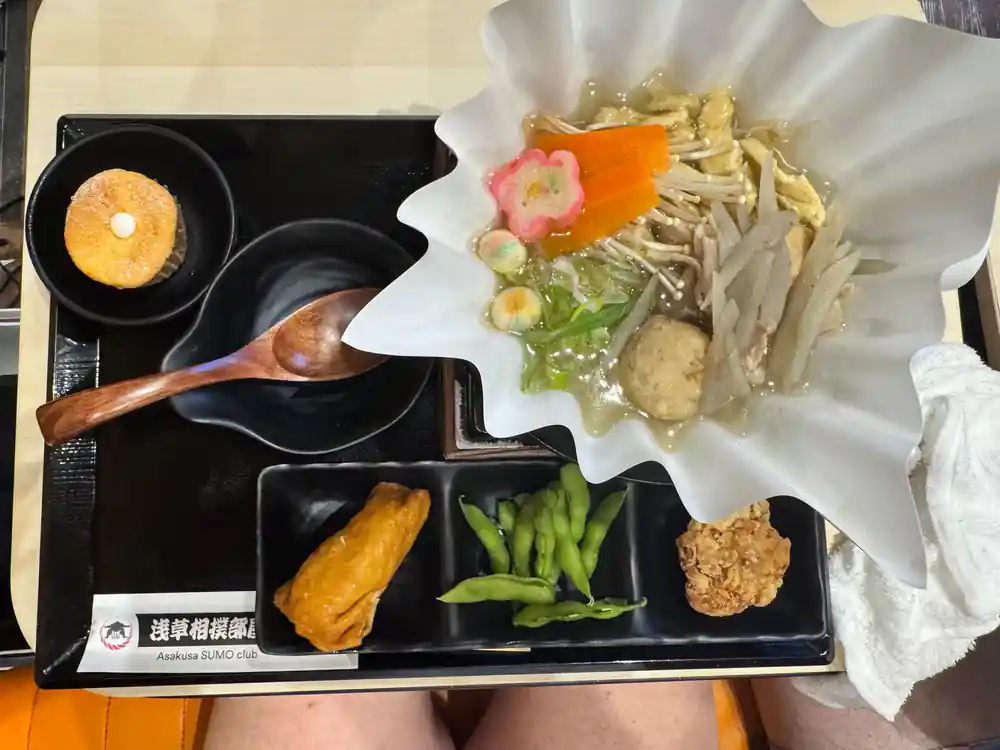
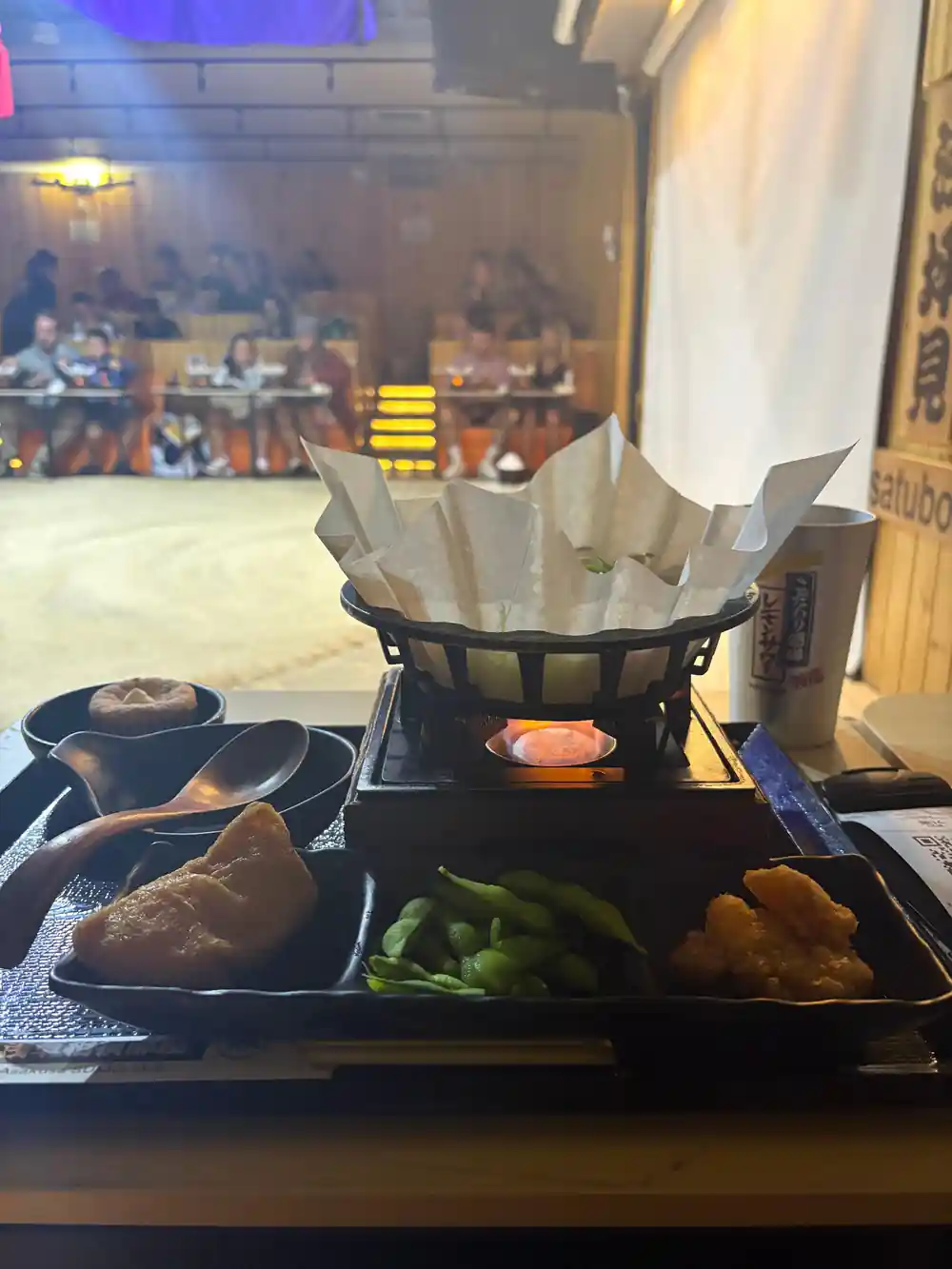
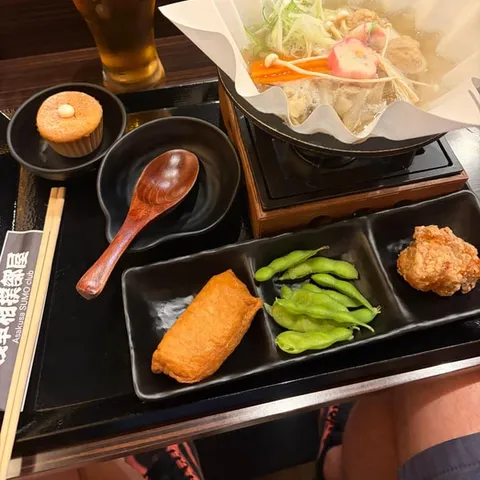
Chanko-nabe is the one-pot dish at the centre of the sumo table. A pot of broth sits between the diners, usually chicken based, and into it go chicken meatballs, tofu, cabbage, mushrooms, leek and whatever vegetables are in season. Everyone eats from the same pot, lifting out what they want, dipping it in a small bowl of sauce, then adding more. It is a meal built for sharing and for second helpings.
The evening you book from this site puts that pot at the centre of the night. Tokyo: Sumo Entertainment Show with Chicken Hot Pot & Geisha runs 2 hours, starts from US$102, and has small group seating available.[1] Geisha entertainment is part of the format, and a geisha's role is to make guests feel at ease with conversation, drinking games and dance performances.[4]
Portions at a sumo table are generous. For a modern Japanese sumo wrestler the optimal weight is between 400 and 600 pounds, sustained by a daily diet of 20,000 calories.[5] A study of 25 makuuchi wrestlers put average weight at 161.2 kg and average height at 186.3 cm.[6] You do not have to match any of that, but the style of eating, one pot with steady top-ups, comes from the same world.
What Else Comes With the Chicken Hot Pot
A chanko-nabe pot is broth, protein and vegetables, and most tables add rice, pickles and a few small side dishes. Chicken meatballs, tofu and greens are the usual line-up, with the leafy things added near the end so they keep some bite. Some kitchens finish the pot by stirring noodles or rice into the last of the broth. Drinks tend to be simple: something cold, and a cup of tea on the side.
If you want a grander table, the Luxury Sumo Show Experience & Japanese cuisine & Drink runs 2 hours and starts from US$102.[2] For a family table, the Family Sumo Workshop & Live Wrestling Show with Lunch runs 2 hours, starts from US$62 and is wheelchair accessible.[3] The chicken hot pot show is rated 4.79 from 8,004 reviews.[1]
Portion sizes on the night depend on the set menu, so say something when you book if you are a big eater or if you would rather have a lighter pot. Extra rice and vegetables are the usual way a chanko table stretches, and you can always ask for the broth to be topped up.
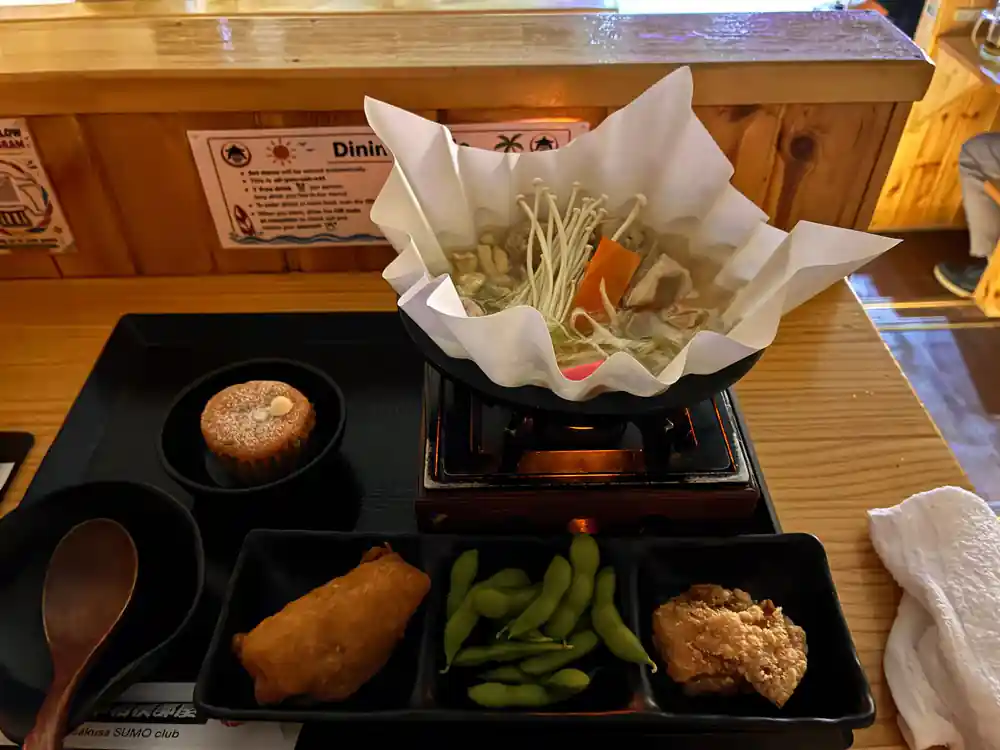
Chicken hot pot and side dishes arrive together, ready for the first round of the evening.
How the Meal and Drinks Run on the Night
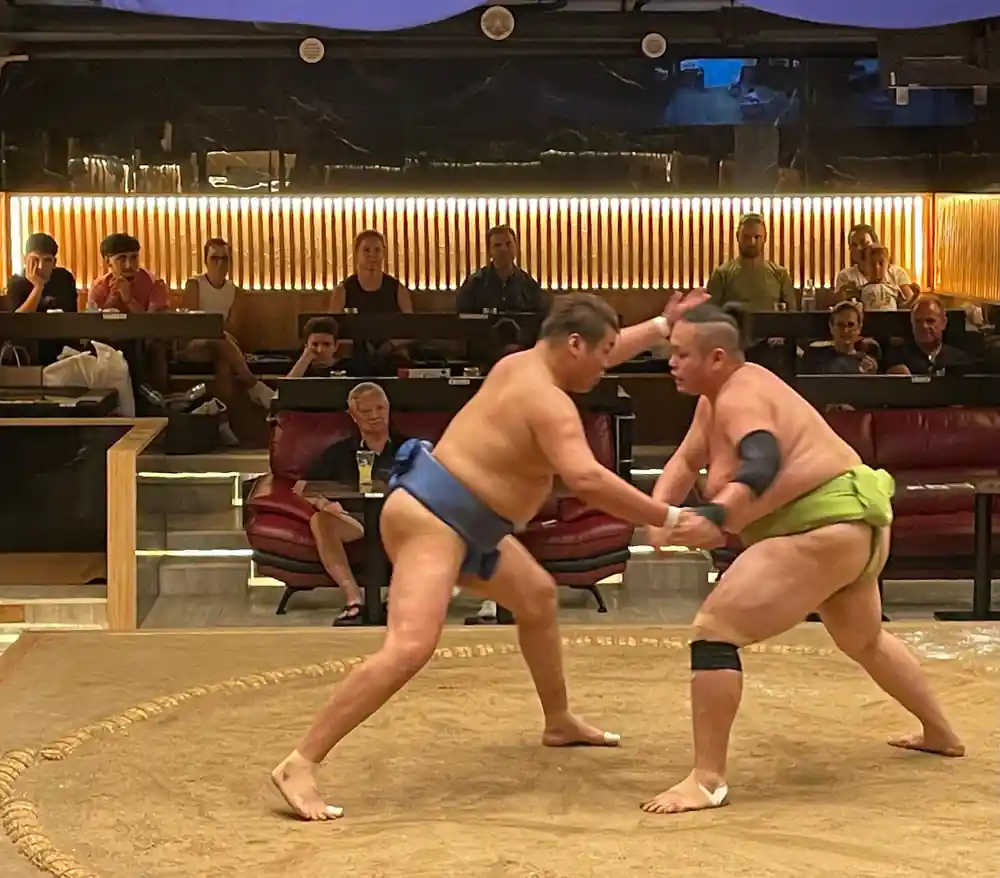
Expect a steady rhythm rather than a long menu. The pot arrives, the broth comes to a simmer, and the first ingredients go in. The ring action is quick: a bout lasts 20-30 seconds[7], and the dohyo the wrestlers use is 14.93 feet (4.55 m) across[8]. Between those short bursts there is time to eat, talk and settle back with a drink.
Practical details matter more than expected. The chicken hot pot show runs 2 hours, so check availability to see starting times for the date you want.[1] Reserve now and pay later is offered, and free cancellation applies up to 24 hours in advance for a full refund.[1] If a flight or a day trip might still shift, that is useful room to move.
On drinks, a Japanese table usually opens with a toast and a cold glass. Beer, sake, shochu, tea and soft drinks all sit comfortably beside a hot pot, and a cup of tea between rounds keeps you going. Ask what the venue pours before you order a bottle, and pace the strong drinks across the two hours.
Vegetarian, Vegan and Other Dietary Choices
A one-pot meal is easy to change if you do not eat chicken or meat. The usual swaps are mushrooms, tofu, fried tofu pouches, daikon, cabbage and greens, with a kombu or vegetable stock instead of chicken broth. Say so when you book rather than at the table, so the kitchen has time to prepare a separate pot and a clean ladle.
For vegan travellers the ingredients to watch are dashi, often made with fish, and egg in some dumplings or dipping sauces. Pescatarian, halal-style and no-pork requests vary from venue to venue, so put yours in writing and keep it simple: vegetables only, no fish stock, no egg. The chicken hot pot show has small group seating available.[1]
If your group mixes meat eaters and vegetarians, put it in one booking note with the number of each. A separate pot, a separate ladle and a clear list of what to leave out is all the kitchen needs to get it right on the night.
from US$102
The Tokyo sumo show with chicken hot pot and geisha runs 2 hours, from US$102 per adult, with small group seating available.[1]
Allergies and Ingredients to Flag Early
Japanese cooking leans on soy, wheat, egg, sesame and fish stock, so a written note about your allergies is worth carrying. A few lines in Japanese, printed or saved on your phone, save a lot of explaining at the table. In a hot pot the ingredients that catch people out are dashi in the broth, soy in the dipping sauce, and wheat in some meatballs and dumplings.
Flag your allergies when you book and again when you arrive, before the pot goes on. If you carry medication, keep it with you rather than in a bag left at the door. Wheelchair accessible seating is noted for the chicken hot pot show.[1]
Cross-contact is the harder problem in a shared kitchen, so be explicit if a trace matters, not just the ingredient itself. Most hosts would rather hear about a serious allergy twice than not at all.
Children, Family Portions and Sharing
Chanko-nabe is mild, so it suits children who are not keen on spice. Expect chicken, tofu, vegetables and rice rather than anything hot, and lift younger diners' portions out of the pot early, before the broth reduces too far. Sharing one pot also means a fussy eater can stick to rice and a little chicken without a separate order.
For a family table, the Family Sumo Workshop & Live Wrestling Show with Lunch runs 2 hours, starts from US$62, is wheelchair accessible and has an English and Japanese instructor.[3] Small group seating is available on the chicken hot pot show as well.[1]
Ask for a seat with a little space around it if you are juggling children and bowls, and keep the youngest away from the pot's edge. Two hours is a comfortable length for most families, with the ring action breaking up the meal.
Making the Most of Your Sumo Dinner Show
Give the meal the whole evening. Arrive a little early, keep the heavy day trip for another day, and plan a slow walk afterwards instead of another booking. Loose clothing and shoes you can slip off are sensible if you end up on cushions or a low bench. If you want more sumo, add a morning practice: asageiko typically begins between 5:00 and 7:30 AM and runs 2-4 hours, with the exact start varying by stable and season.[9]
Ryogoku, the sumo quarter of Tokyo, is worth an hour on foot, and the Kokugikan arena there has a spectator capacity of up to 10,000.[10] Grand Sumo Tournaments come to Tokyo in January, May and September.[11] If your trip lands in one of those months, plan the sumo parts of your trip first, then build the day around food, ring and a short walk home.
From-prices for Tokyo sumo shows with a meal
From-prices per adult in US dollars for four Tokyo sumo listings that include food.[1][2][3][12]
What a Tokyo sumo meal costs
From-prices in US dollars as listed for each tour; no separate child price is listed.[1][2][3][12]
When to book your sumo dinner show
Plan your chanko evening
Choose your show
Decide between the chicken hot pot show, a luxury dinner show and a family workshop with lunch before you fix the rest of your day.
Book and hold the date
Reserve now and pay later is offered, and free cancellation runs up to 24 hours in advance for a full refund.[1]
Flag dietary needs
Note vegetarian, vegan or allergy requests when you book so the kitchen can prepare a separate pot and a clean ladle.
Arrive ready to eat
Come hungry, wear loose clothing, and check availability to see the starting time for your date.[1]
Pace the pot and the drinks
Alternate beer or sake with tea or water, and take vegetables out of the broth early so they keep their bite.
Book the chicken hot pot and geisha evening
from US$102Reserve now & pay later