Worth remembering
- Professional sumo is divided into 6 divisions, and the top division, Makuuchi, contains 42 wrestlers.[1]
- Six Grand Sumo Tournaments are held each year, in Tokyo in January, May and September, in Osaka in March, in Nagoya in July and in Fukuoka in November.[2]
- Bouts last 20-30 seconds, and there is a ceremony before each bout.[3] Expect quick bursts of action between long stretches of ritual.
- According to Keio University research, 25 makuuchi wrestlers averaged 161.2 kg in weight and 186.3 cm in height.[4]
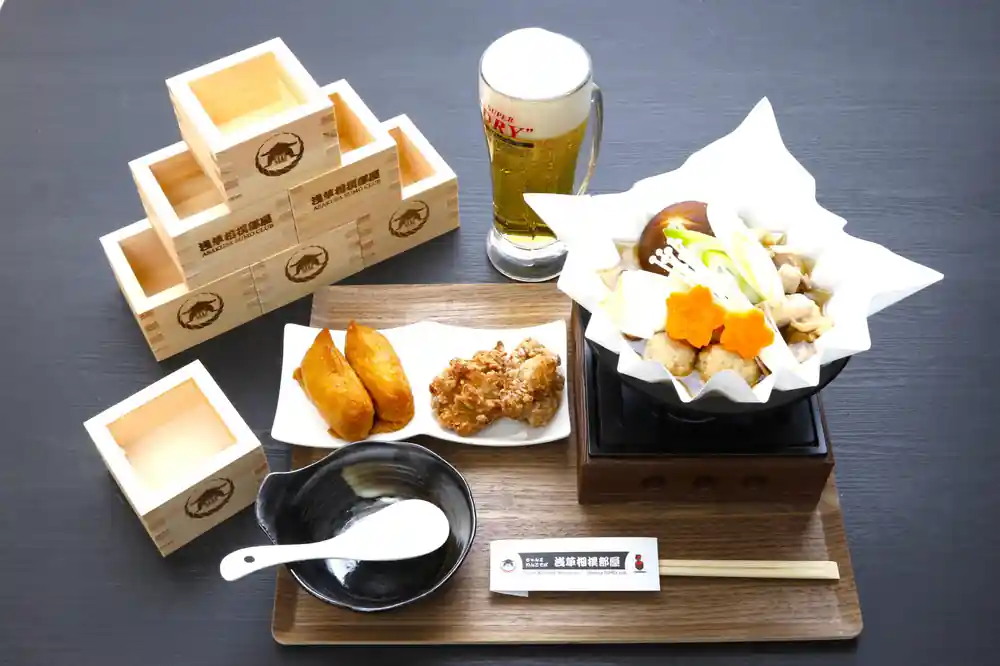
- The Tokyo sumo entertainment show with chicken hot pot and geisha runs 2 hours, starts from US$102 and is rated 4.79 from 8,004 reviews.[5]
- Top choice Chicken Hot Pot & Geisha from US$102 Duration2 hours[5]Rated4.79 from 8,004 reviews[5]CancellationFree cancellation up to 24 hours in advance[5]Good to knowWheelchair accessible[5] Check availability
- Family Sumo Workshop from US$62 Duration2 hours[6]Rated4.90 from 430 reviews[6]CancellationFree cancellation up to 24 hours in advance[6]Good to knowSkip the line, wheelchair accessible[6] See this tour
- Ginza Sumo Show from US$61 Duration1.5 hours[7]Rated4.57 from 1,459 reviews[7]CancellationFree cancellation up to 24 hours in advance[7]Good to knowWheelchair accessible[7] See this tour
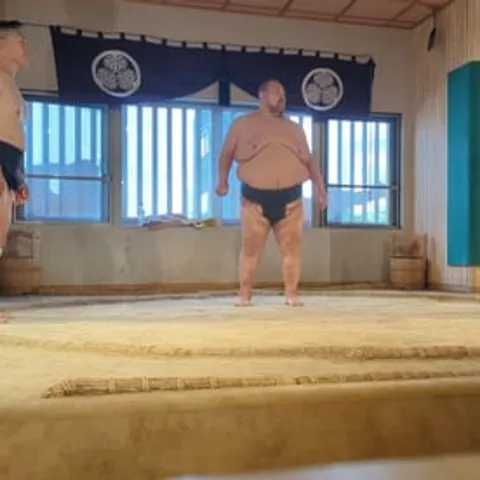
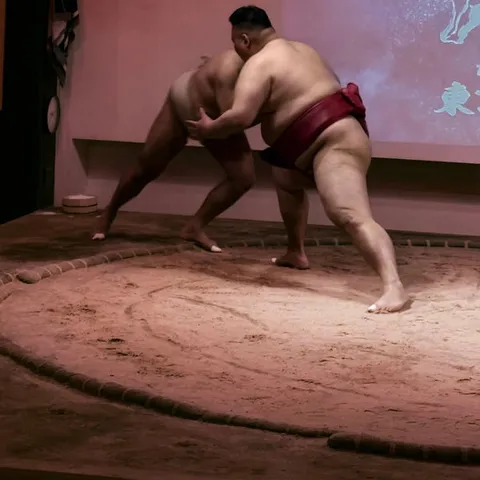
Professional sumo consists of approximately 550 rikishi divided into 6 divisions. The top division, called Makuuchi, includes the top 42 wrestlers in the sport.
Is a sumo day worth building into your Tokyo trip?
Read before booking
- Check the tournament months in Tokyo, Osaka, Nagoya and Fukuoka.[2]
- Book a sumo show or tournament seat in advance if your dates are fixed.
- Tokyo sumo shows start from US$61, with the hot pot and geisha show from US$102.[5][7]
- A wheelchair seat costs 8,000 yen and covers a wheelchair user and one companion.[8]
On the day
- Morning practice typically starts between 5:00 and 7:30 AM and runs 2-4 hours.[9]
- Small group places are listed on the hot pot and geisha show in Tokyo.[5]
- Dress in light layers, and bring a small towel for the warm rooms.
- Arrive early, find your seat, and watch the ring preparations before the first bout.
The Six Divisions and Where Everyone Starts
Professional sumo is divided into 6 divisions, and the top division, Makuuchi, contains 42 wrestlers.[1] Under the Nihon Sumo Kyokai, the association that governs the sport, there are 47 stables training nearly 700 wrestlers.[10] A new recruit joins a stable, lives there, trains there and eats there, and progress comes through results on the clay. That is where the banzuke comes in: it is the list that sets out who stands where before each tournament begins.
The banzuke is the ranking sheet. It carries the ranked wrestlers of every division, from the names at the very top down to the newest men on the list, and it turns a sport of short, explosive bouts into a long story told across a year. Read one carefully and you can see who is rising, who is holding on and who is running out of room. In Japan it is treated as news, not paperwork, and fans study it for days after it appears.
Reading the Banzuke Ranking Scroll
A banzuke is read from the top down. The highest ranks sit at the top of the sheet and the lowest at the bottom, and each name carries the division and position it holds. Learning how sumo tournaments work is mostly learning to read this one document: names that move up have earned it, names that move down have not, and the rest stay put. There are no points tables and no league table, just a list that is rewritten as results come in.
Six Grand Sumo Tournaments are held each year, in Tokyo in January, May and September, in Osaka in March, in Nagoya in July and in Fukuoka in November.[2] For a traveller, that rhythm is useful. In a tournament month you can watch the top division in a proper arena, with all the ceremony that comes with it. Outside those months the show circuit in Tokyo keeps running, and a good show explains the sport faster than any book.
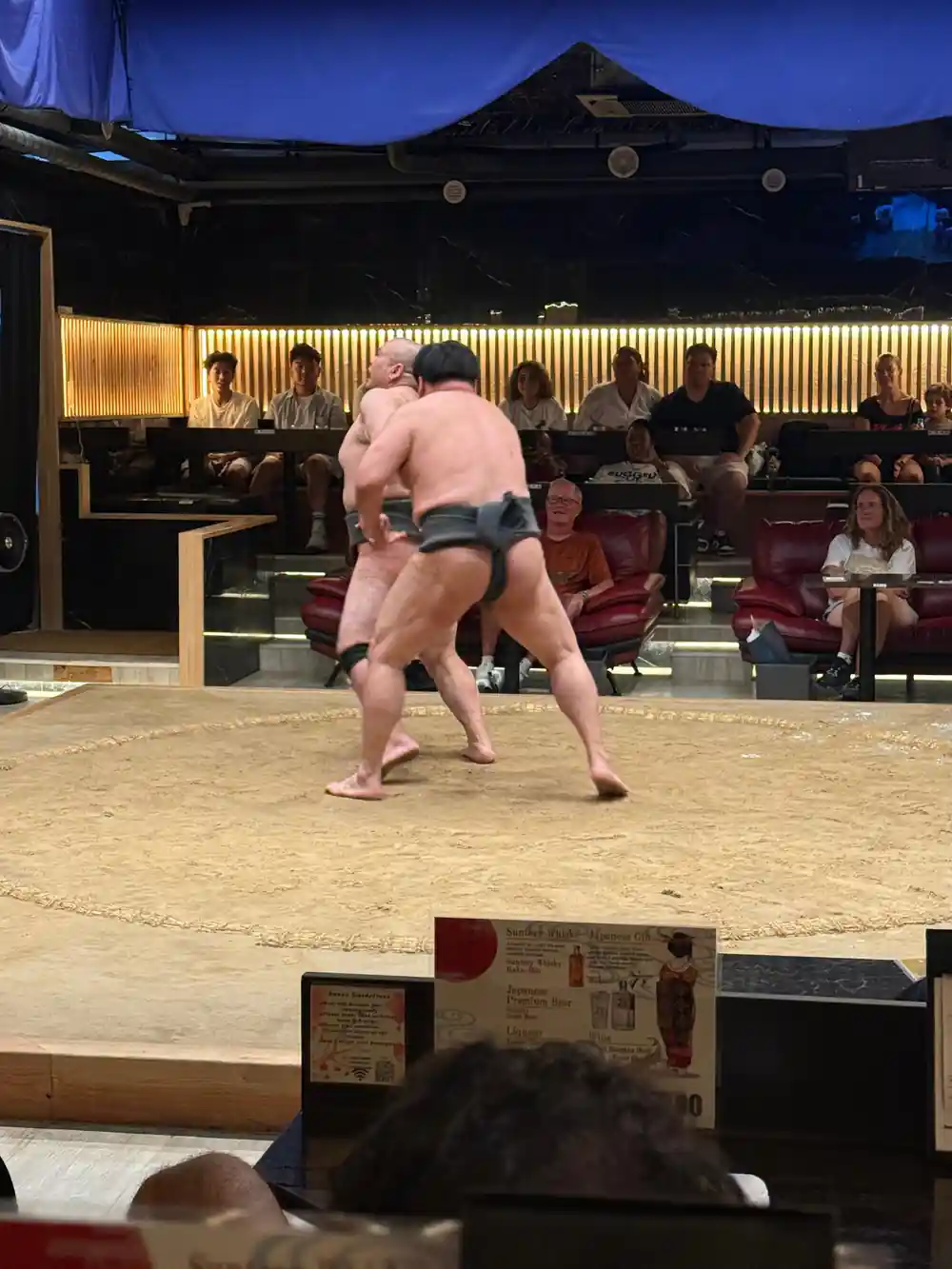
A packed arena around the dohyo before the first bout of the day.
How Tournament Results Drive Promotion and Demotion
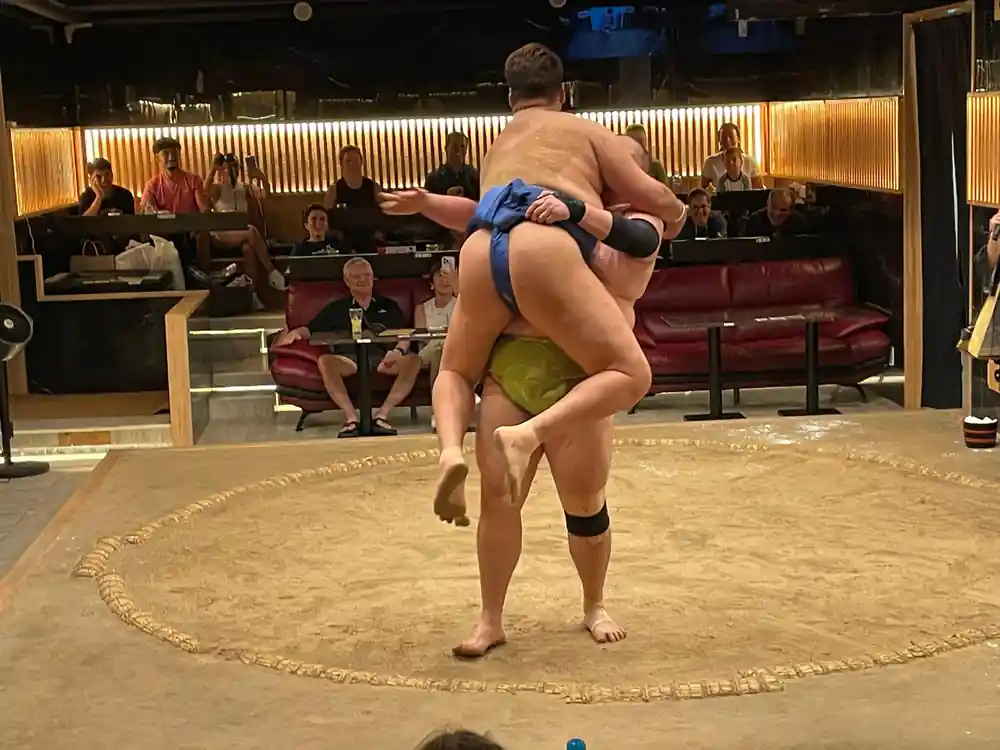
The bouts themselves are startlingly short. Bouts last 20-30 seconds, and there is a ceremony before each bout.[3] In sumo, there are 82 kimarite, or match winning techniques, and 5 non-techniques or ways to lose, all defined by Japan Sumo Association.[11] Much of what looks like raw pushing is one of those techniques being applied at speed by men who have drilled it thousands of times since they were teenagers.
Results then feed the banzuke. A wrestler who strings wins together at a given rank moves up the sheet, and a wrestler who loses more than he wins slides down it. Professional sumo is divided into 6 divisions, and the top division, Makuuchi, contains 42 wrestlers.[1] The lower down you sit, the longer the road back, and the men at the top of Makuuchi guard their places hard against the ranks pressing beneath them.
Every tournament ends with arguments about who deserved to move up and who was lucky to stay where they were. That argument is the sport's oldest conversation, and it is what keeps a printed list feeling like a live scoreboard long after the final bout of the day has finished.
The Path to Ozeki and the Yokozuna Belt
Above the ranked body of Makuuchi sit the sport's senior ranks, and the highest of them all is the yokozuna. The yokozuna belt, the thick braided rope worn for the ring-entering ceremony, is the clearest sign in sumo that a wrestler has reached the summit. It is not a trophy kept in a cabinet. The rope is worn for the ceremony, and it marks the man who carries the rank.
Ozeki sits directly below yokozuna, and together the two ranks are the summit of a career that most rikishi never come close to. Reaching them means years near the top of Makuuchi, taking on the best men on the banzuke and beating enough of them to be noticed. Professional sumo is divided into 6 divisions, and the top division, Makuuchi, contains 42 wrestlers.[1] At that level, everyone knows everyone else's habits.
Wrestlers born outside Japan compete in the same divisions, and names such as Aonishiki have brought sumo wrestling to audiences far from Ryogoku. The ranking system travels well too. Once you know what the lines on a banzuke mean, the sport reads the same in any language, which is part of the reason it has picked up followers well beyond Japan.
from US$102
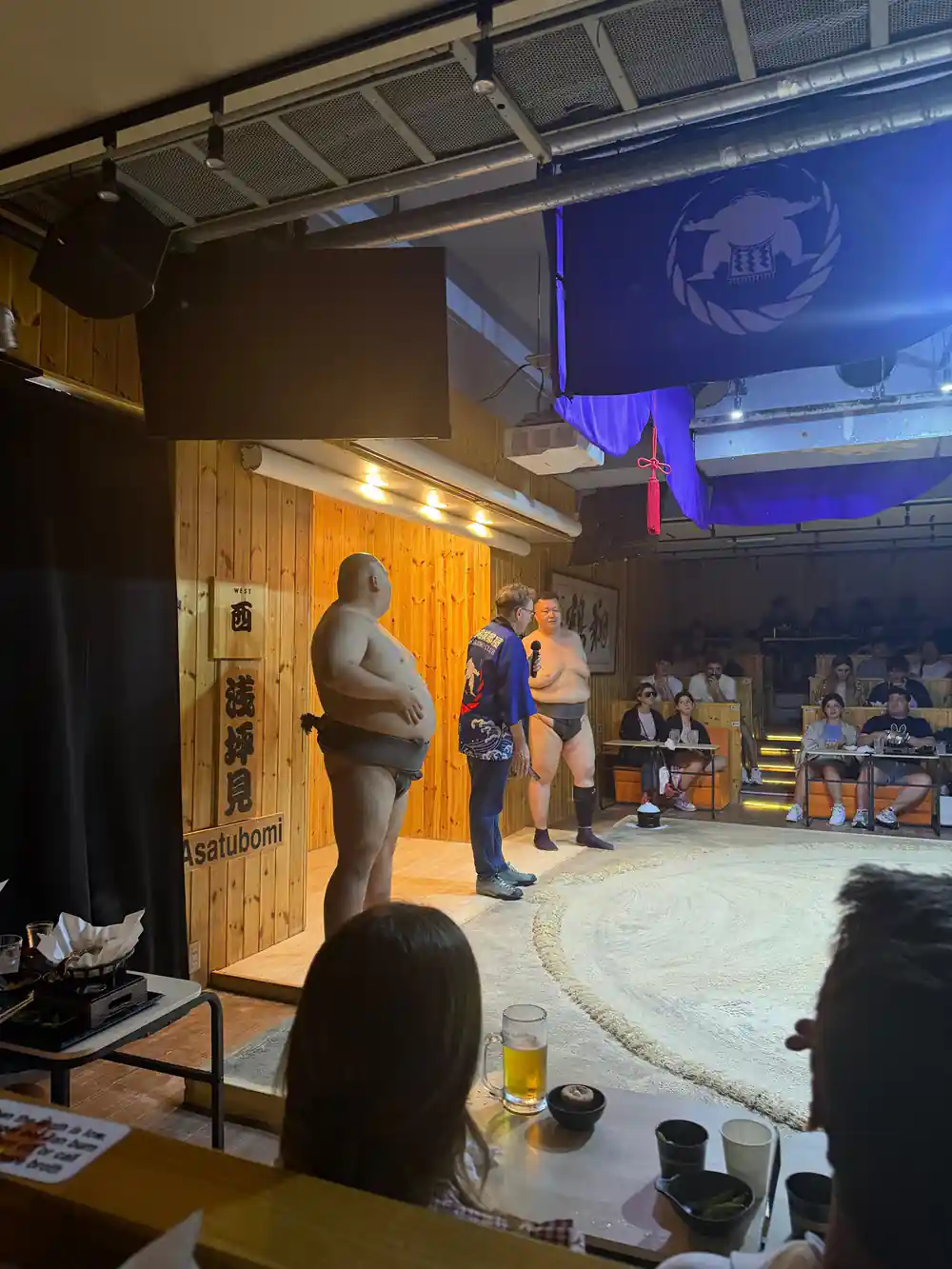
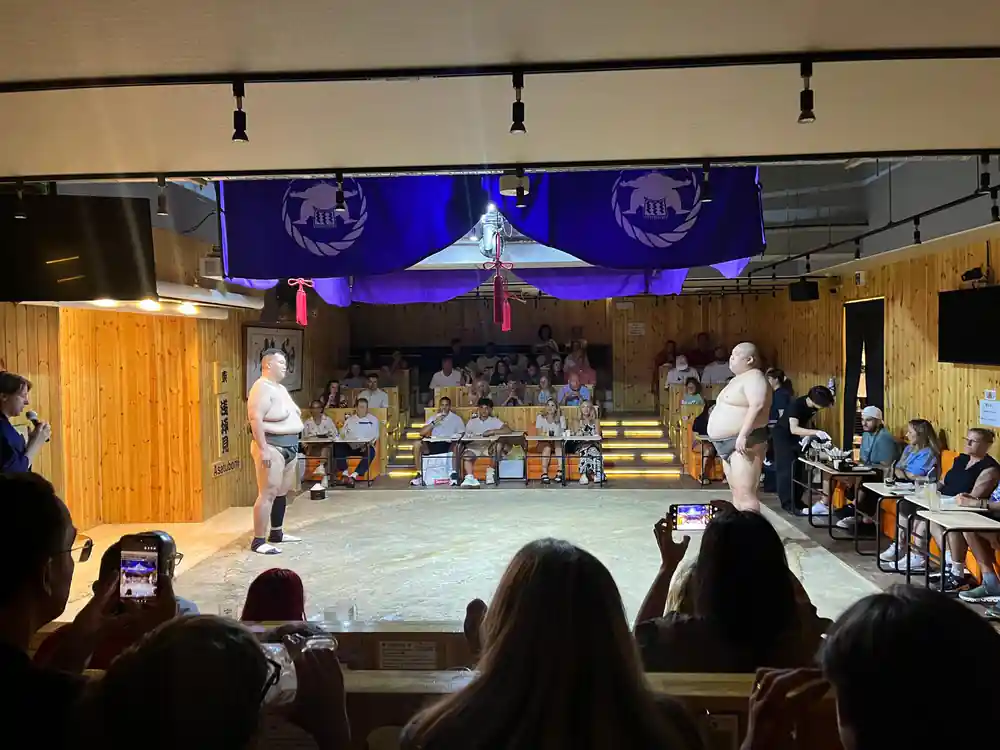
The Tokyo Sumo Entertainment Show with Chicken Hot Pot & Geisha runs 2 hours and is rated 4.79 from 8,004 reviews.[5]
The Dohyo, the Stable and the Training Day
The ring is called the dohyo, and it is a circle of packed clay with a diameter of 14.93 feet (4.55 m).[12] It is rebuilt for tournaments, and the surface is unforgiving when a wrestler lands on it. Practice is where most of the work happens: morning practice typically begins between 5:00 and 7:30 AM and continues for 2-4 hours, and the exact start time varies by stable and season.[9]
The diet behind those bodies is a discipline of its own. A modern Japanese sumo wrestler's optimal weight of between 400 and 600 pounds is sustained by a daily diet of 20,000 calories.[13] Chanko nabe, the hot pot cooked in the stables, is usually the first sumo food a visitor tastes, and it explains a lot about how these men eat and recover.
Sizes vary enormously, of course. According to research conducted by the Keio University Sports Medicine Research Center, 25 makuuchi wrestlers averaged 161.2 kg in weight and 186.3 cm in height.[4] Those averages tell you what the top division looks like up close: not simply heavy, but tall, balanced and quick for their size, with the footwork to prove it.
Where to Watch Sumo in Tokyo
Six Grand Sumo Tournaments are held each year, in Tokyo in January, May and September, in Osaka in March, in Nagoya in July and in Fukuoka in November.[2] The Ryogoku Kokugikan sumo arena in Sumida City, Tokyo has a spectator capacity of up to 10,000.[14] For wheelchair users, a wheelchair seat costs 8,000 yen and is for two people, a wheelchair user and one accompanying person.[8]
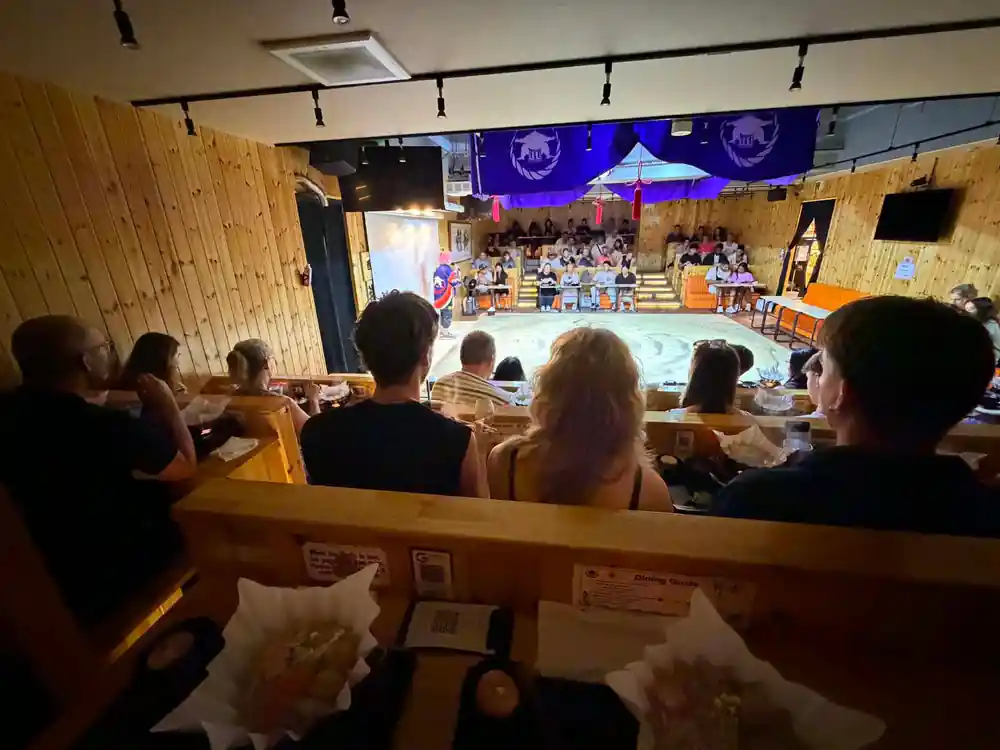
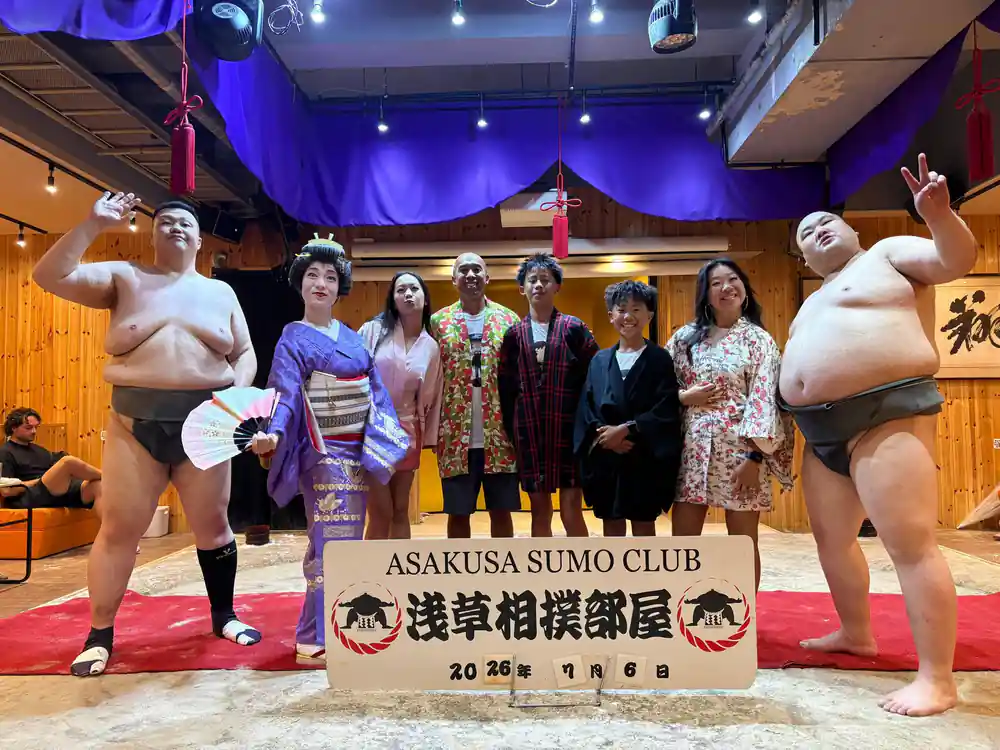
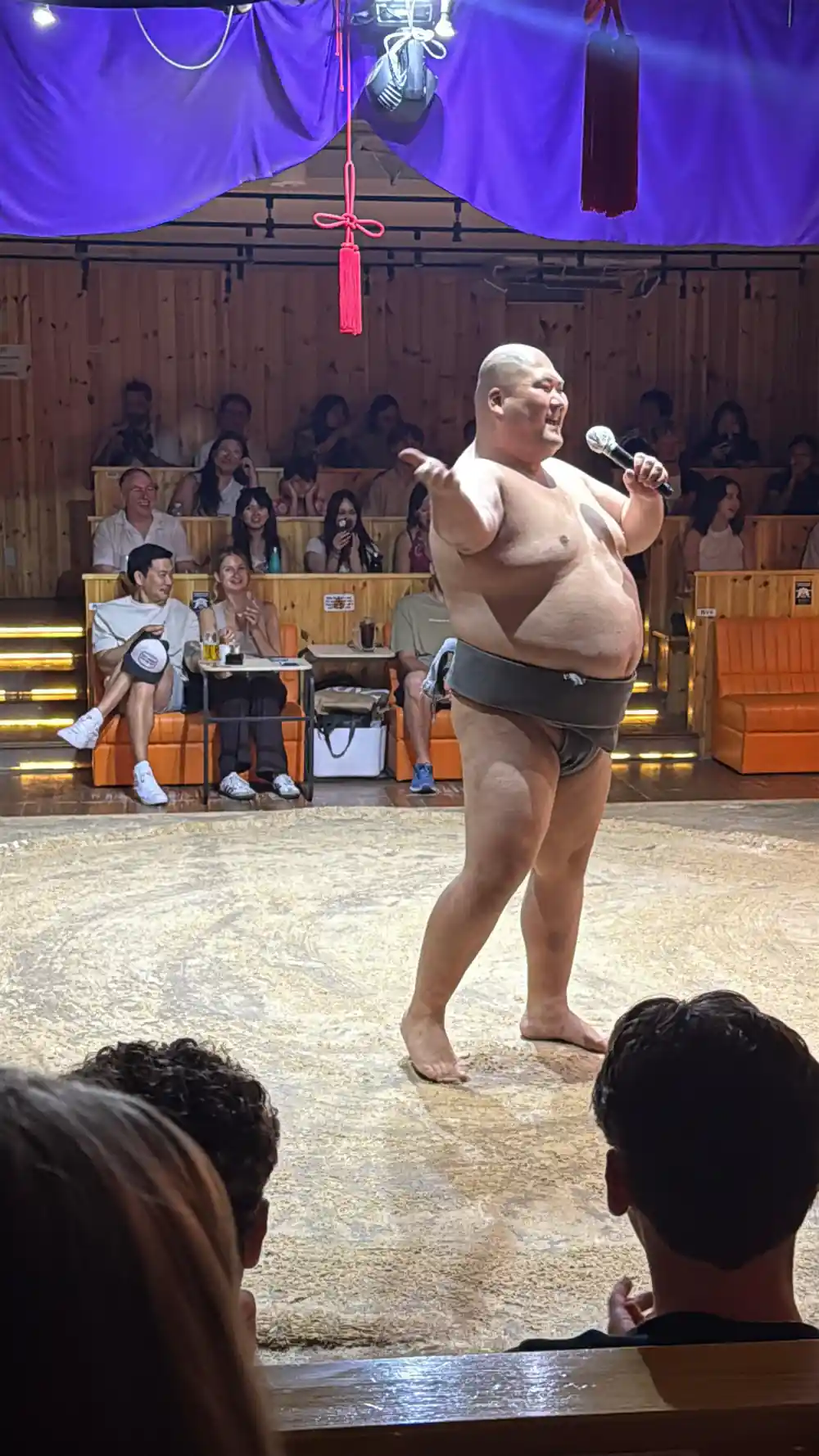
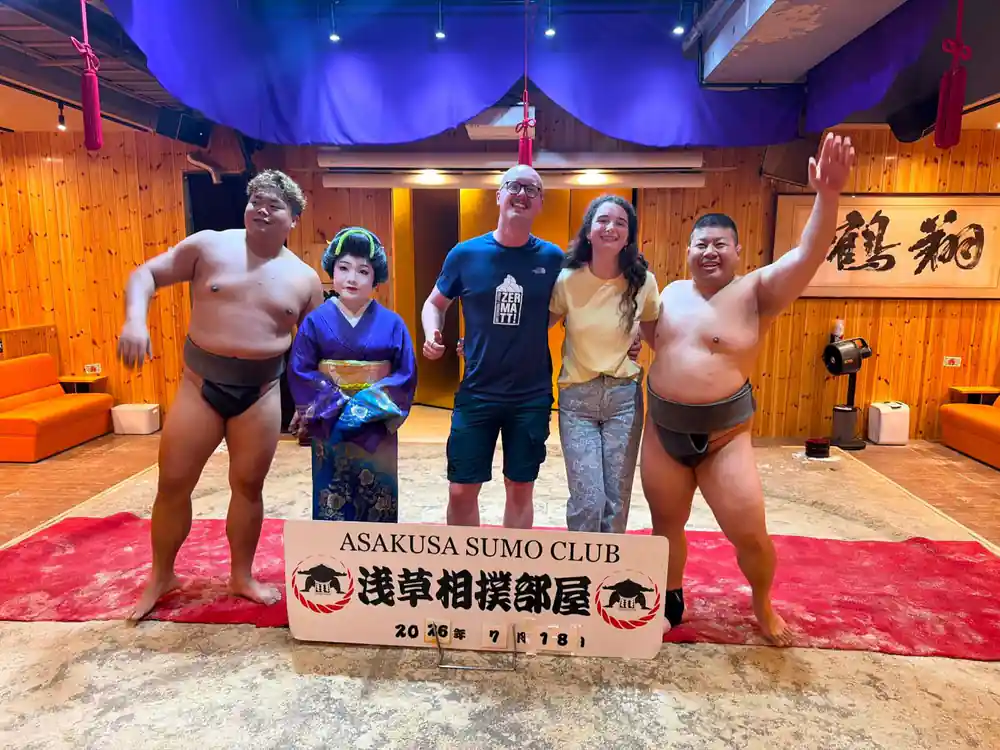
Outside those months, Tokyo sumo shows run all year, and they are the easiest way to see the sport up close. Tokyo: Sumo Entertainment Show with Chicken Hot Pot & Geisha runs 2 hours, starts from US$102 and is rated 4.79 from 8,004 reviews; small group places are available, the venue is wheelchair accessible, and free cancellation is offered up to 24 hours in advance.[5] A geisha's role is to make guests feel at ease with conversation, drinking games and dance performances.[15]
Other Tokyo options suit different tastes and budgets. Tokyo Ginza Sumo Show: Live Performance & Photo Experience runs 1.5 hours and starts from US$61,[7] while Tokyo: Family Sumo Workshop & Live Wrestling Show with Lunch runs 2 hours and starts from US$62.[6] Both are wheelchair accessible and both offer free cancellation up to 24 hours in advance.[6][7] Morning practice is a quieter experience again, staged in a working stable before most of the city is awake.
How Many Wrestlers Ever Reach the Top Division
Makuuchi contains 42 wrestlers, and there are nearly 700 wrestlers training in 47 stables.[1][10] That is the story of sumo ambition in two numbers: the top division is a small room, and the queue outside it is long. Wrestlers spend years in the divisions below, training at dawn, eating enormous meals and waiting for a run of results that carries them up a line on the sheet.
For a traveller, that rarity is part of the appeal. Watching a bout that lasts 20-30 seconds, among men who have spent years earning the right to be on the clay at all, is a different experience from watching a staged show.[3] The show explains the sport quickly and comfortably. The tournament shows you what the ranking actually costs the people in it.
Read the banzuke before you go, even if you only skim it. Learn the divisions and the senior ranks, watch how the sheet moves after each tournament, and the sport opens up. Then choose your experience: a morning at a real stable, an evening of chicken hot pot and geisha, or a tournament day in Ryogoku with a full arena around you.
Reviews for Tokyo sumo shows
Review counts as listed for each Tokyo sumo show:[5][6][7][16][17]
Tokyo sumo show prices per person
From-prices per adult as listed on GetYourGuide:[5][6][7][18]
When the Grand Sumo Tournaments run
Plan your sumo trip
Check the tournament calendar
Six Grand Sumo Tournaments run each year, in Tokyo in January, May and September, in Osaka in March, in Nagoya in July and in Fukuoka in November.[2]
Learn the ranks before you go
Professional sumo is divided into 6 divisions, and the top division, Makuuchi, contains 42 wrestlers.[1]
Decide between a tournament and a show
A tournament day gives you the top division in a full arena, while a Tokyo dinner show gives you food, wrestling and a much closer seat.
Sort out access and seating
A wheelchair seat costs 8,000 yen and is for two people, a wheelchair user and one accompanying person.[8]
Book early and check the policy
The tour booked from this site offers free cancellation up to 24 hours in advance, plus reserve now and pay later.[5]
See the sumo show with chicken hot pot and geisha
from US$102Reserve now & pay later