Worth remembering
- Sumo's origins date back 2,000 years, and it did not flourish as a spectator sport until the early 1600s.[1]
- A sumo dohyo is 14.93 feet (4.55 m) across, and wrestlers scatter salt to purify the ring before a bout.[2]
- Six Grand Sumo Tournaments run each year: Tokyo in January, May and September, Osaka in March, Nagoya in July and Fukuoka in November.[3]
- A bout typically lasts 20-30 seconds, and the sport counts 82 kimarite and 5 non-techniques.[4][5]
- The Sumo Entertainment Show with Chicken Hot Pot and Geisha lasts 2 hours and costs from US$102.[6]
- Top choice Hot Pot & Geisha Show from US$102 Duration2 hours[6]Rating4.79 from 8,004 reviews[6]Good to knowSmall group available[6]CancellationFree cancellation up to 24 hours[6] Check availability
- Family Sumo Workshop from US$62 Duration2 hours[7]Rating4.90 from 430 reviews[7]Good to knowEnglish and Japanese instructor[7]CancellationFree cancellation up to 24 hours[7] See this tour
- Ginza Sumo Show from US$61 Duration1.5 hours[8]Rating4.57 from 1,459 reviews[8]Good to knowWheelchair accessible[8]CancellationFree cancellation up to 24 hours[8] See this tour
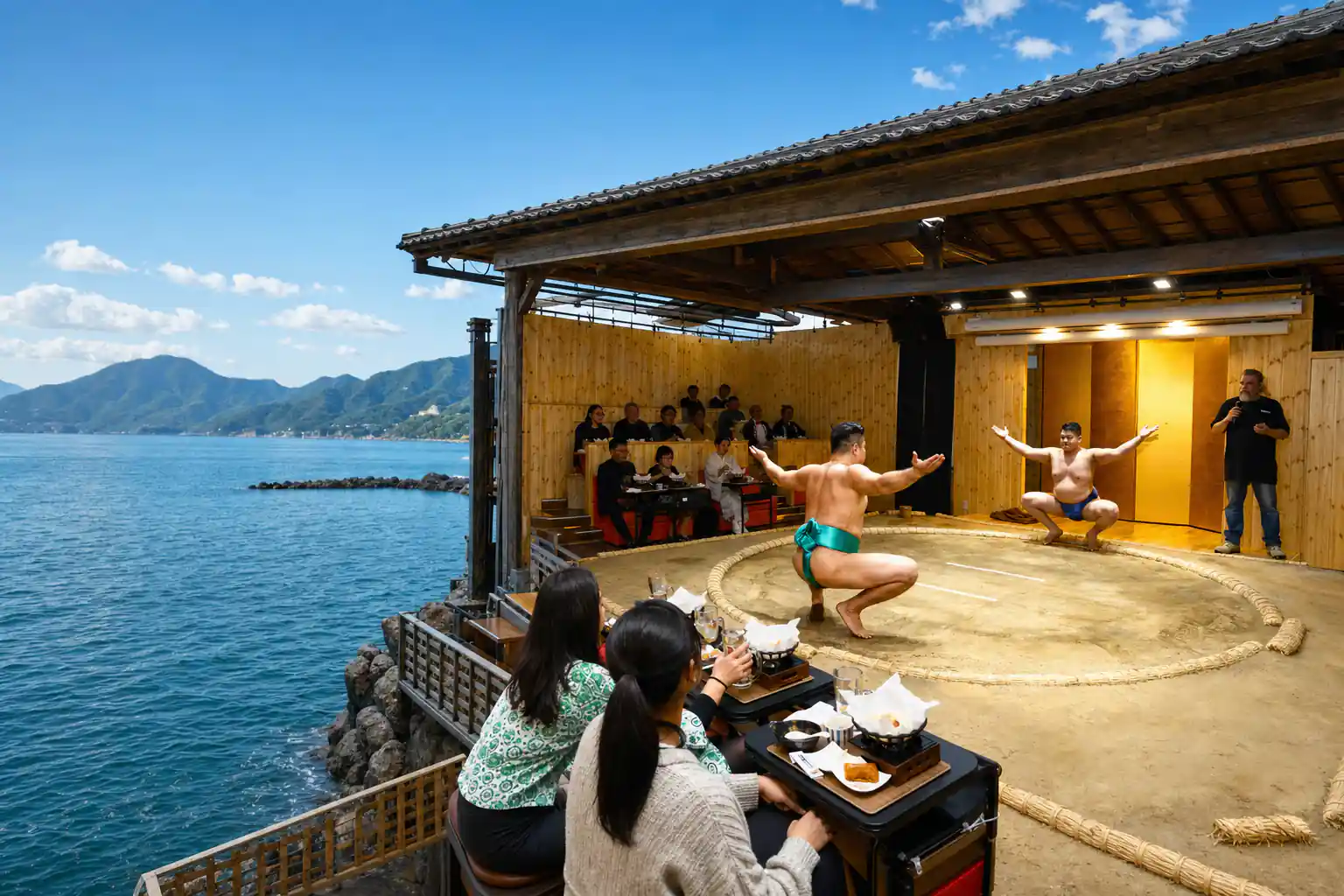
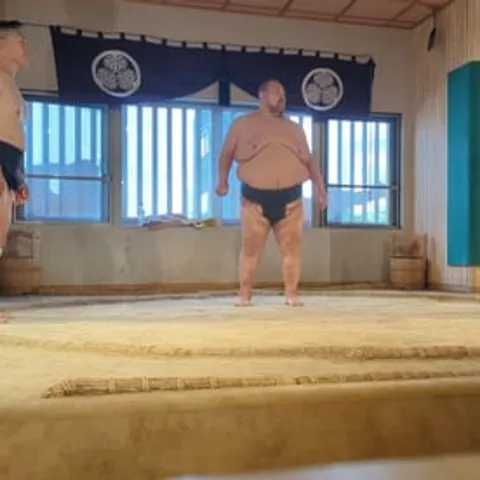
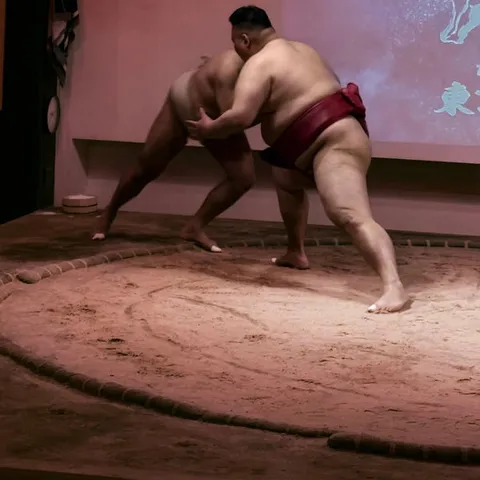
Historians agree that the origins of sumo date back 2000 years; however, it never really flourished as a spectator sport until the early 1600's.
Should you build a trip around sumo?
Read before booking
On the day
- Check availability to see starting times when you book[6]
- Evening shows are indoors; a light layer is usually enough
- Chanko nabe arrives hot; give the pot a moment before the first spoonful
- Sit where you can see the ring's edge, where the footwork is easiest to follow
From Shinto Ritual to Ring Sport
Sumo is far older than almost any sport still watched today. Historians agree that its origins date back 2,000 years, and that it did not really flourish as a spectator sport until the early 1600s.[1] What began around shrine grounds, bound up with Shinto ritual, slowly became something crowds came to watch. The salt, the stomping and the carefully swept clay ring survived that journey intact. They are not extras laid on for visitors. They are the oldest part of the sport, and they are the reason a bout can feel like a ceremony with a fight inside it. Understanding that double nature is the key to enjoying a show, and it costs nothing to learn before you arrive.
The vocabulary is small and worth learning before you go. In English the sport is written sumo, with a lower case s unless it opens a sentence or sits inside a name. The wrestlers are rikishi, the referee is a gyoji, and the ring is the dohyo. A tournament is a basho. Once those words are in your head, the announcements, the programme and the chatter around you start to make sense. You do not need to arrive fluent. Half the audience at a Tokyo show is there for the first time, and the person beside you is probably working it out at the same speed you are.
Salt, Stomping and the Purity of the Ring
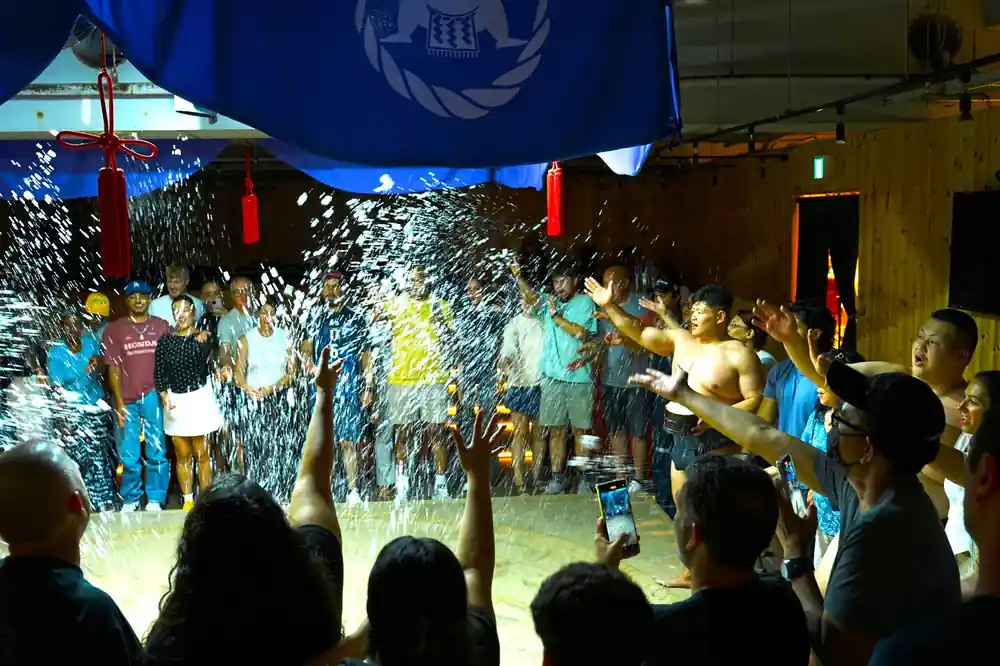
Before the first clash, a wrestler scoops up salt and scatters it wide across the clay. The gesture is a purification, a way of clearing the ring and the moment before two heavy men collide. Watch the rhythm of it. Some wrestlers throw a little, others fling a long grey arc that catches the light. It is done calmly, almost casually, and it is the clearest signal that the bout is about to begin. Cameras love it, and first-time visitors remember it longer than they expect. When a hall full of people goes quiet for that throw, you can feel the ritual doing its work.
The shiko stomp is the other ritual everyone notices. Each wrestler lifts a leg high to the side and brings it down hard, then repeats on the other side. The stomp is traditionally about driving out evil spirits from the ring, and it doubles as a warm-up for the legs and hips. It looks easy. Try it in your hotel room and you will find out how much balance it takes. When both wrestlers do it together, the thud travels through the floorboards and the room goes quiet for a second. Then a hand dips into the salt box again, and the sequence starts over. By the time both men are ready, the audience has learned the rhythm without being told anything.
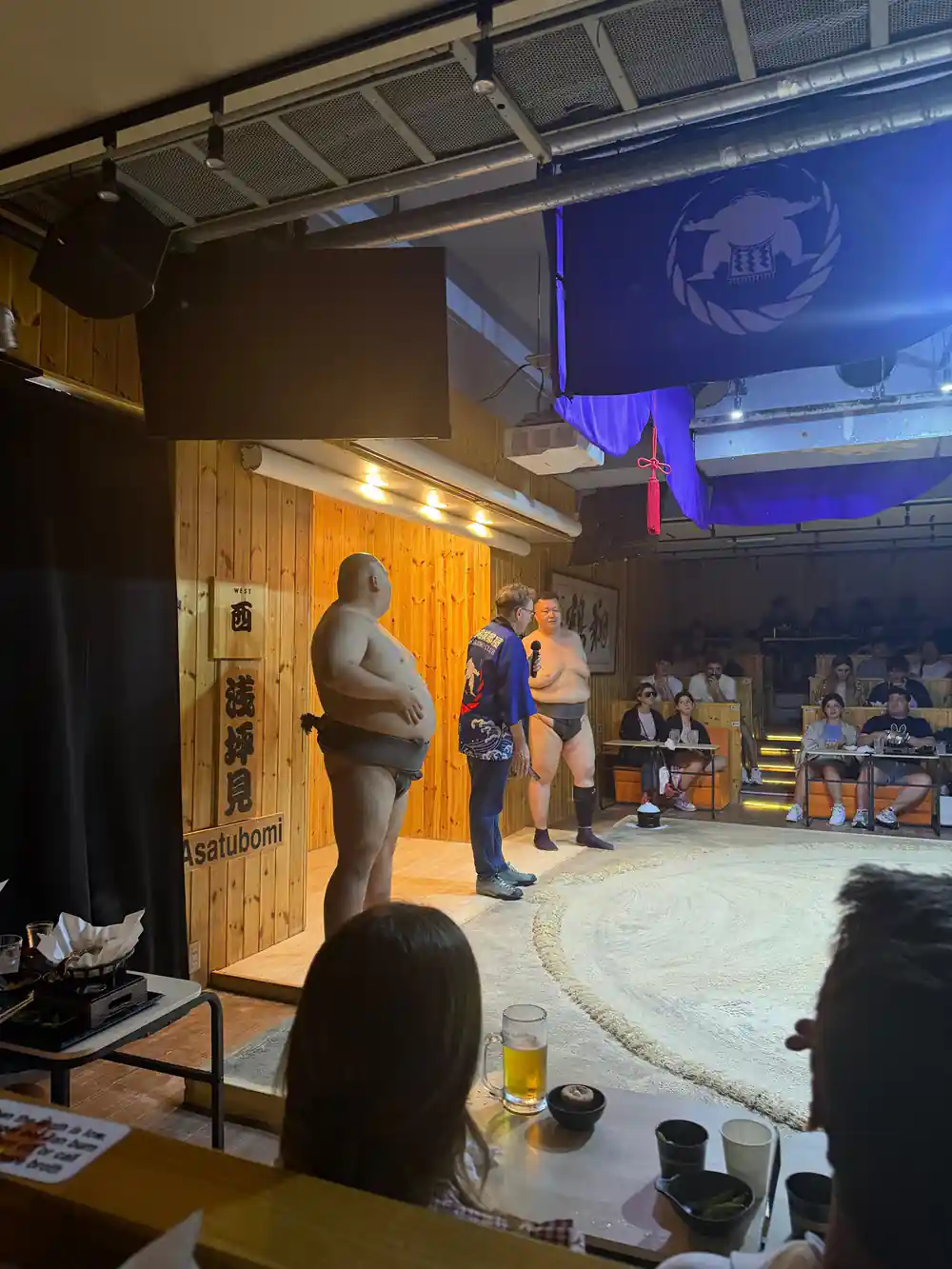
Salt is thrown across the clay to purify the ring before a bout
Inside the Sacred Dohyo
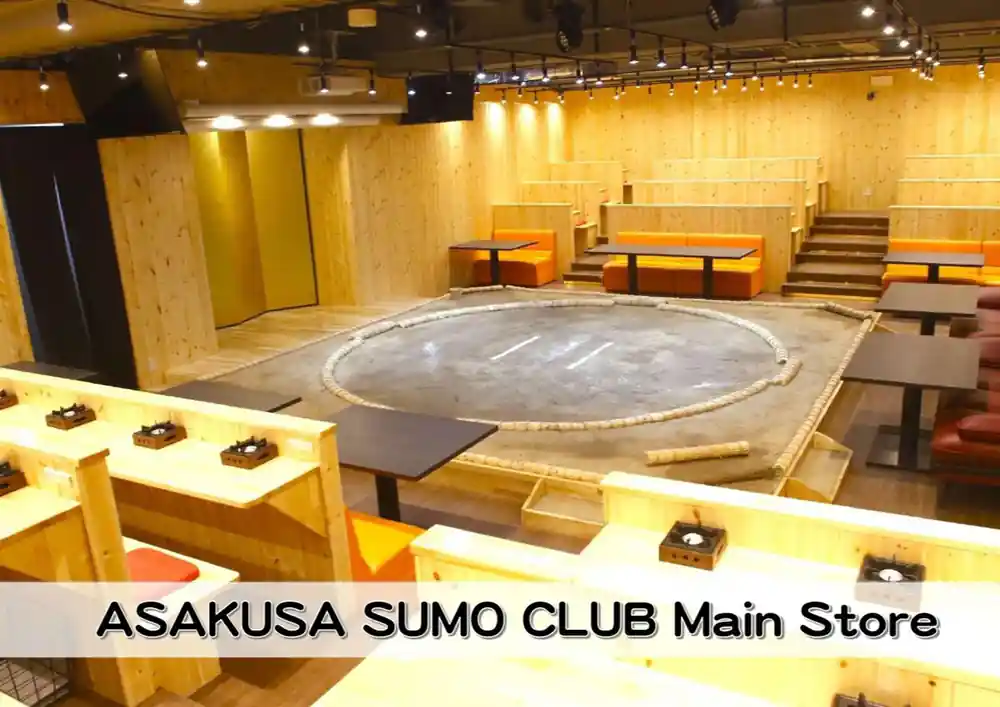
The ring itself is smaller than most people imagine. A sumo dohyo has a diameter of 14.93 feet (4.55 m).[2] Into that circle go two very large men, and the result is that almost nothing happens slowly. The surface is packed clay, swept and smoothed between bouts, with a ring of straw bales marking the edge. In the big halls a roof hangs above it, shaped like the shrine roofs the sport grew out of. Sit close and you can hear bare feet scraping the clay, and a collision that sounds like two doors slamming.
The main stage in Tokyo is the Ryogoku Kokugikan sumo arena in Sumida City, and it has a spectator capacity of up to 10,000.[9] It is a steep, intimate room, the sort of place where the noise of a full house rolls around the roof. Access has been thought through as well: a wheelchair seat costs 8,000 yen and is for two people, a wheelchair user and one accompanying person.[10] If you are planning around a tournament rather than a show, that detail is worth knowing before tickets go on sale.
The Mawashi and the Size of a Wrestler
The most recognisable piece of equipment in the sport is a long strip of stiff silk, wrapped several times around the waist and knotted at the back. Wrestlers call it the mawashi. Its colour and its trim say something about rank and about the division a wrestler competes in, and the belts worn in the top division carry hanging fringe and, on ceremony days, a thick white rope. There is no padding, no gloves and no helmet to hide behind, which is part of why the sport looks so ancient. Every grip lands on skin or on cloth, and a good grip can lift a heavy man off his feet.
The size question comes up in every conversation about sumo. Research cited in one write-up found that 25 makuuchi wrestlers averaged 161.2 kg in weight and 186.3 cm in height.[11] At the outer edge of the sport, the optimal weight for a modern Japanese sumo wrestler is put at between 400 and 600 pounds, sustained by a daily diet of 20,000 calories.[12] Professional sumo is divided into six divisions, and the top division, Makuuchi, contains 42 wrestlers.[13] Those men live and train together in stables, and their days are built around eating, sleeping and practising.
from US$102
From US$102, Tokyo's Sumo Entertainment Show with Chicken Hot Pot and Geisha runs 2 hours and earns 4.79 from 8,004 reviews.[6]
Edo, Spectacle and the Professional Ring
Sumo's move from shrine ground to paying crowd happened from the early 1600s, when it began to flourish as a spectator sport.[1] City audiences wanted stars, and stars needed somewhere to perform. The ring moved indoors. Rules were written down and referees became officials with costumes of their own. What you watch in Tokyo today is the descendant of that bargain between ritual and show business, and you can still feel both halves pulling at each other during a bout. The ceremony holds a crowd still. The clash releases it. The rituals travelled with the sport as well, and the salt, the stomp and the little square of clay stayed exactly where they were.
One number is useful when you plan. The Nihon Sumō Kyōkai governs the sport, and a count in one article puts it at 47 stables training nearly 700 wrestlers.[14] Stables are not arenas. They are houses with a practice room, where young recruits live, cook and train under a master. That is where the sport is actually made, early in the morning, long before any show begins. If you want to see sumo rather than a performance of sumo, a stable visit is the thing to look for, and a morning tour into a Tokyo stable is the usual way in.
Seconds That Decide Everything
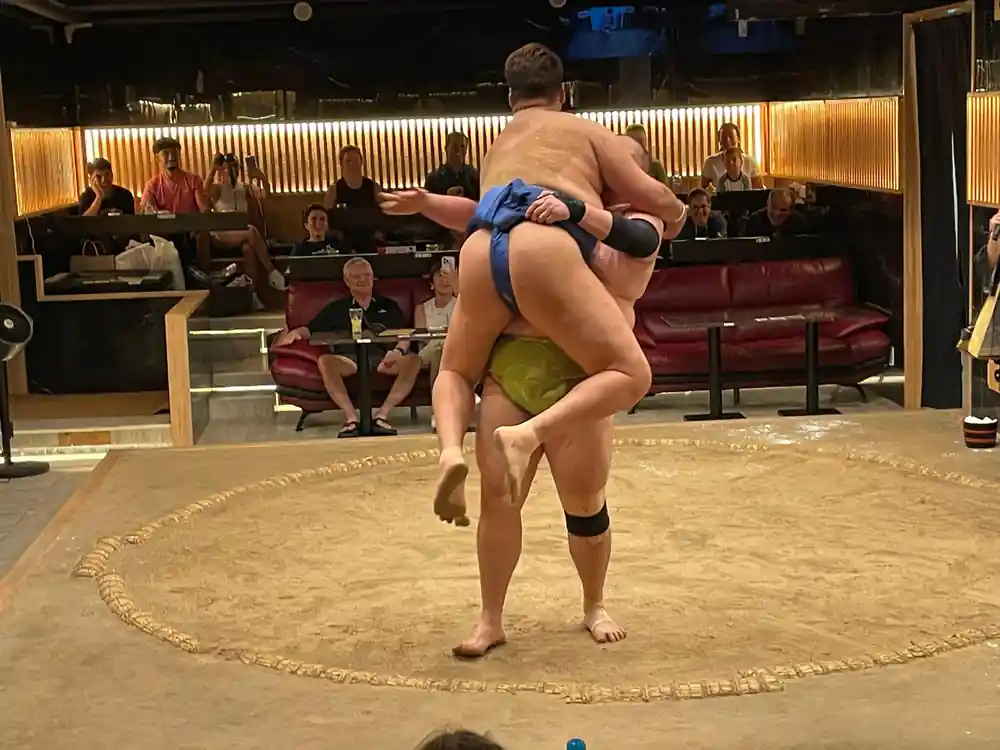
A bout is over almost before you have settled into your seat. Sumo bouts last 20-30 seconds.[4] The crouching and staring beforehand can take longer than the fight itself. Two wrestlers squat, touch knuckles, rise without engaging, and go back for more salt. Then, without warning, they collide. Someone is out of the ring or flat on the clay, and the referee's fan points the way. The hall exhales. Nothing in the ring is padded, so a fall is a fall, and the noise of the crowd tells you how hard it landed.
Winning is more complicated than pushing. There are 82 kimarite, or match winning techniques, and 5 non-techniques, all defined by the Japan Sumo Association.[5] Some are simple pushes and throws, while others are so rare that spectators reach for the replay. Keep an eye on the gyoji's hand when a bout ends. The gesture names the technique that just happened, and the crowd usually makes its feelings about that clear. You will not catch every technique on a first visit, and nobody expects you to.
Morning Practice, Shows and How to See It
Real sumo happens early. Morning practice, or asageiko, typically starts between 5:00 and 7:30 AM and lasts 2-4 hours, with the exact start time varying by stable and season.[15] You sit quietly and watch men repeat the same movement hundreds of times. There is no commentary and no applause, just breathing and the slap of bodies. Several Tokyo tours visit real stables for exactly that reason, and they fill quickly, because a stable can only take so many visitors at once. Dress warmly, bring quiet shoes, and expect to sit still for a while.
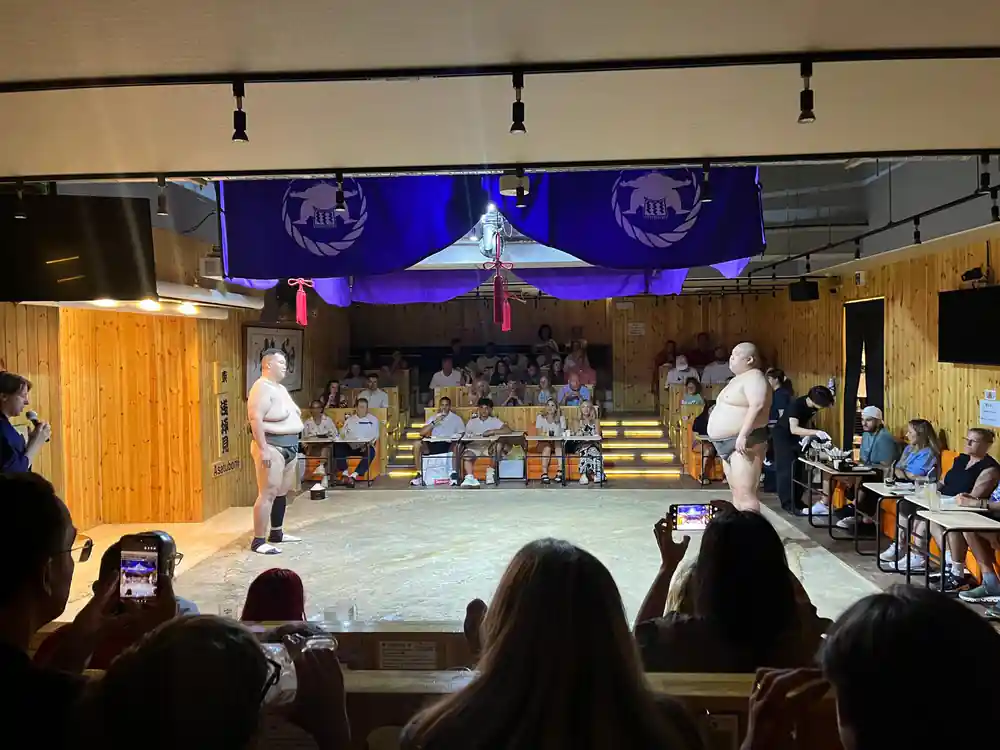
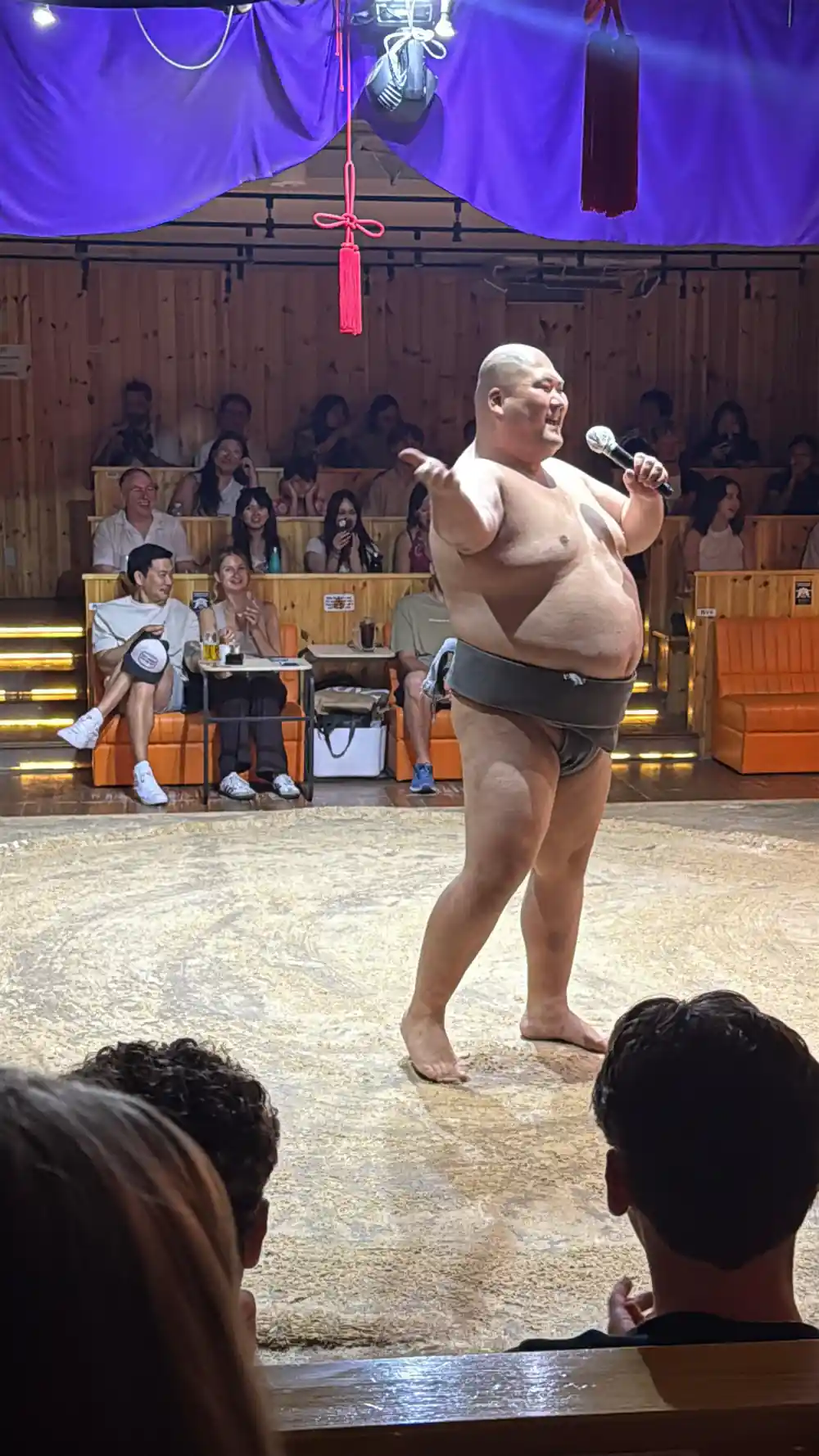
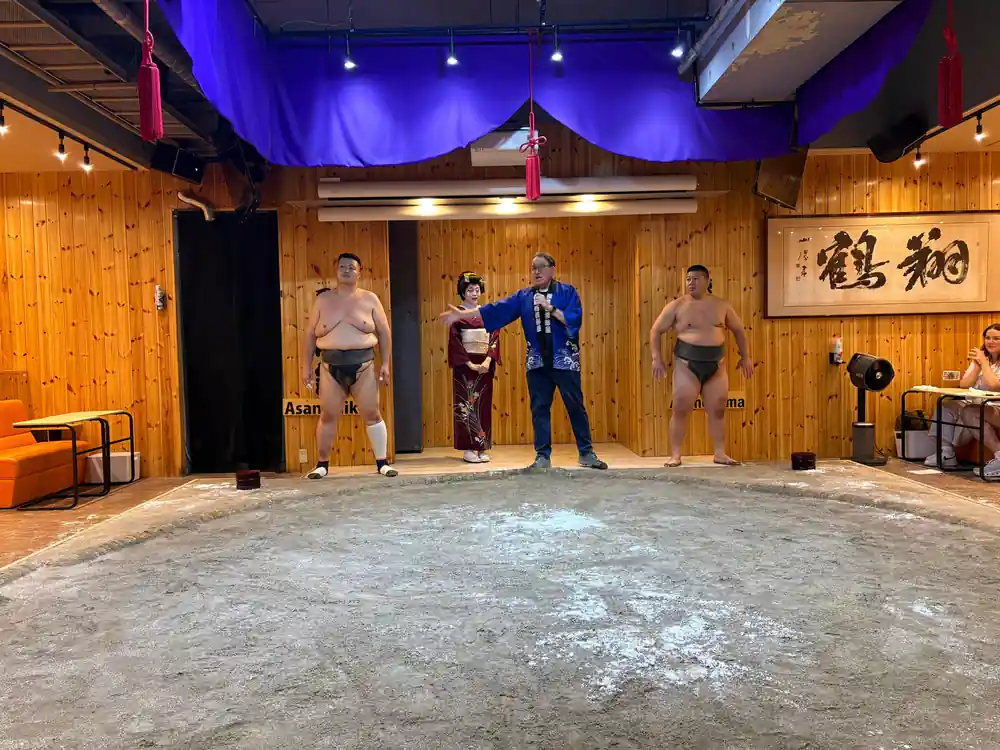
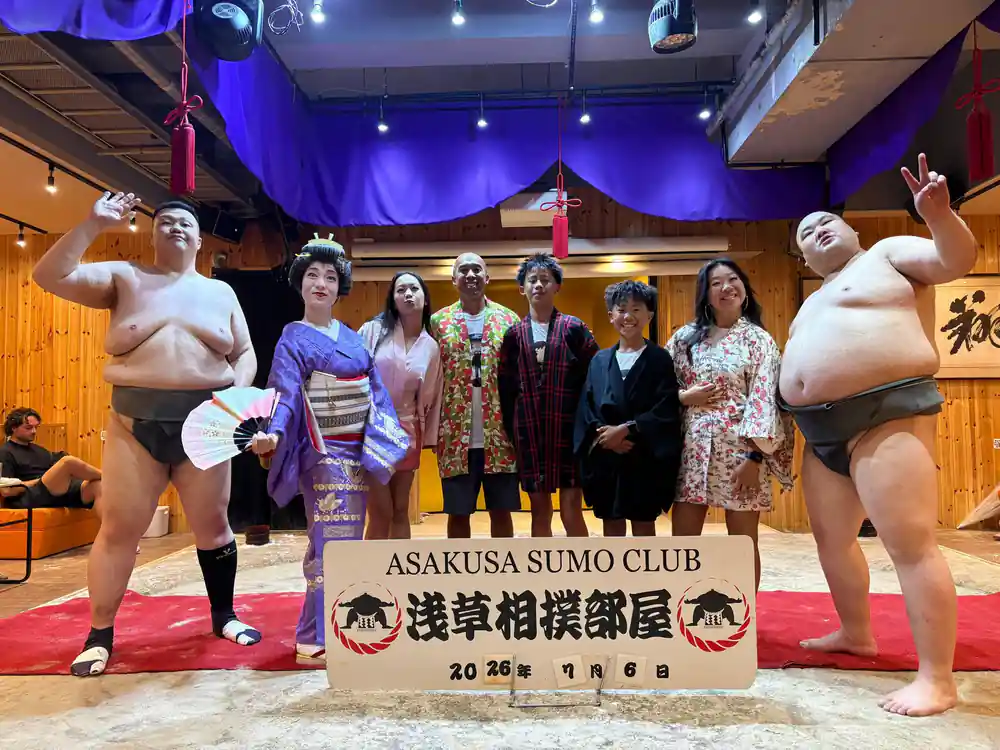
Shows are the other way in, and they are built for visitors. The Tokyo Sumo Entertainment Show with Chicken Hot Pot and Geisha runs 2 hours and is rated 4.79 from 8,004 reviews.[6] You get bouts, a chicken hot pot and a geisha performance in one evening. A geisha's role is to make guests feel at ease with conversation, drinking games and dance performances.[16] For a first trip it is the easiest introduction of the lot: friendly, well fed, and short enough that nobody's attention drifts.
From-prices of Tokyo sumo shows
From-prices in US dollars for Tokyo sumo listings:[6][7][8][17]
Tokyo sumo shows compared by from-price
From-prices in US dollars for Tokyo sumo listings:[6][7][8][17]
When the Grand Sumo Tournaments Happen
How to read sumo's rituals
Watch the salt throw
Before the first clash a wrestler scatters salt across the clay to purify the ring. It is the clearest signal that a bout is about to start.
Follow the shiko stomp
Each wrestler lifts a leg high and stamps down, driving out evil spirits. The thud is the sound of a show beginning.
Measure the ring
The clay dohyo is 14.93 feet (4.55 m) across, and two wrestlers fill it almost completely.[2]
Time the bout
Once the wrestlers collide there is little time to look away. Bouts last 20-30 seconds.[4]
Stay for the hot pot
Chanko hot pot follows the wrestling on the Sumo Entertainment Show with Chicken Hot Pot and Geisha.[6]
See the salt, the stomp and the ring for yourself
from US$102Reserve now & pay later