Worth remembering
- Most bouts are decided in the first exchange, and a typical bout lasts 20-30 seconds.[1] Watch the feet, not the faces.
- The dohyō is 14.93 feet (4.55 m) across, so there is little room to circle away from the edge.[2]
- Sumo defines 82 kimarite, or winning techniques, and 5 non-techniques that count as ways to lose.[3]
- The show booked here runs for 2 hours from US$102 and is rated 4.79 from 8,004 reviews.[4]
- Reserve now and pay later, with free cancellation up to 24 hours in advance for a full refund.[4]
- Top choice Sumo show, hot pot & geisha from US$102 Duration2 hours[4]Rating4.79 from 8,004 reviews[4]In the roomChicken hot pot and geisha[4]CancellationFree cancellation up to 24 hours[4] Check availability
- Luxury sumo show & cuisine from US$102 Duration2 hours[5]Rating4.72 from 920 reviews[5]In the roomDeluxe Japanese cuisine[5]CancellationFree cancellation up to 24 hours[5] See this tour
- Family sumo workshop from US$62 Duration2 hours[6]Rating4.90 from 430 reviews[6]In the roomLive wrestling and lunch[6]CancellationFree cancellation up to 24 hours[6] See this tour
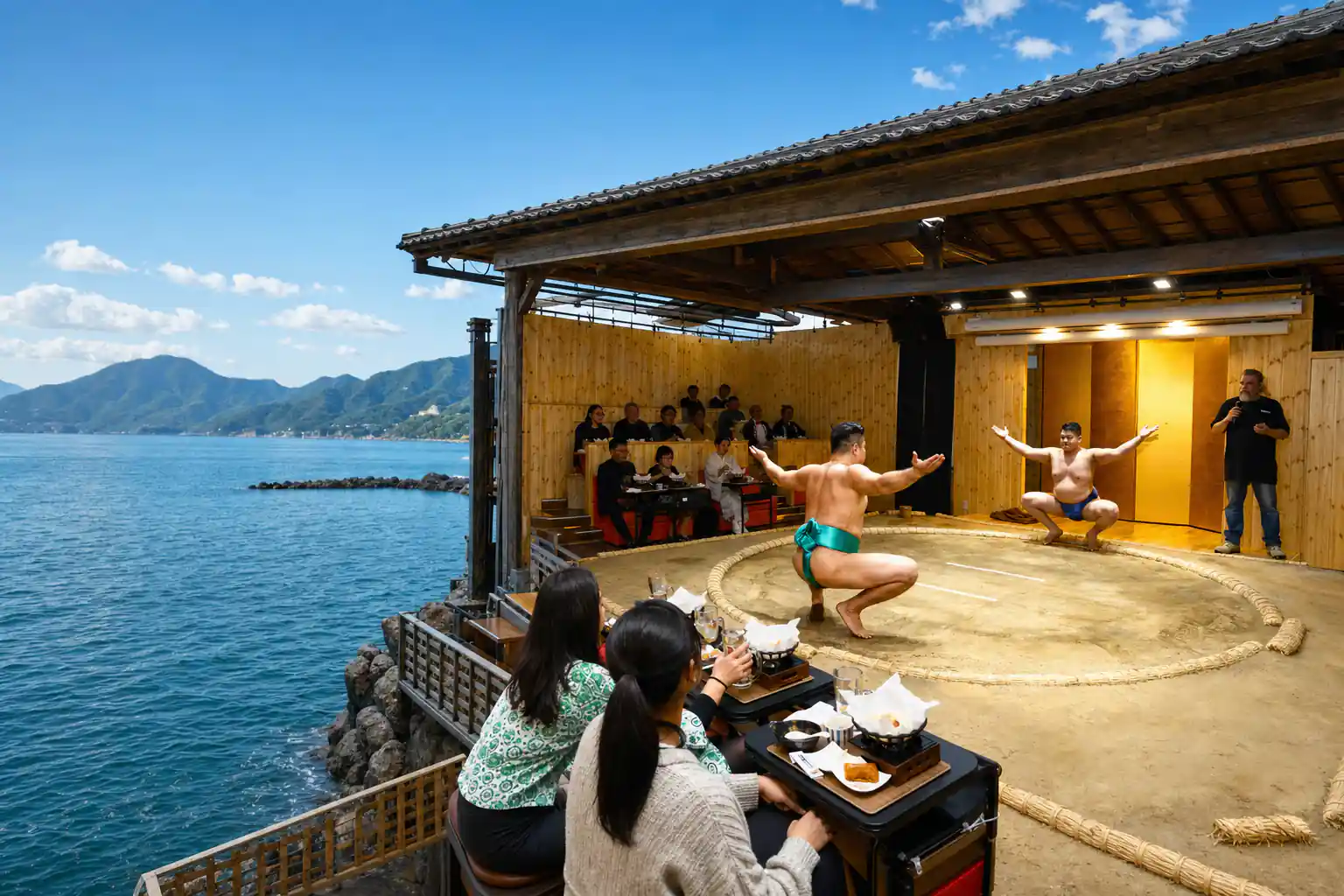
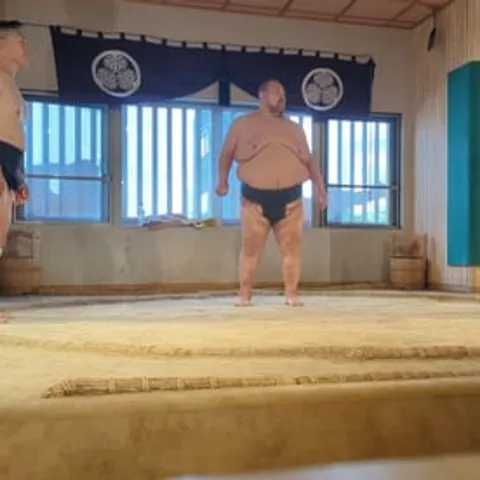
In sumo, there are 82 kimarite, or match winning techniques and 5 non-techniques or way to lose, all defined by Japan Sumo Association.
Is the Tokyo Sumo Show Worth Booking?
Read before booking
How a Sumo Bout Is Won in Seconds
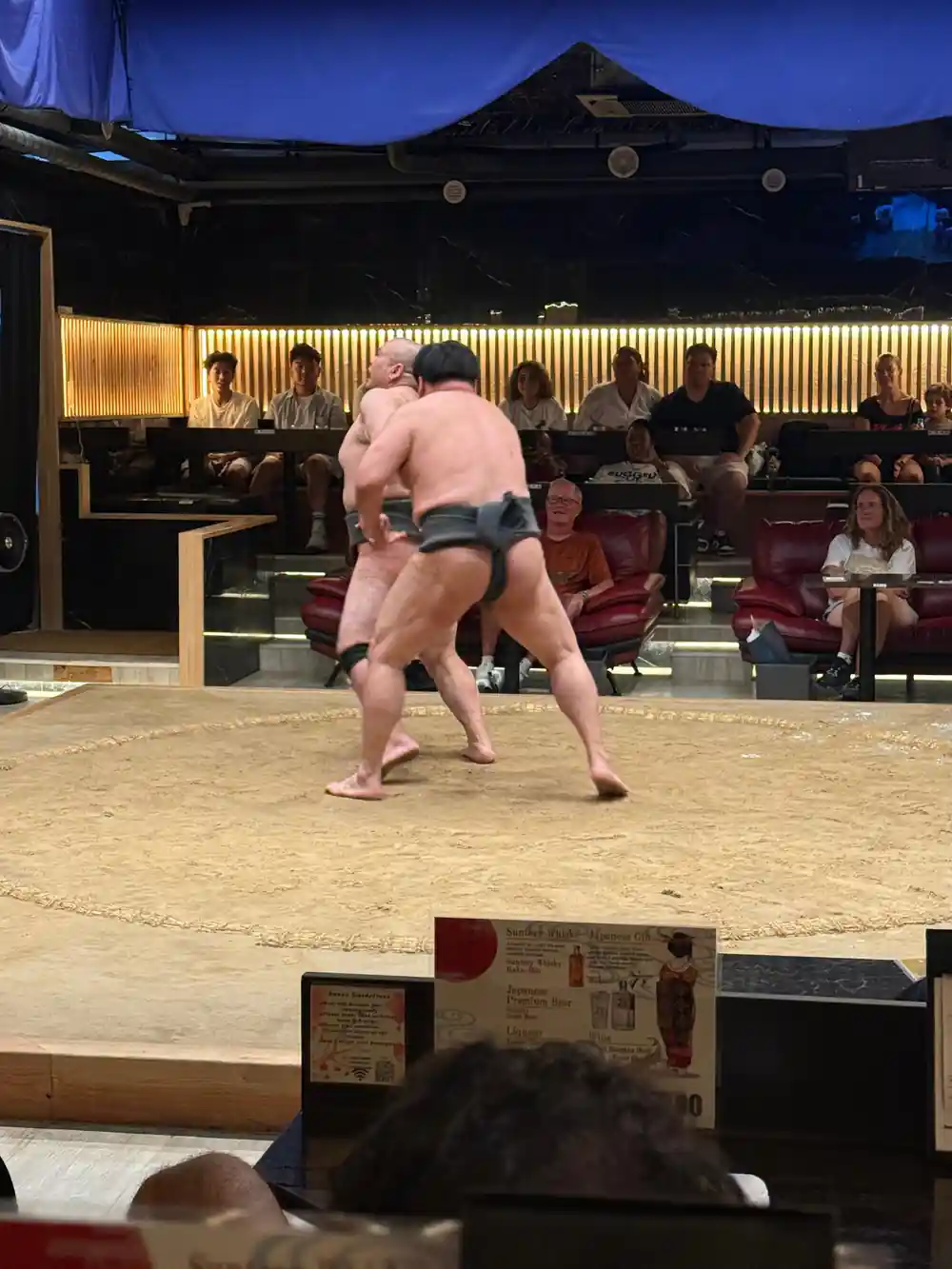
A sumo bout is one of the shortest contests in any sport. From the moment two wrestlers launch into each other, a typical bout lasts 20-30 seconds, so the action is over almost as soon as it starts.[1] That is barely long enough to lift a camera, which is a good reason to watch the feet and the hips rather than the faces. The ring gives the two men very little room to work with: the dohyō is 14.93 feet (4.55 m) across.[2] A bout is decided when one wrestler is pushed over the straw bales or goes down onto the clay, and the referee settles it by pointing his fan at the winner. Then both men bow, walk back to their marks and the next pair steps up.
At a Tokyo show you sit close enough to hear the first collision. The crowd noise comes in short bursts, because the wrestling does too. Between bouts there is time to eat, talk and watch the rituals around the ring: the salt thrown into the clay, the stamping, the slow turning of the hands. If you are new to the sport, that rhythm is worth tuning into. It tells you when to look up. A visitor show is a comfortable place to work out how sumo works before you commit to a tournament day.
The Tachi-ai: The Decisive Opening Charge
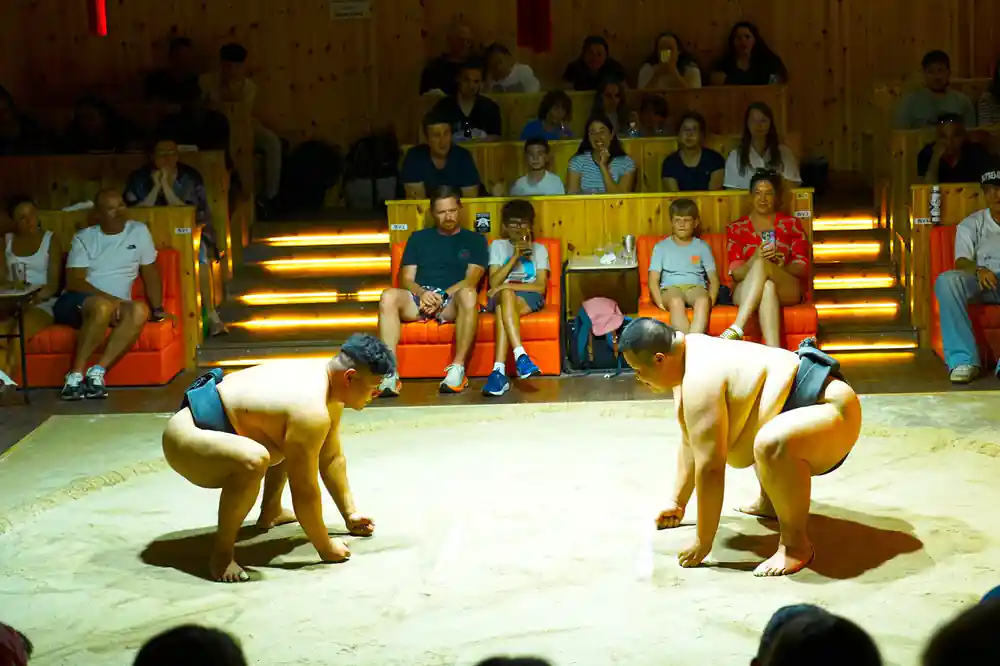
The tachi-ai is the opening charge, and it is where a bout is usually decided. Two wrestlers crouch at their marks, fists near the clay, eyes locked. They have to agree on the moment to go, and that agreement can take a few seconds or much longer, with the crowd holding its breath. When they finally move, the first contact is heavy: heads, shoulders and hands collide at speed. Watch the hands rather than the shoulders. The wrestler whose grip lands first can steer his opponent, and a wrestler who is being steered is already being walked towards a small circle of straw.
For a spectator, the useful habit is to pick one wrestler before the charge and follow his feet. A foot planted too high, a hand thrown out for balance, a head dipped at the wrong angle: these are the small failures that decide an exchange in seconds. In a small arena, resist the urge to watch the referee at the start. Look at the two bodies and where they are pushing each other. Only afterwards, once the call comes, does the referee matter.
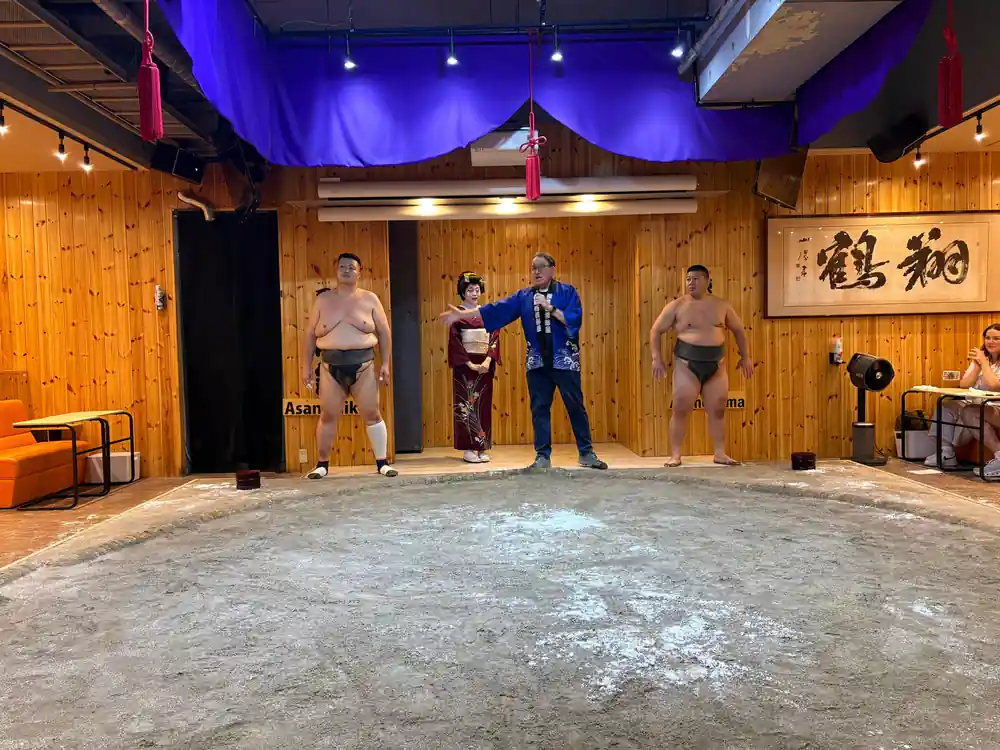
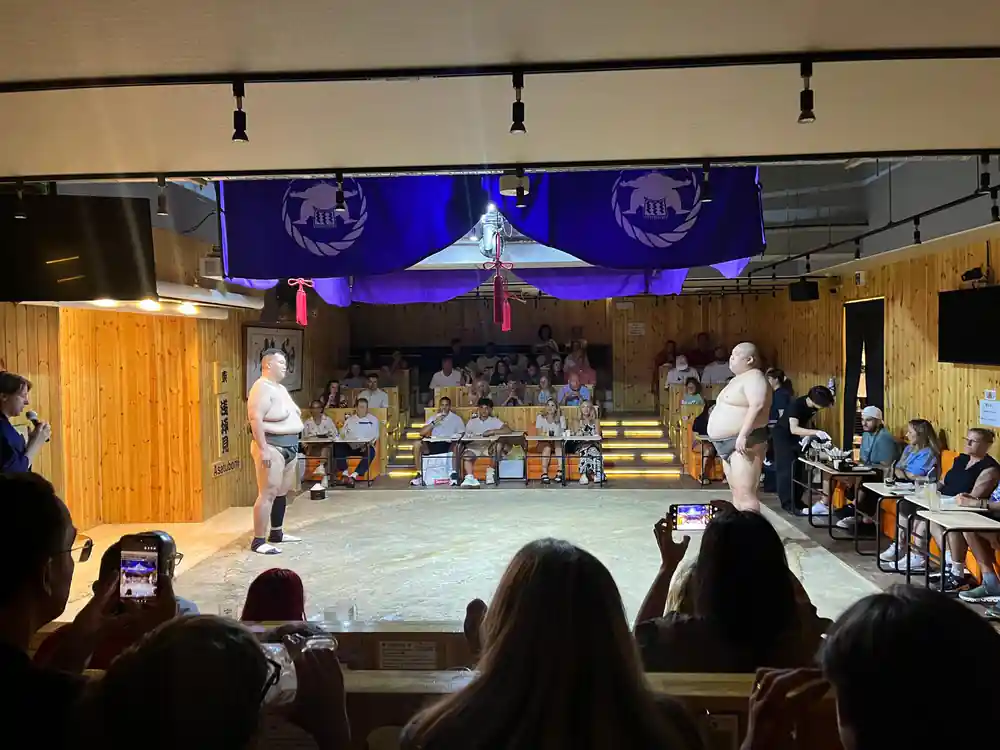
A dohyō seen from ringside, where a bout can be over in seconds.
Winning Techniques: The Named Kimarite
Sumo is not only pushing. The Japan Sumo Association defines 82 kimarite, or match winning techniques, and 5 non-techniques, which are ways to lose a bout.[3] Some look like throws, some like trips, and some like a single decisive shove that sends a wrestler over the edge. After the bout, the technique is announced to the crowd. That call is one of the pleasures of watching live: a short phrase that names exactly what you have just seen.
You do not need the vocabulary to enjoy an evening of bouts. Watch the belt grip instead. A wrestler hunting for a hold with both hands is setting something up, and once he has it he can choose when to use it. When a bout ends unusually, the reaction in the room tells you something rare has happened, and the announcement afterwards names it. Over several bouts you will start to recognise the recurring shapes, even without the Japanese.
One more thing to watch for: the reset. When a bout is stopped, both wrestlers walk back to their marks without protest, straighten, and start again. There is no arguing with the call and no time-wasting. For a sport built on explosive contact, the discipline around it is striking, and it is the part of a live show that visitors tend to talk about afterwards.
The Referee's Fan and What His Calls Mean
The referee in the ring is easy to pick out: a bright robe, a fan in his hand, a voice that carries to the back of the hall. When a bout finishes, he steps in and points the fan at the winner. That gesture is the result you are waiting for, and it is worth watching on every bout, because the timing of it tells you how clear the decision was. He also keeps the pair moving, calling them back to their marks when the action stalls.
Watch him at the end of a bout, not during it. The fan lifts, the call is made, the two wrestlers bow and reset. Around the ring, other officials sit low to the clay, watching the same action from an angle that catches what the referee may have missed. That layer of eyes matters. Some endings are too close to call from one side of the ring alone.
If you watch several bouts in a row, you will notice how rarely the referee is needed. Most endings are obvious to everyone in the room before he moves. His value shows in the close ones, where the fan goes up after a beat of hesitation and the room waits to see which way it points.
from US$102
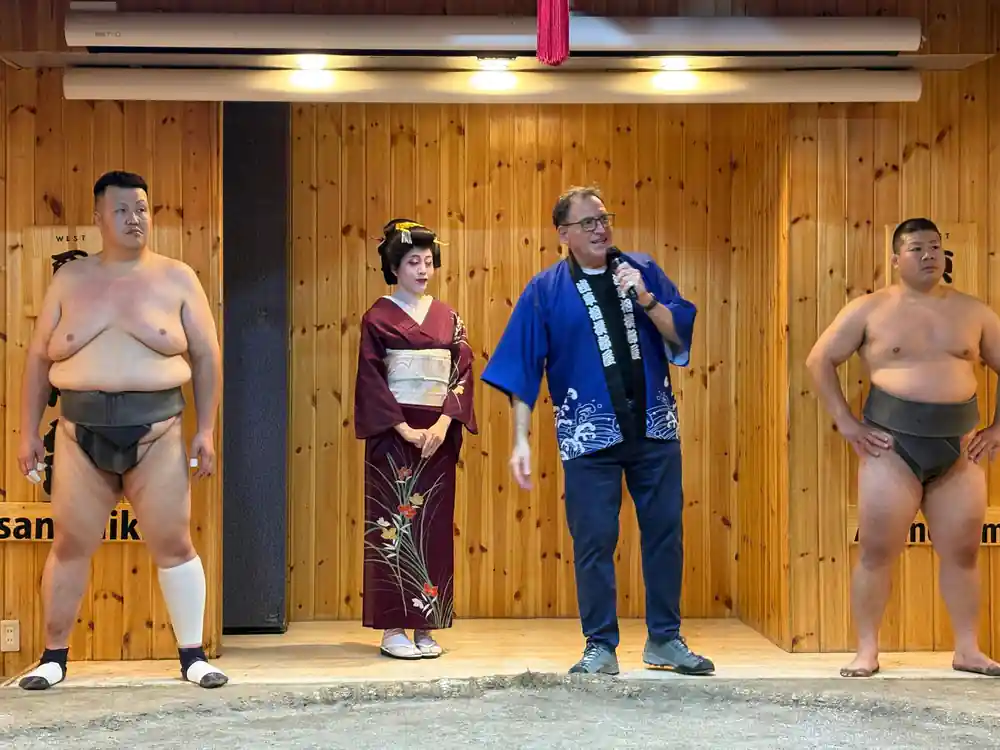
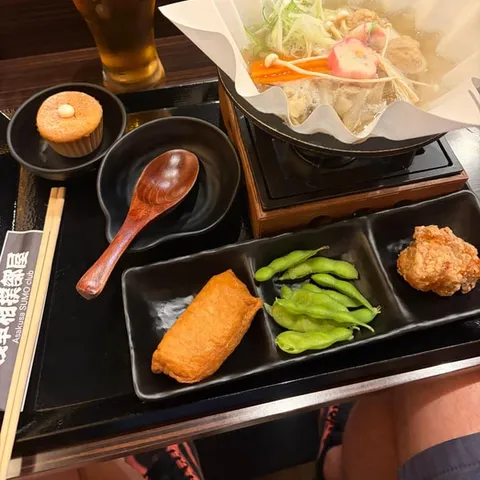
The show booked from this site pairs sumo wrestling with a chicken hot pot meal and a geisha performance in a small Tokyo venue.
Boundaries and Forbidden Moves
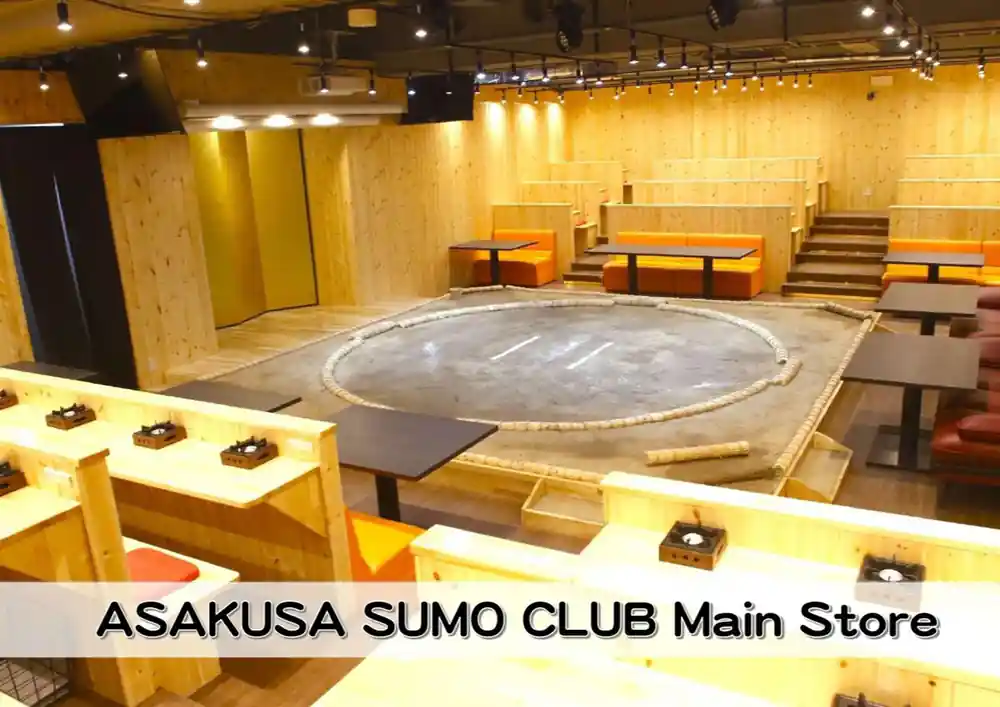
The ring is small on purpose. At 14.93 feet (4.55 m) across, the dohyō leaves almost nothing behind a wrestler who is being pushed backwards.[2] The boundary is marked by straw bales set into the clay, and the space beyond them is out. Watching a wrestler fight for a foothold a hand's width from the bales is one of the best things in the sport, and it is the part first-time visitors remember.
Sumo also defines 5 non-techniques, ways to lose, alongside the 82 winning techniques.[3] In practice, plenty of bouts finish without a beautiful throw: a foot slides over the straw, a wrestler overbalances, a grip is lost at the worst moment. That is worth remembering when you watch. The messiest endings can be the most instructive, and the room reacts to the effort as much as to the finish.
The Ranking System and the Path to Yokozuna
Professional sumo is divided into six divisions, and the top division, Makuuchi, contains 42 wrestlers.[7] Beneath that group, other wrestlers compete for a higher place on the list, bout by bout, tournament by tournament. The whole circuit is fed by the stables: under the Nihon Sumō Kyōkai there are 47 stables training nearly 700 wrestlers.[8] Wrestlers live and train together in those stables, and the morning practice sessions visitors can watch in Tokyo are quiet, repetitive and serious.
The bodies reflect the work. Measured at the top of the sport, 25 makuuchi wrestlers averaged 161.2 kg in weight and 186.3 cm in height.[9] The daily diet behind that is remarkable: the optimal weight of between 400 and 600 pounds for a modern Japanese sumo wrestler is sustained by 20,000 calories a day.[10] Training starts early, too. Morning practice typically begins between 5:00 and 7:30 AM and runs for 2-4 hours, with the exact start time varying by stable and season.[11]
What to Watch During Your Experience
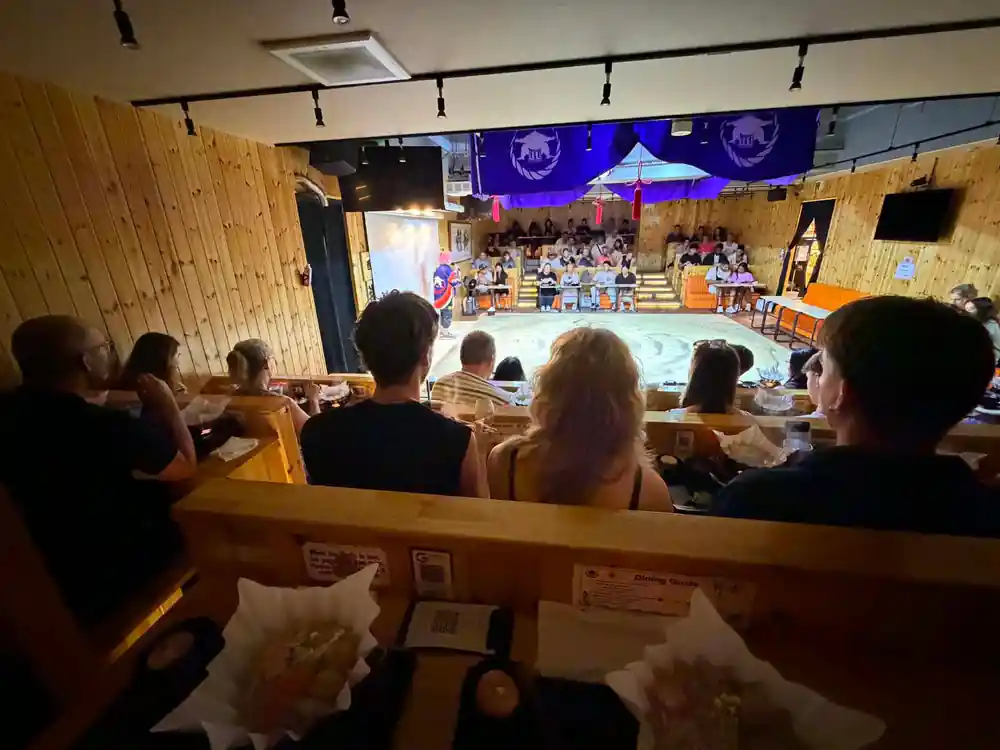
The big tournaments fill a serious arena. The Ryogoku Kokugikan sumo arena in Sumida City, Tokyo has a spectator capacity of up to 10,000.[12] Those are the days when the sport looks like a major event, with a whole hall watching one patch of clay. Visitor shows work differently, and Tokyo sumo fights in a small venue put you close enough to see the grip, the breathing and the referee's fan without any distance between you and the ring.
The show booked from this site is the sumo entertainment show with chicken hot pot and geisha. It runs for 2 hours[4] and is rated 4.79 from 8,004 reviews.[4] It starts from US$102, with a small group option, and the venue is wheelchair accessible.[4] A geisha performance is part of the evening, and a geisha's role is to make guests feel at ease with conversation, drinking games and dance performances.[13] You can reserve now and pay later, with free cancellation up to 24 hours in advance for a full refund.[4]
Review counts for Tokyo sumo shows
Compare Tokyo sumo show prices
US dollar from-prices for Tokyo listings on GetYourGuide:[4][5][6][14][16]
When Tokyo Hosts Grand Sumo
How to read a bout
Watch the crouch
Both wrestlers drop low, set their fists near the clay and stare at each other. The room goes quiet until they agree to move.
Follow the first contact
Watch who gets lower and whose hands land first. The wrestler who wins that first moment usually controls everything after it.
Keep an eye on the edge
The dohyō is small, at 14.93 feet (4.55 m) across, so a wrestler pushed backwards has very little room to recover.[2]
Listen for the technique
When the bout ends, the referee points and the winning technique is named. Sumo defines 82 kimarite and 5 non-techniques.[3]
Do not blink
A typical bout lasts 20-30 seconds, so keep the camera down at the start and take photos after the call.[1]
See the rules play out at a Tokyo sumo show
from US$102Reserve now & pay later