Worth remembering
- The dohyo has a diameter of 14.93 feet (4.55 m), a small clay stage for a sport with a very long rulebook.[1]
- Professional sumo runs across 6 divisions, and the top division, Makuuchi, includes the top 42 wrestlers in the sport.[2]
- The professional ring has long been reserved for men, while women compete in amateur, university and international sumo.
- A Tokyo listing puts guests in a mawashi on a real clay ring, from US$46.[3]
- Morning practice typically begins between 5:00-7:30 AM and continues for 2-4 hours.[4]
- Top choice Sumo Entertainment Show from US$102 Duration2 hours[5]Rating4.79 from 8,004 reviews[5]CancellationFree cancellation up to 24 hours[5] Check availability
- Luxury Sumo Show from US$102 Duration2 hours[6]Rating4.72 from 920 reviews[6]CancellationFree cancellation up to 24 hours[6] See this tour
- Family Sumo Workshop from US$62 Duration2 hours[7]Rating4.90 from 430 reviews[7]CancellationFree cancellation up to 24 hours[7] See this tour
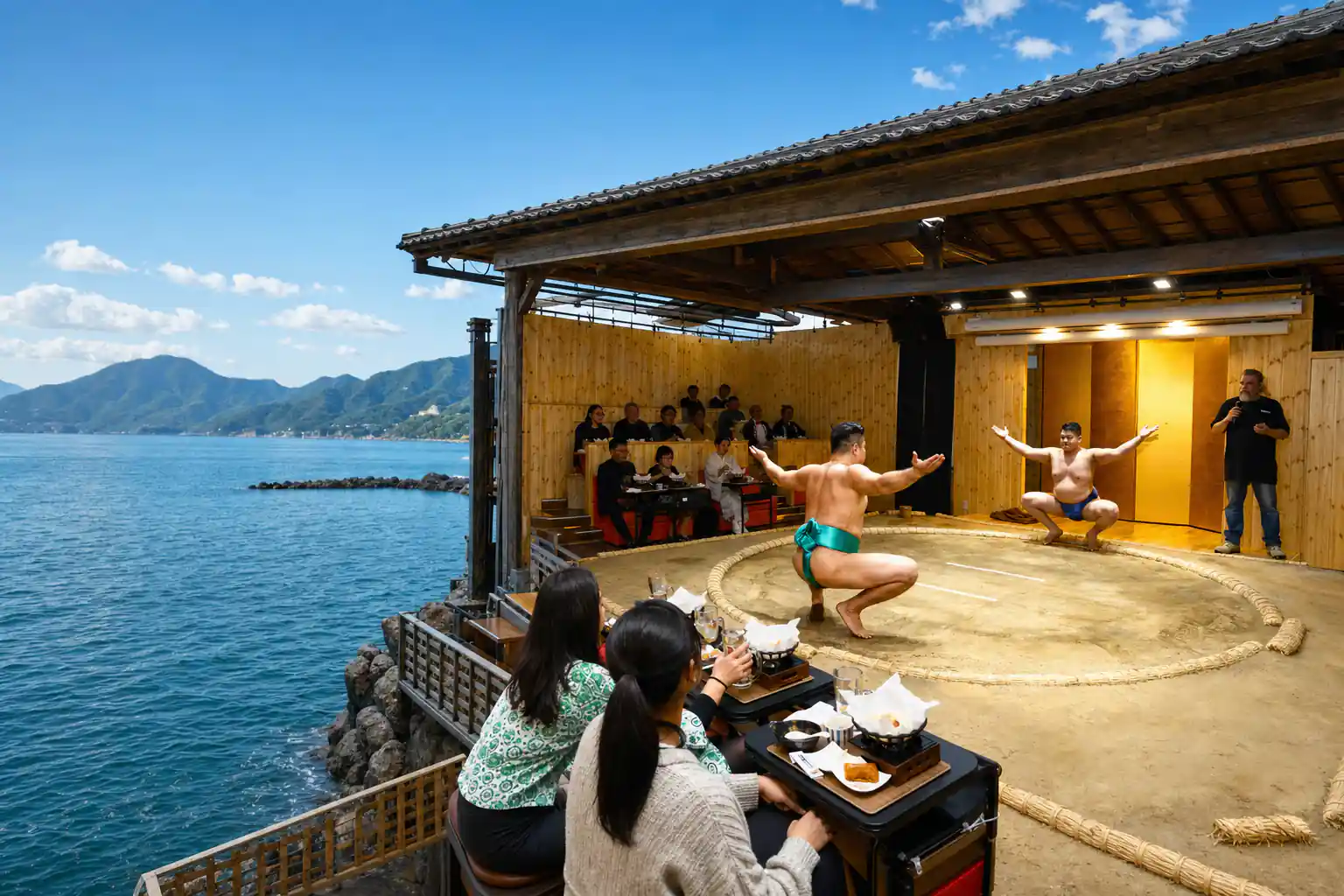
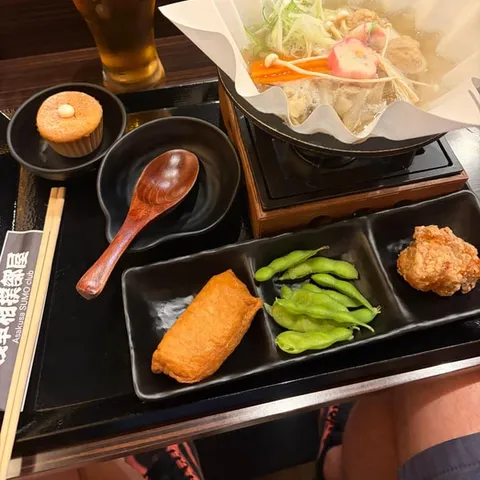
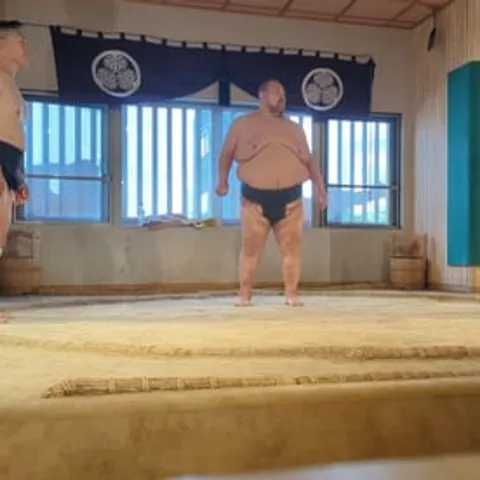
Under the Nihon Sumō Kyōkai, the association that governs the sport in Japan, there are currently 47 stables training nearly 700 wrestlers.
Verdict: Watch the Pros, Then Try the Clay Yourself
Booking and planning
What the Dohyo Is and Who Traditionally Steps On It
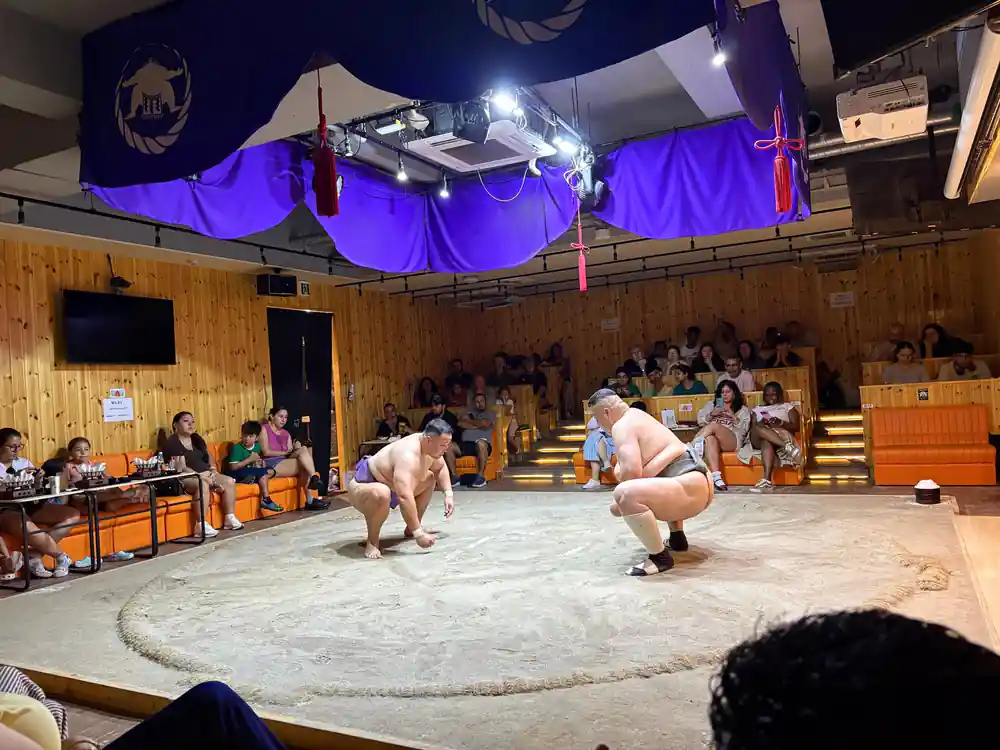
The dohyo is the ring itself: a raised platform of packed clay with a circle of straw bales pressed into the surface. The fighting surface has a diameter of 14.93 feet (4.55 m).[1] Wrestlers step onto it after scattering salt, clapping their hands and stamping their feet, and the contest that follows is usually short. Sumo bouts last 20-30 seconds.[10] Everything around the clay, from the referee's fan to the cushions the audience sits on, belongs to a ritual that visitors recognise long before they understand it.
Historians agree that sumo's origins date back 2,000 years, and that it did not really flourish as a spectator sport until the early 1600s.[11] There are 82 kimarite, or match winning techniques, and 5 non-techniques, all defined by the Japan Sumo Association.[12] That mixture is what makes the sport worth watching in person: a small ring, a short bout, and a large vocabulary of ways for one wrestler to send the other out or down.
Women and the Ring: The Rule Everyone Argues About
The most asked question about the dohyo is who is allowed on it, and the answer differs by world. Professional sumo has long reserved the ring for men, a tradition that has been argued over in public for years and that still divides opinion among fans, sponsors and the people inside the sport. The argument tends to flare up around ceremonies and public events rather than around the bouts themselves.
Amateur sumo works differently. Women train and compete in club, university and international amateur competition, and girls' sumo has its own youth circuits. Away from the clay, women are central to Japanese hospitality: a geisha's role is to make guests feel at ease with conversation, drinking games and dance performances.[13] That contrast, a ring reserved for men and an evening built around a geisha, is one reason the discussion keeps going.
For travellers, the practical point is simple. The shows sold to visitors are not the professional ring, and the rules there are set by the organiser. If you want to watch women wrestle, look at amateur and university events, and if you want to understand the professional tradition, watch a bout and read around the debate rather than expecting a tidy answer.
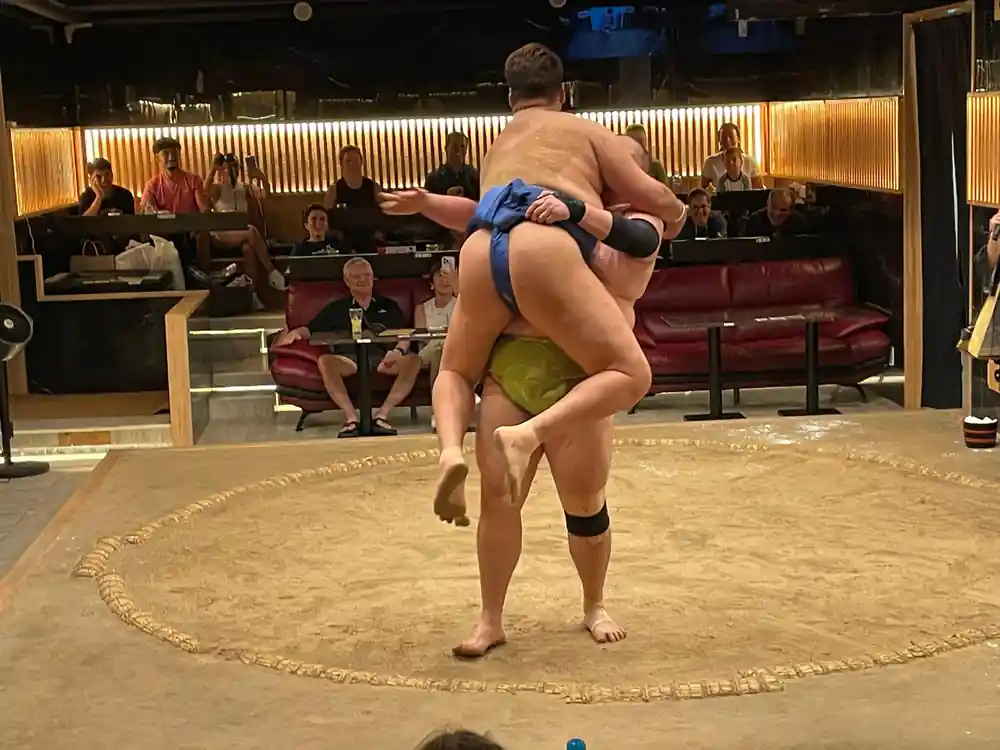
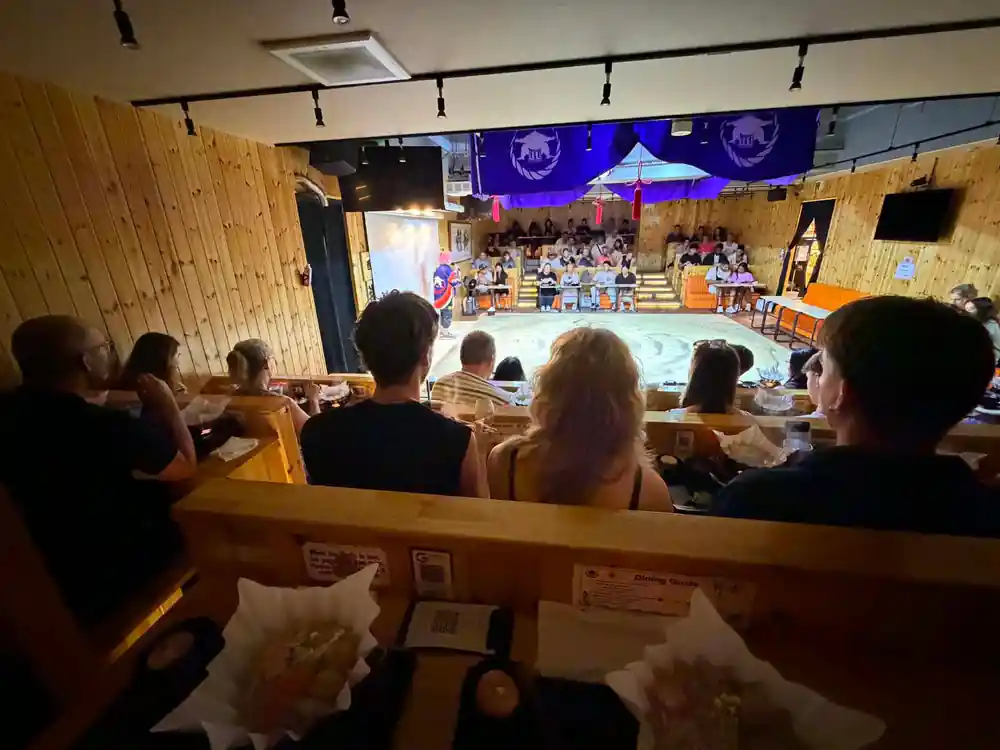
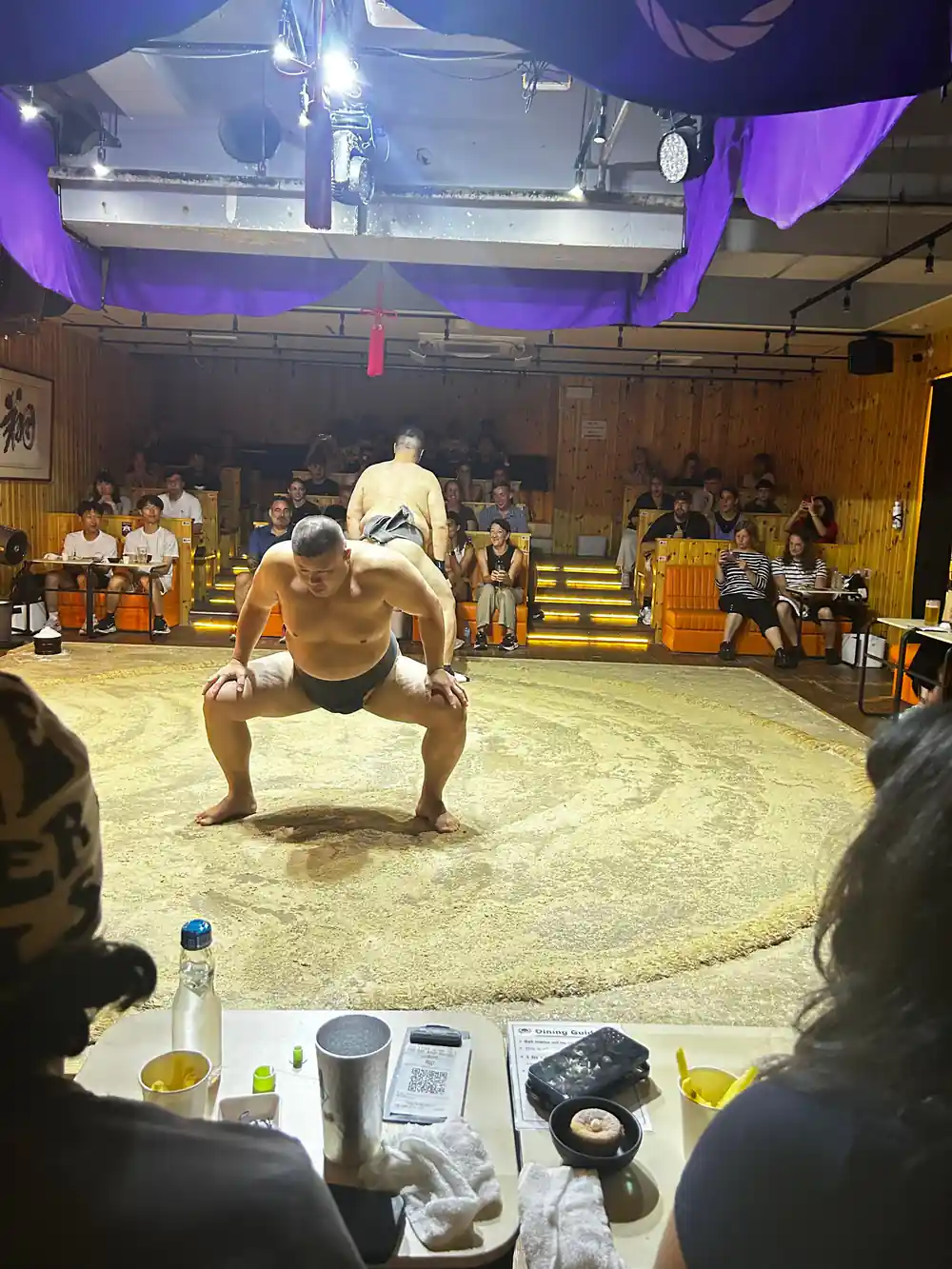
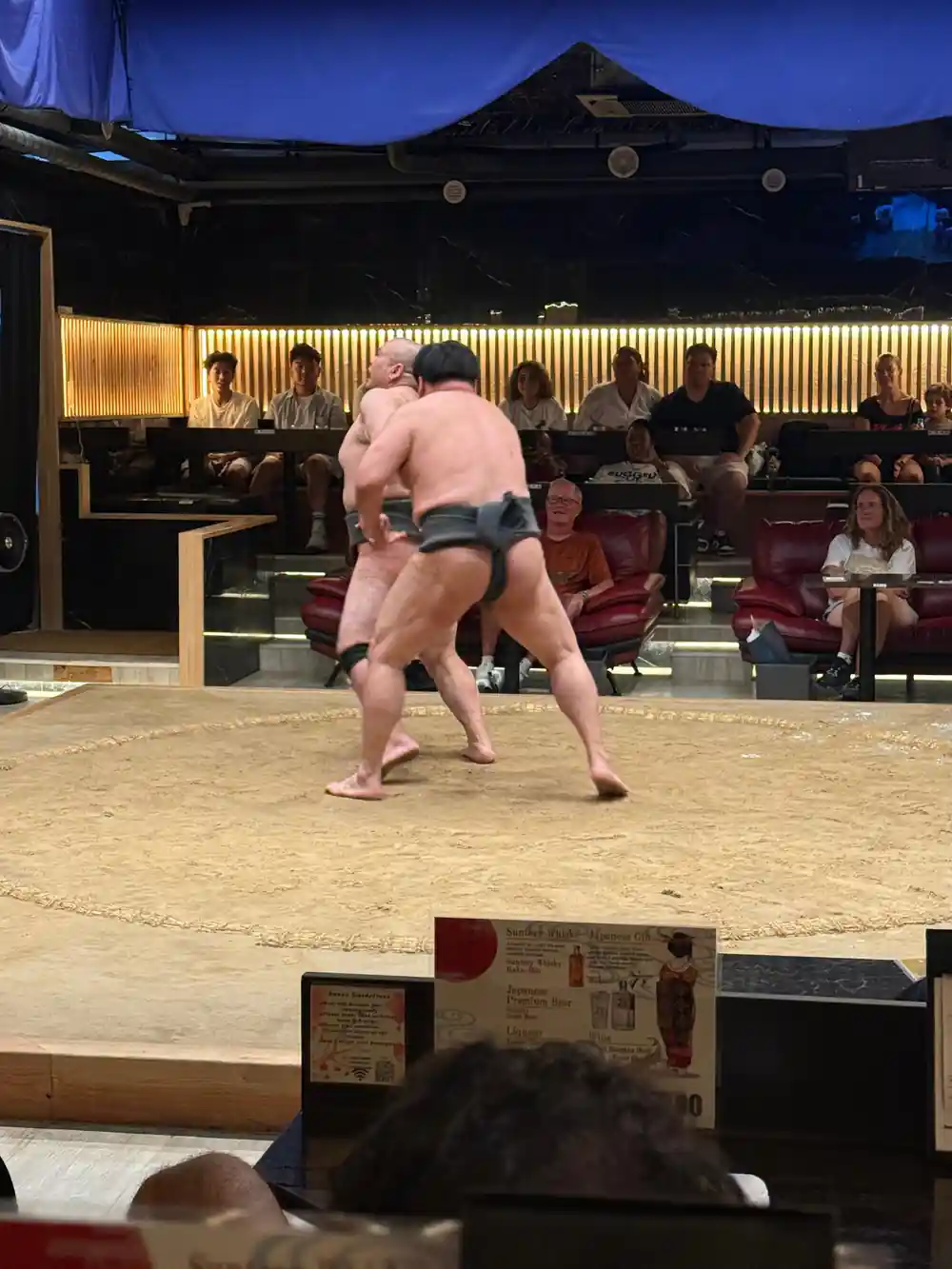
A clay dohyo inside a hall, with straw bales marking the boundary.
Foreign Wrestlers in Professional Sumo
Professional sumo is a small world. Under the Nihon Sumō Kyōkai, there are currently 47 stables training nearly 700 wrestlers.[14] They are divided into 6 divisions, and the top division, Makuuchi, includes the top 42 wrestlers in the sport.[2] A stable is a live-in institution: recruits train, eat, sleep and study under one roof.
Wrestlers born outside Japan have been part of that pool for decades, and the entry route is the same for everyone who is accepted: join a stable and work up through the divisions. Size is the visible part of the job. Research reported on a sumo experience site found that 25 makuuchi wrestlers averaged 161.2 kg (about 355 lbs) in weight and 186.3 cm in height.[15] A modern Japanese sumo wrestler's optimal weight of between 400 and 600 pounds is sustained by a daily diet of 20,000 calories.[16]
Amateur Sumo: University, High School and Club Circuits
Outside the professional ranks, sumo is a normal amateur sport with clubs, coaches and fixtures. Universities across Japan run sumo teams, high schools compete in their own circuits, and adult clubs take beginners who have never worn a mawashi. Amateur competition uses weight classes, so a lighter wrestler is not simply fed to the biggest person in the room, and the emphasis falls on technique, balance and footwork.
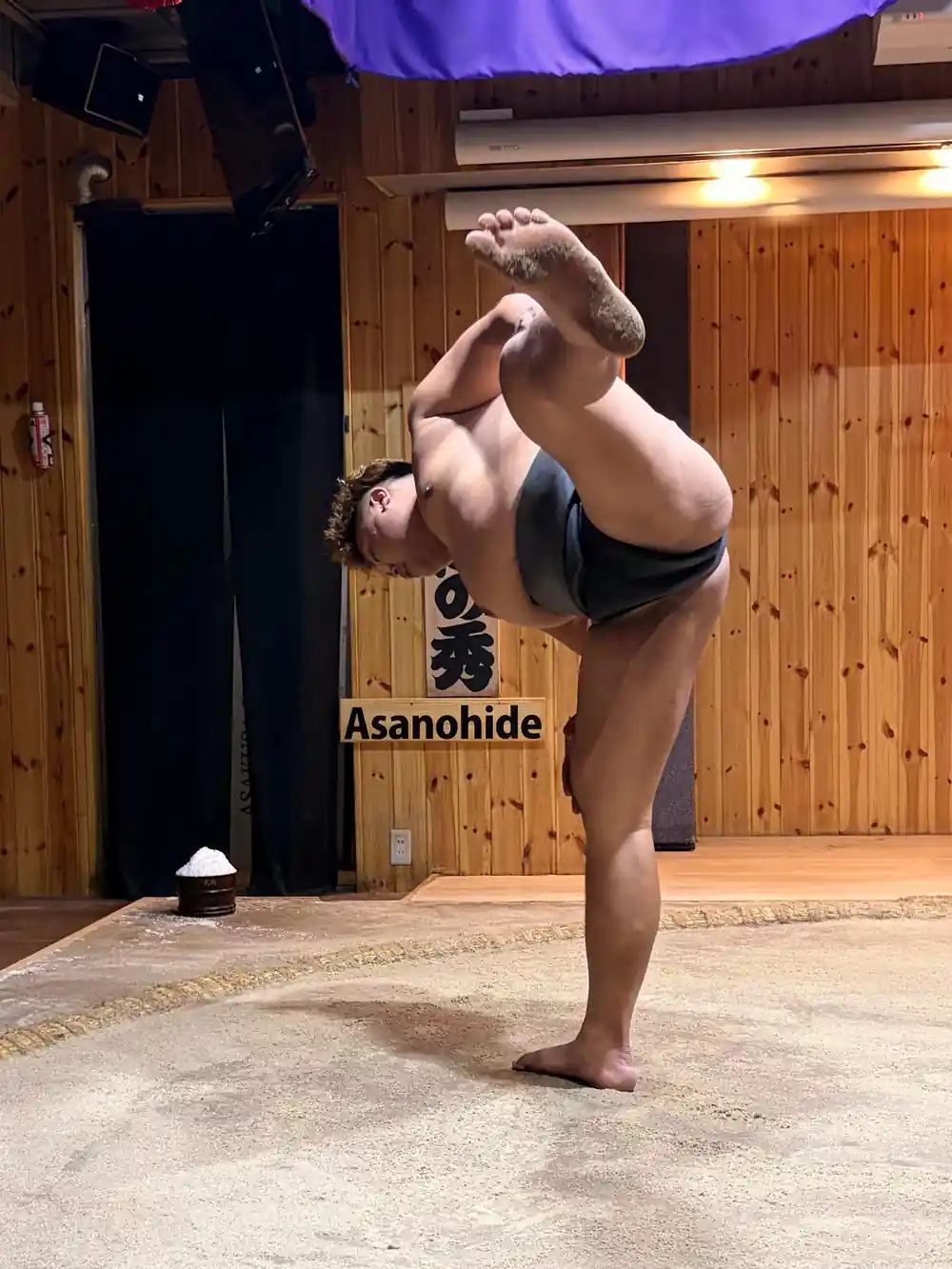
This is where the question can you sumo wrestle in japan gets a practical answer. Club training starts with the basics: stance, the opening charge, gripping the belt and learning to fall without hurting yourself. Expect repetition, early sessions and a coach who corrects your feet before you are allowed to push anyone. Some clubs open sessions to visiting wrestlers, and a few run beginner courses aimed at adults.
Standards vary. Some university teams train daily and travel to national tournaments, while a local club may meet twice a week in a community hall with a ring marked out on mats. Ask before you turn up, bring water, and expect plenty of shiko, the stamping exercise that builds the legs and the balance every wrestler needs.
14.93 feet
The dohyo, the clay ring itself, has a diameter of 14.93 feet (4.55 m), and every question about who may stand on it begins with that small circle.[1]
International Recognition and the Olympic Question
Sumo travelled a long time ago. National federations exist across Europe, the Americas, Asia and Africa, and amateur world championships draw competitors from countries with no professional tradition at all. The rules are adapted for amateur competition, with weight categories and a tournament format built for a weekend rather than a long professional tour.
Sumo is not an Olympic sport, and the international amateur circuit is where the sport's growth outside Japan happens. That recognition matters for wrestlers who never turn professional: it gives them a route to compete, travel and represent a national team. In Japan, the professional route is a career for a small number of wrestlers, while the amateur route is where school and university competitors spend their years.
The other side of international recognition is the audience. Sumo is now watched far beyond Japan, and wrestlers who come from abroad are a normal part of the top division rather than a novelty. That change has been slow, and it has happened without the ring itself changing shape.
Youth Sumo and Children's Tournaments
Children in Japan meet sumo early, often at school or at a local festival rather than in a purpose-built hall. Community tournaments are held on temporary rings, sometimes on sand or on mats, and the youngest age groups are coached gently, with balance and safe falling taught before any serious pushing.
Youth sumo is not only for boys. Girls compete in their own age groups and tournaments, and school programmes are usually mixed at the youngest levels. For parents travelling with children, a sumo show is an easy introduction: shows are short, seated and easy to follow even if nobody in the family speaks Japanese. Watching once also helps, because seeing the ring, the referee and the rituals makes a club session or a practice visit much easier to follow.
Step Into the Ring: What Visitors Can Do
If you are asking can I do sumo wrestling in japan as a visitor, several listings are built around exactly that. In Tokyo there is a listing built around wearing a mawashi on a real clay ring, from US$46[3], a sumo experience with hot pot, photo and gift from US$81[17], and a session with a former top-division rikishi in Ginza from US$48, with a listed duration of 1 hour[18]. In Osaka there is an ex-professional ring challenge from US$44[19].
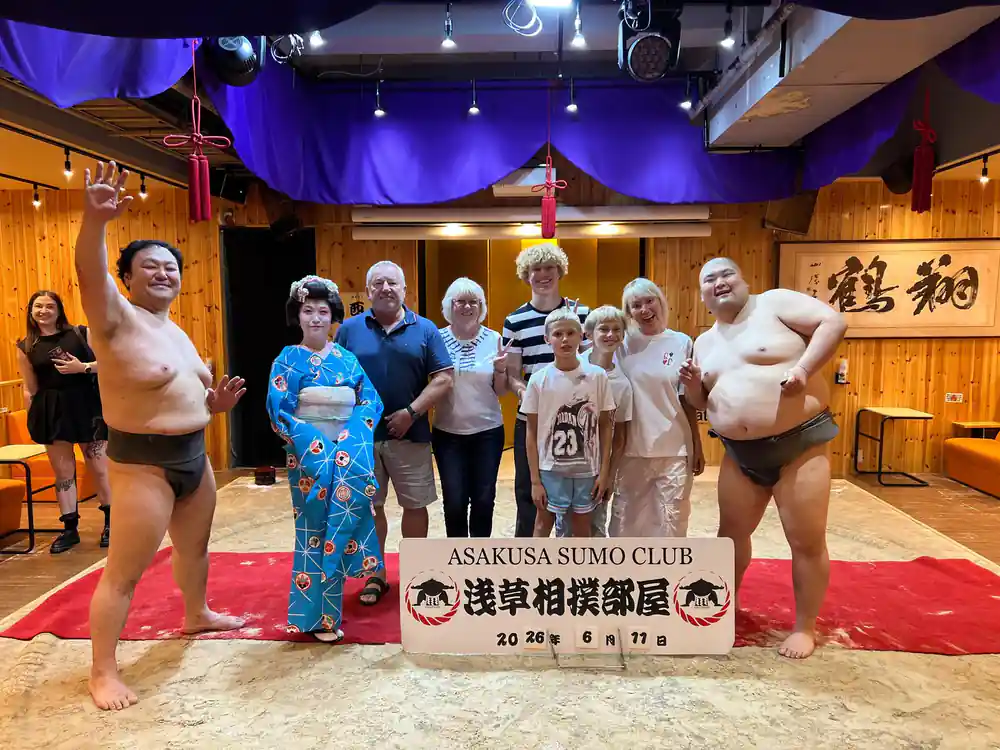
The show booked from this site is a sumo entertainment show with chicken hot pot and a geisha, from US$102, with a duration of 2 hours.[5] Small group options are available, the venue is wheelchair accessible, and free cancellation is offered up to 24 hours in advance for a full refund.[5] A geisha's role is to make guests feel at ease with conversation, drinking games and dance performances.[13]
If you would rather watch the real thing, morning practice typically begins between 5:00-7:30 AM and continues for 2-4 hours, and the exact start time varies by stable and season.[4] Grand Sumo Tournaments are held through the year in Tokyo, Osaka, Nagoya and Fukuoka, and the Kokugikan arena in Ryogoku has a spectator capacity of up to 10,000.[8][9] A wheelchair seat costs 8,000 yen and is for two people, a wheelchair user and one accompanying person.[20]
Listed duration of Tokyo sumo shows
Tokyo sumo shows, from-prices per person
From-prices in US dollars:[5],[6],[21],[3]. Child prices are not listed separately.
Booking windows for a Tokyo sumo trip
How to get on the clay
Decide what you want
A stage show with food and a geisha, a short Ginza session, or a real morning practice. These are different experiences, and they rarely overlap.
Book the ring time
Look for listings that mention a mawashi, ring entry or a challenge. The main Tokyo show starts from US$102[5].
Turn up early
Arrive with time to change and to listen to the safety briefing. Wear clothes you can move in, and expect to go barefoot on the clay.
Watch the professionals
Morning practice typically begins between 5:00-7:30 AM and continues for 2-4 hours[4]. Expect an early alarm.
Keep it respectful
A dohyo is a working space. Follow the instructor, do not wander onto the clay uninvited, and photograph only where you are told you may.
Book the Tokyo sumo show that hands you a mawashi
from US$102Reserve now & pay later