Worth remembering
- A mawashi is the wrapped belt a wrestler wears, and the way it is tied at the back is one of the first details newcomers notice.
- The chonmage is long hair, oiled and folded into a topknot at the crown, and it is cut off in public when a wrestler retires.
- Research for 25 makuuchi wrestlers puts the average at 161.2 kg and 186.3 cm, and a bout can be over in 20-30 seconds.[1][2]
- Knees, ankles and shoulders carry the damage in a sport with no padding, and many careers end when small injuries stop healing.
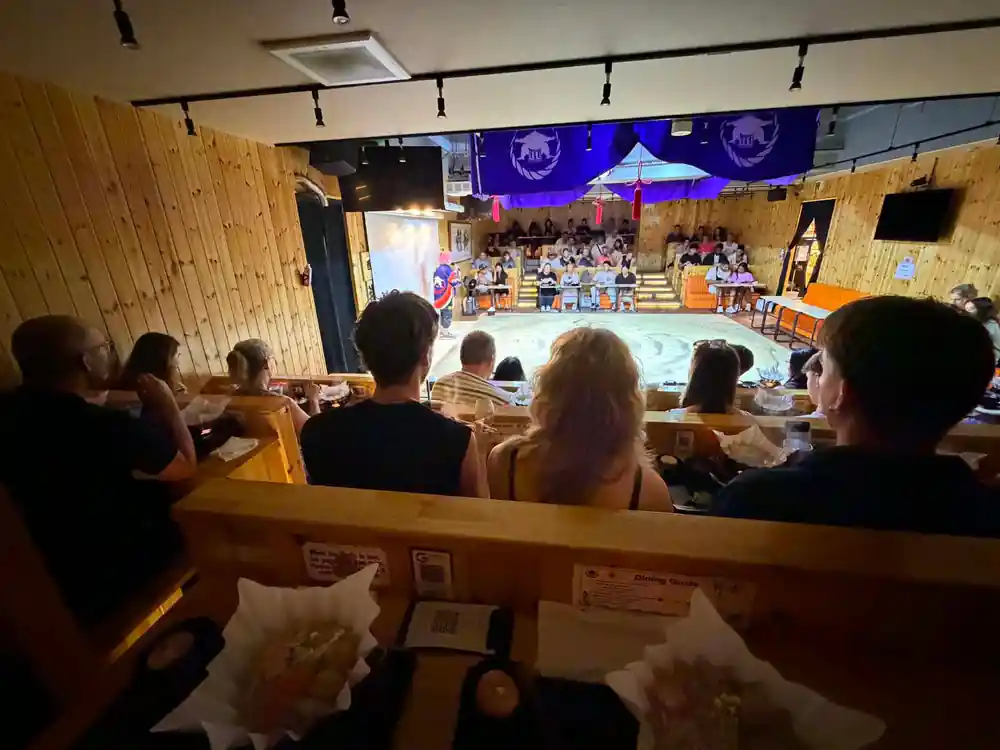
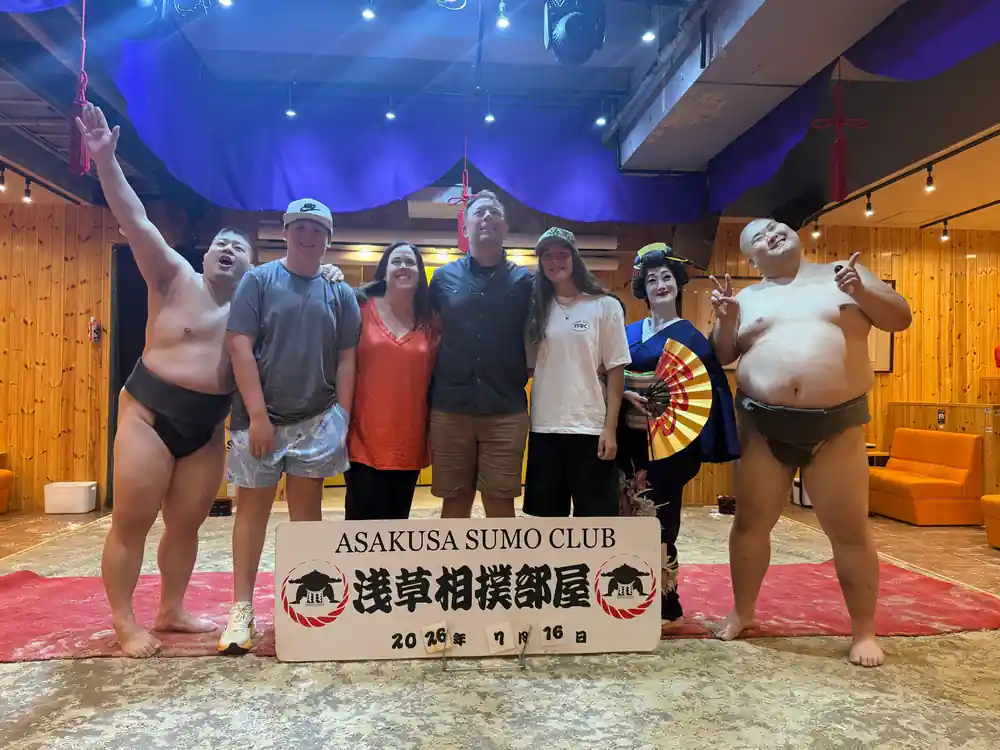
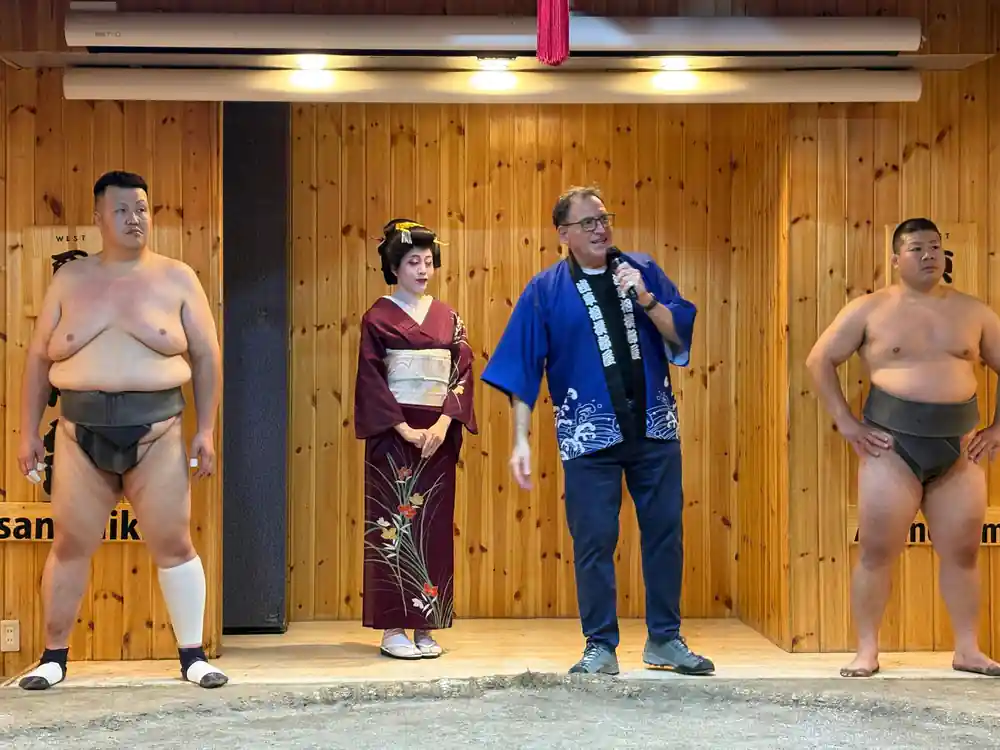
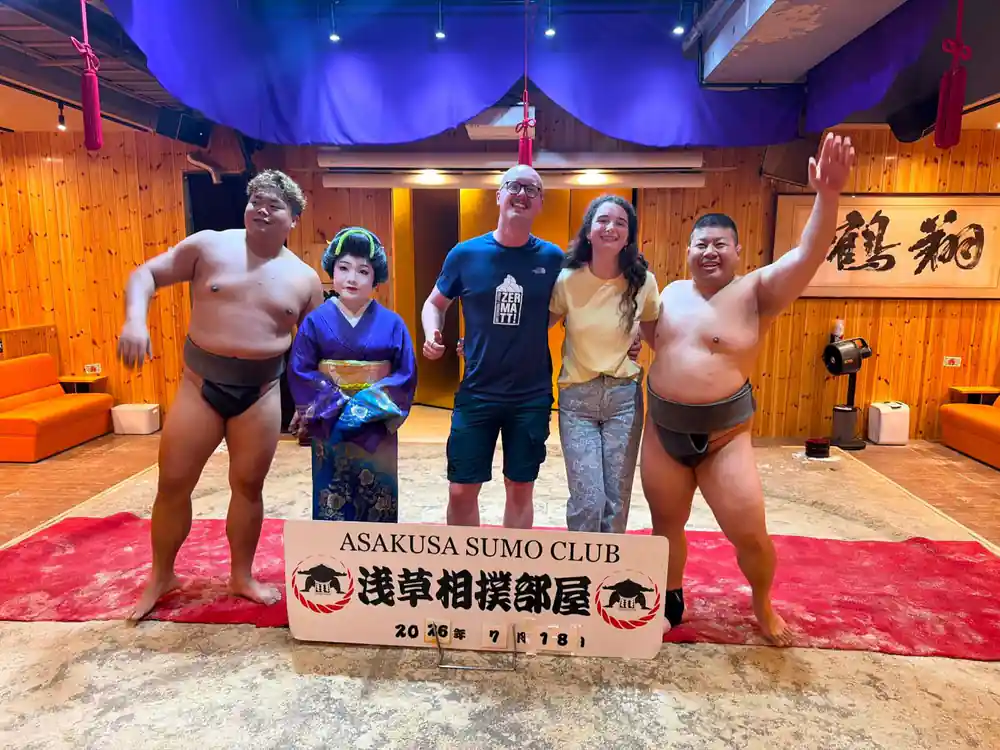
- The Sumo Entertainment Show with Chicken Hot Pot & Geisha runs 2 hours from US$102 and is rated 4.79 from 8,004 reviews.[3]
- Top choice Sumo Show with Hot Pot from US$102 Duration2 hours[3]Rated4.79 from 8,004 reviews[3]AccessWheelchair accessible[3]CancellationCancel up to 24 hours in advance[3]ExtrasSmall group available[3] Check availability
- Family Sumo Workshop from US$62 Duration2 hours[4]Rated4.90 from 430 reviews[4]AccessWheelchair accessible[4]CancellationCancel up to 24 hours in advance[4]ExtrasSkip the line[4] See this tour
- Ginza Sumo Show from US$61 Duration1.5 hours[5]Rated4.57 from 1,459 reviews[5]AccessWheelchair accessible[5]CancellationCancel up to 24 hours in advance[5]ExtrasNot stated See this tour
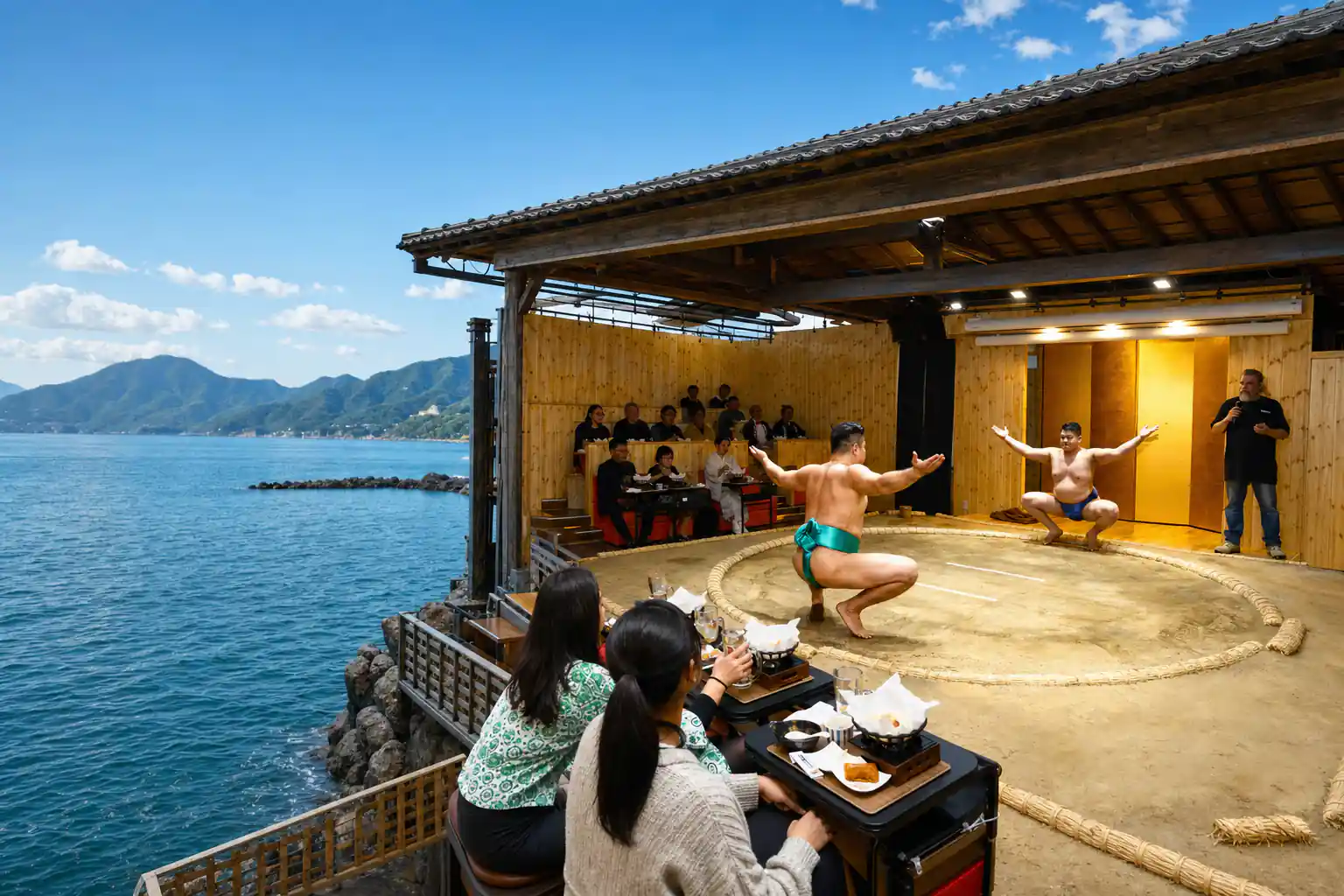
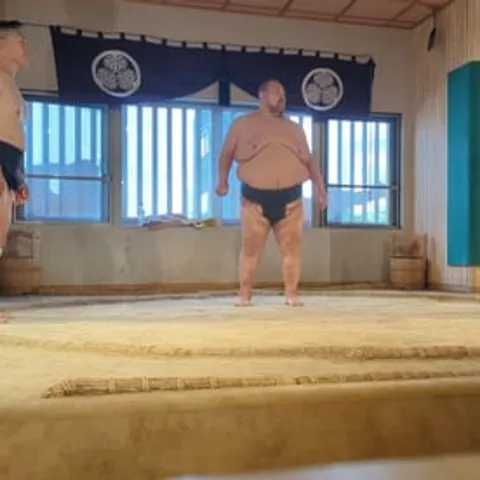
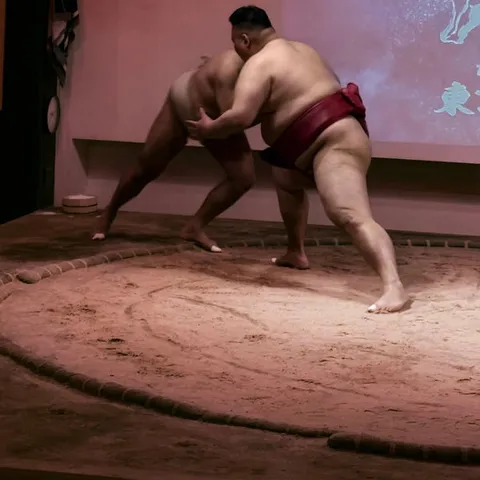
According to research conducted by the Keio University Sports Medicine Research Center, the average weight of 25 makuuchi wrestlers was 161.2 kg (about 355 lbs), with an average height of 186.3 cm.
Is this Tokyo sumo show worth booking?
Read before booking
On the day
- Listed as wheelchair accessible, with a small group option.[3]
- Sit close if you can: the mawashi knot and the footwork are the details worth watching.
- Bring a light layer; you sit still for much of the show.
- Charge your phone; the ring, the meal and the geisha performance are worth remembering.
Building a Heavyweight Frame
A sumo wrestler's body is not an accident of appetite. It is built deliberately over years of eating, sleeping and training on a schedule most athletes would find strange, and the mass is the point: it gives a low centre of gravity, a wide base and the weight to shift an opponent who is trying to shift you. Research from the Keio University Sports Medicine Research Center puts the average weight of 25 makuuchi wrestlers at 161.2 kg and their average height at 186.3 cm.[1] A modern Japanese wrestler's optimal weight is put at between 400 and 600 pounds, sustained by a daily diet of 20,000 calories.[7]
Under the bulk sits a great deal of muscle, trained for short explosive work rather than distance. Wrestlers drill the same push, the same grip and the same shuffle step until it is automatic, then eat heavily and sleep, which is when much of the size is added. In a bout you can see why the training looks so repetitive: everything happens in a small circle, at close range, with hands locked on cloth and no room to run.
The Mawashi Knot and Wrestling Belt
The mawashi is the wrapped belt a wrestler wears, and it is also the handle his opponent grips. It is wound around the waist and between the legs, tied off at the back with the ends left hanging, and a fringe of stiff strands falls over the cloth at the front. Newcomers notice the colour; regulars watch the mawashi knot, because a belt that shifts under pressure gives away a grip at the worst moment.
Mawashi tying is a two-person job and a small ritual of its own. One wrestler raises his arms and holds still while the other walks the cloth around him, pulls each loop tight, checks the tension at the hips and finally makes the knot at the back. Wrestlers adjust the belt again at the edge of the ring, tucking loose ends and settling the fringe. Watch the seconds before the first clash if you want to see it done properly.
Mawashi types vary more than black and white photographs suggest. Training versions are made of tough cotton and go soft and dark with use, while the dress versions worn in the ring and in ceremony are stiffer, in deeper colours, with long strands hanging at the front. A belt that is always slightly damp, always being retied, is simply part of the working day.
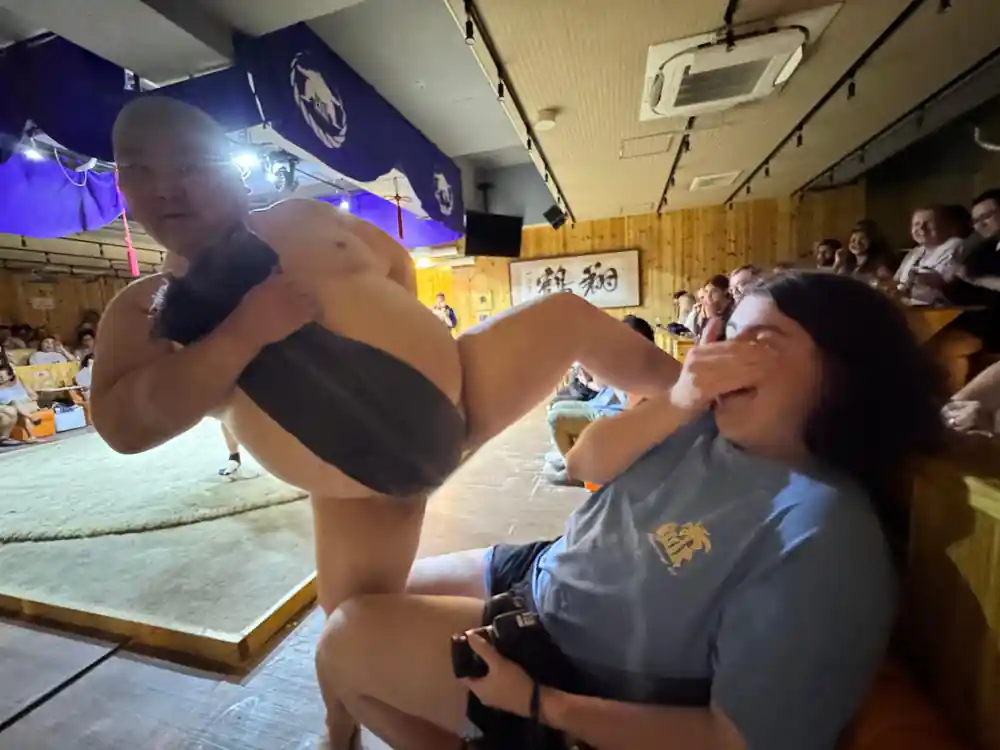
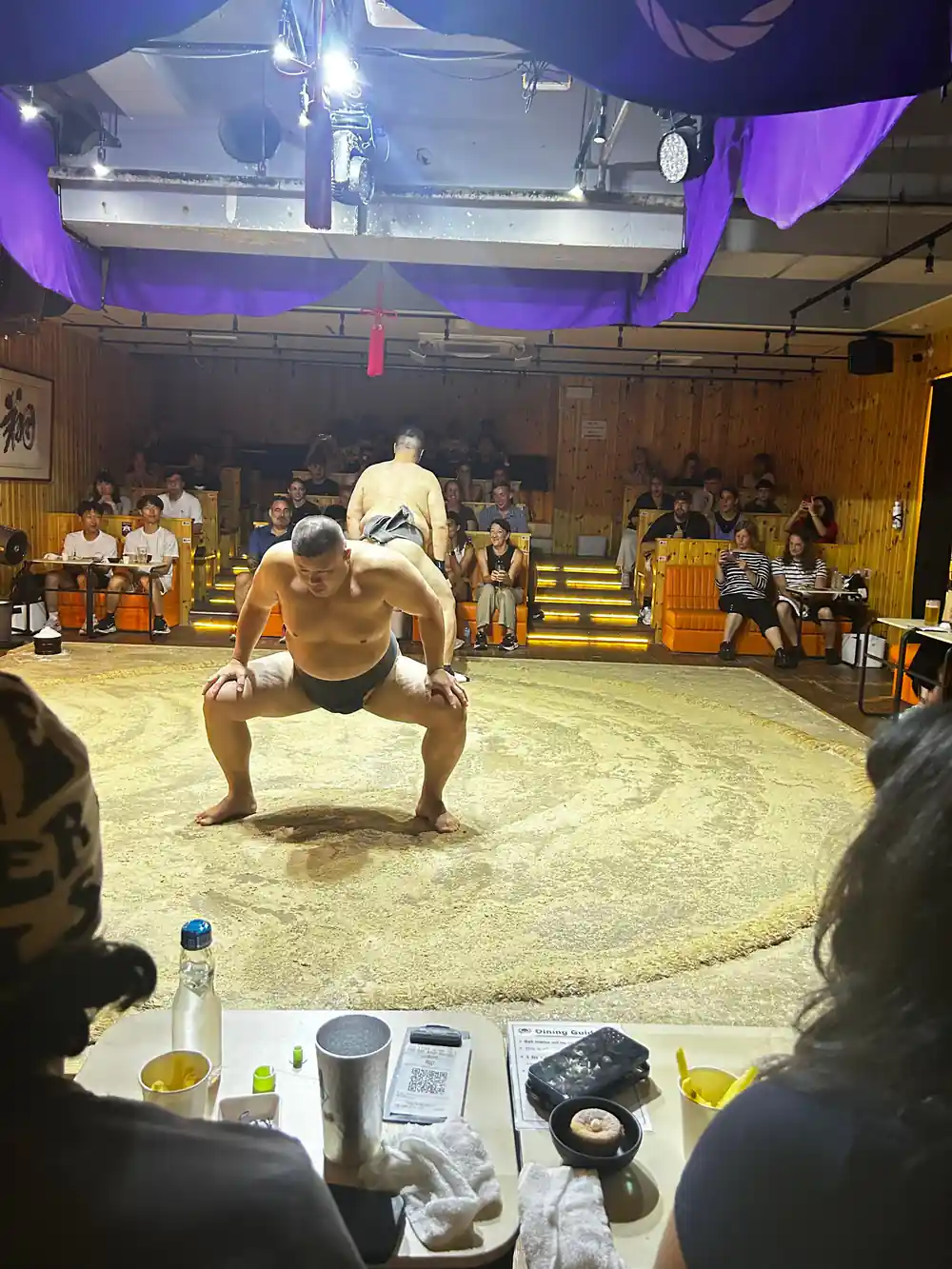
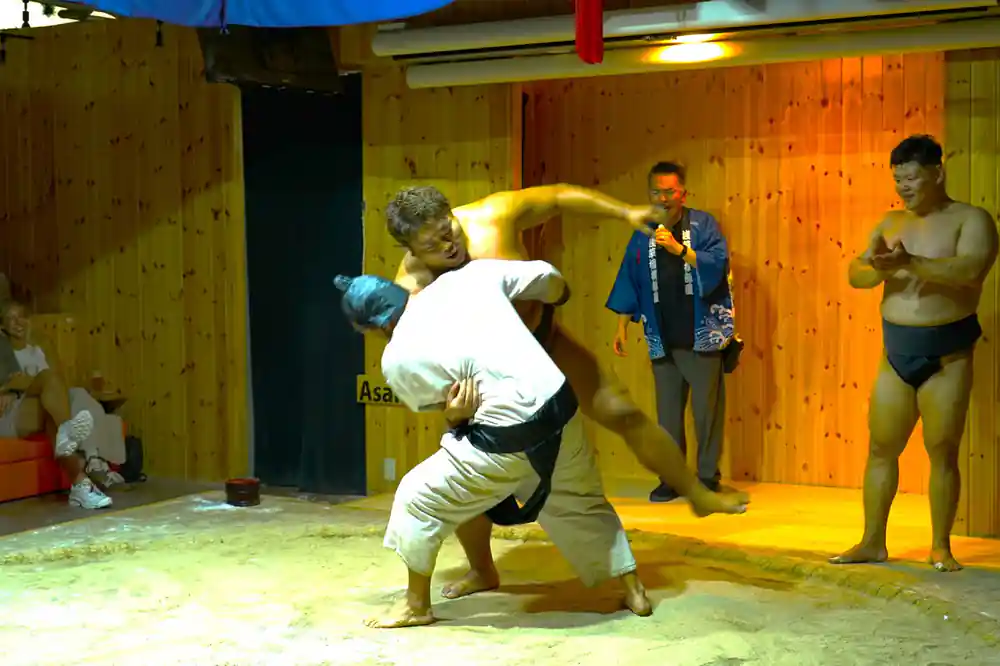
Two wrestlers crouch, hands hovering, and the whole bout can be decided in seconds.
The Chonmage Topknot and Traditional Grooming
Hair is grown long, oiled and combed back into the chonmage, a topknot folded over at the crown. It is working hair rather than fashionable hair, brushed, oiled and retied through the day with a comb and a great deal of patience. In the ring the topknot is the silhouette you pick out first when a wrestler turns his back to you, and it moves as a counterweight above the shoulders.
Grooming is shared work. Younger wrestlers learn to tie a topknot on each other long before they can manage their own, and combs, oils and pins live together in the stable. Hair is dressed carefully before training and combed out afterwards, since a loose topknot in the middle of a bout is a nuisance nobody wants. Sit near the front and you can see how much care goes into something that looks effortless from a distance.
Surprising Speed and Flexibility in Heavy Bodies
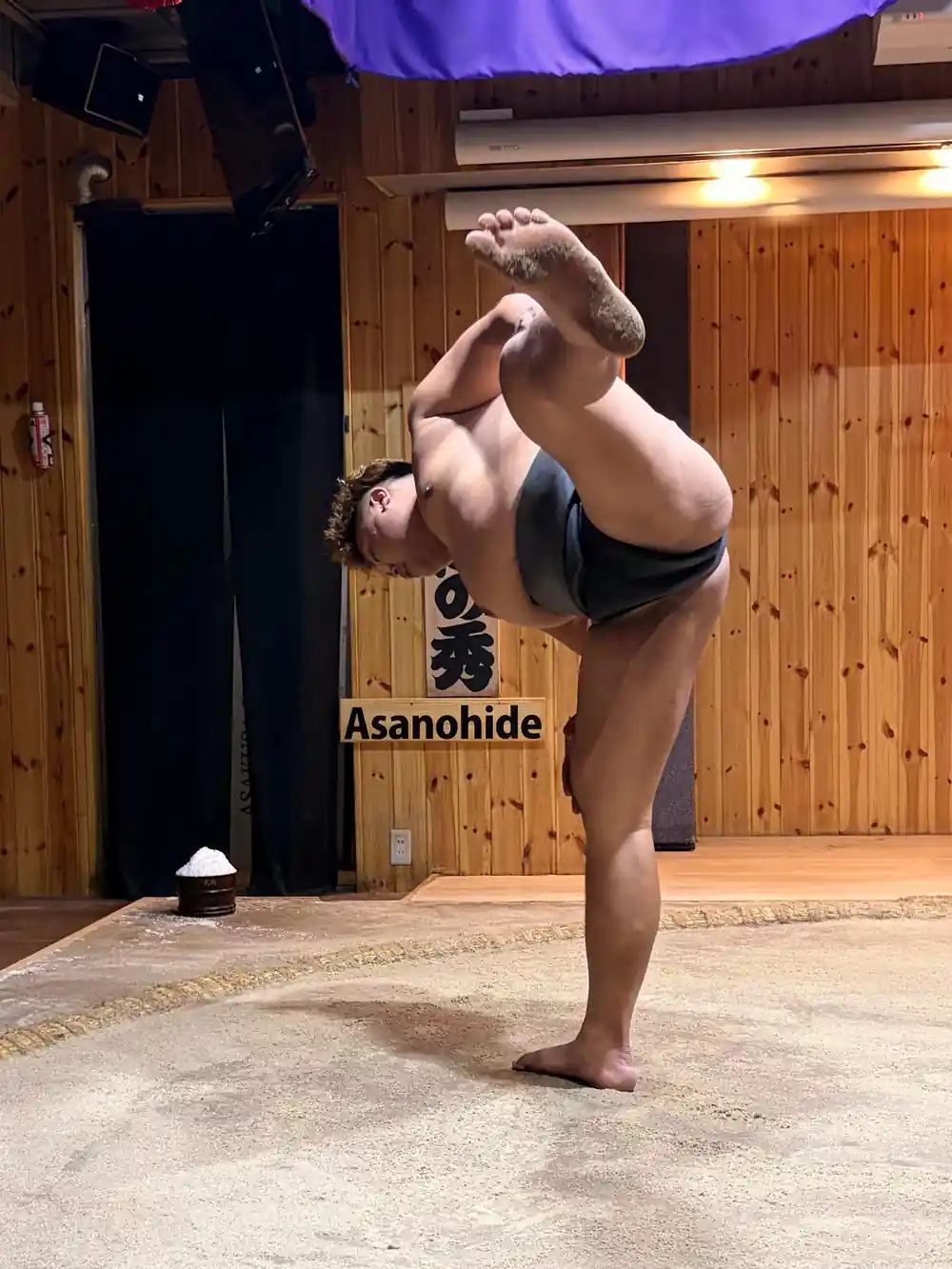
The first surprise is the speed. A bout lasts 20-30 seconds, and much of that time is spent simply refusing to be moved.[2] The ring has a diameter of 14.93 feet (4.55 m), so there is nowhere to hide and no space to circle slowly.[8] What looks like one long shove is really a sequence of small decisions about balance: where the hips are, which foot is planted, which way the other man's weight is leaning.
The second surprise is the range of endings. There are 82 kimarite, or match winning techniques, and 5 non-techniques or ways to lose, all defined by the Japan Sumo Association.[9] Heavy men bend, twist and step in ways that seem impossible for their size, and a wrestler with quick feet can turn a bigger opponent's momentum against him. Bulk helps, and so does footwork.
Morning practice shows the same thing at closer range. Asageiko typically starts between 5:00 and 7:30 AM and runs for 2-4 hours, with the exact time varying by stable and season.[6] There is far less ceremony than at a show and far more repetition: shoves, ducks, grips and long spells of crouching while the same drill runs again and again.
from US$102
The Sumo Entertainment Show with Chicken Hot Pot & Geisha runs 2 hours and is rated 4.79 from 8,004 reviews.[3]
Common Injuries That End Wrestling Careers
Sumo is a collision sport with no padding, and the injuries follow the mechanics of it. Knees take a lot of it: a wrestler is often driving a heavy man backwards while his own leg is twisted underneath him. Ankles and toes suffer at the clay edge when a foot slides out, and shoulders and elbows complain after years of gripping cloth and being thrown.
The quieter problem is accumulation. A wrestler can compete with strapping and tape for a long time, then find that a joint which ached all winter does not come right before the next tournament. Careers end more often with an injury that will not heal in time than with one dramatic moment. A staged show hides all of this. A morning practice visit does not.
Weight Classes and Ranking Structure
Sumo's ladder is built from six divisions, and the top division, Makuuchi, holds the top 42 wrestlers in the sport.[10] Under the Nihon Sumo Kyokai, the association that governs the sport in Japan, there are 47 stables training nearly 700 wrestlers.[11] A wrestler's place on that ladder comes from results, and the climb is slow: a good run of wins moves you up the list rather than straight to the top.
Ranking is decided by what happens on the clay rather than by measurements. The heaviest men are not automatically the highest ranked, and a lighter wrestler with good balance can rise a long way. Averages hide the spread: the same research that gives 161.2 kg for 25 makuuchi wrestlers covers slender technicians and enormous pushers alike.[1] If you want to see the top ranks compete, the Grand Sumo Tournaments come to Tokyo in January, May and September, to Osaka in March, to Nagoya in July and to Fukuoka in November.[12]
Tournament days are the loudest way to see the sport. Ryogoku Kokugikan in Sumida City, Tokyo has a spectator capacity of up to 10,000.[13] Seat prices vary widely by category, and a wheelchair seat costs 8,000 yen and is for two people, a wheelchair user and one accompanying person.[14] Between tournaments, entertainment shows and morning practice visits put you much closer to the wrestlers than a distant seat in an arena.
The Topknot-Cutting Retirement Ceremony
When a wrestler retires, the chonmage is cut off in public. Guests take turns stepping up with scissors and snipping a strand, while the retiring wrestler sits in front of family, stablemates and supporters. It is the one occasion on which the topknot is not retied at the end, and the mood swings between jokes and tears as the hair gets shorter.
The last cut goes to the man who trained him, and it takes what is left of the topknot with it. After that the wrestler appears with a shaved crown and a career behind him, which is a strange sight for anyone who has watched him for years. Followers treat the ceremony as the emotional counterweight to bouts that last 20-30 seconds, and newcomers who happen to see one rarely forget it.[2]
How long each Tokyo sumo show runs
Listed durations for four Tokyo sumo shows: Sumo Entertainment Show with Chicken Hot Pot & Geisha, Luxury Sumo Show Experience, Family Sumo Workshop, Ginza Sumo Show.[3][4][5][15]
What a Tokyo sumo show costs per adult
From-prices in US dollars for four Tokyo sumo show listings.[3][4][5][15]
When to book and when to go
Watching sumo closely
Start with the knot
Before the bout begins, watch the belt being tightened at the back. That knot is what both men will grip, and it is the first thing to look at.
Follow the feet
Look at the feet, not the arms. The wrestler who gets his hips low and his toes planted usually decides where the push goes.
Time the bout
Bouts are short. If you look away for a photo you can miss the whole thing, so watch first and take pictures afterwards.
Read the cloth
Notice the difference between the soft training belts and the stiff, dark ones worn in the ring and in ceremony.
Stay for the meal
The show comes with chicken hot pot, and the meal is the easiest moment to ask questions about what you have just seen.
See live sumo, hot pot and a geisha show in Tokyo
from US$102Reserve now & pay later